
Canton
Solar thermal — Buildings Programme (VD)
Flat contribution or per m² of collectors.
Grants for solar thermal systems (hot water, heating support).
www.leprogrammebatiments.chSolar water heating · Yverdon-les-Bains
At a glance
Small project
CHF 10'100 – CHF 23'600
Typical project
CHF 13'000 – CHF 30'200
Large project
CHF 17'800 – CHF 41'000
| Project | Quantity | Low | High | Per unit |
|---|---|---|---|---|
| Small project | 3 m² | CHF 10'100 | CHF 23'600 | CHF 5'500 |
| Typical project | 6 m² | CHF 13'000 | CHF 30'200 | CHF 3'500 |
| Large project | 11 m² | CHF 17'800 | CHF 41'000 | CHF 2'600 |
Computed with our estimator for Yverdon-les-Bains (regional factor included), standard finish. Only the project size changes.
Included
Not included
In Yverdon-les-Bains, the federal building register lists 2'992 residential buildings and 15'846 dwellings. These municipal benchmarks help put your home in context, but do not replace an individual assessment.
68 % built before 1980
Construction year does not reveal past renovations: check the current insulation condition.
60 % · Gas
This distribution describes recorded buildings, not your system's consumption or efficiency.
| Energy | Heating | Hot water |
|---|---|---|
| Gas | 60 % | 45.9 % |
| Heating oil | 28 % | 25.4 % |
| District heating | 2 % | 0.8 % |
| Heat pump | 6 % | 5.4 % |
| Electricity | 3 % | 7.9 % |
| Wood | 2 % | 1 % |
| Solar thermal | 0 % | 6.9 % |
Each line gives the share of buildings using that energy, separately for heating and for hot water. The two columns do not always reach 100%: some buildings combine two systems, or reported none.
A standard non-condensing boiler is usually older and less efficient.
16.7 % of buildings mix housing with shops or offices.
In Yverdon-les-Bains, RegBL data provides crucial insights for your renovation project. With 1 building officially protected out of 167 known entries, homeowners must engage with municipal authorities early regarding heritage permits. Regarding size, the median house volume is 808 m3 based on the SIA 416 standard, which is vital for calculating insulation or heating requirements. Please note that data coverage is partial, as only 244 houses have been measured out of 1352. Consequently, you should verify your property’s specific dimensions to ensure accurate cost estimations and appropriate planning for your building's scale.
Source : Registre fédéral des bâtiments et des logements (RegBL), OFS, 2026. Existing residential buildings; percentages of recorded values.
Located at an altitude of 435 meters, the city of Yverdon-les-Bains benefits from favorable sunshine, with an average global horizontal irradiation of 1332 kWh/m²/year.
In the context of the local energy transition, marked by the City's Climate Plan aiming for carbon neutrality by 2050, switching to solar thermal becomes a strategic choice for homeowners.
With approximately 2845 heating degree days per year, the energy demand for hot water and heating is significant. Installing solar collectors helps reduce dependence on fossil fuels while increasing your property value.
The ideal time to consider these works often coincides with the replacement of your aging heat production system. If your boiler is reaching the end of its lifespan, coupling its replacement with a solar thermal installation allows for optimized integration.
Solar thermal collectors generally cover a large part of the hot water demand in summer, drastically reducing energy consumption during sunny months.
By anticipating these works within the framework of a comprehensive renovation, you not only benefit from better technical efficiency but also align with the goals of the Energy City, a label the municipality has held since 2010.
The selection of your solar thermal system depends closely on your actual needs and your roof configuration.
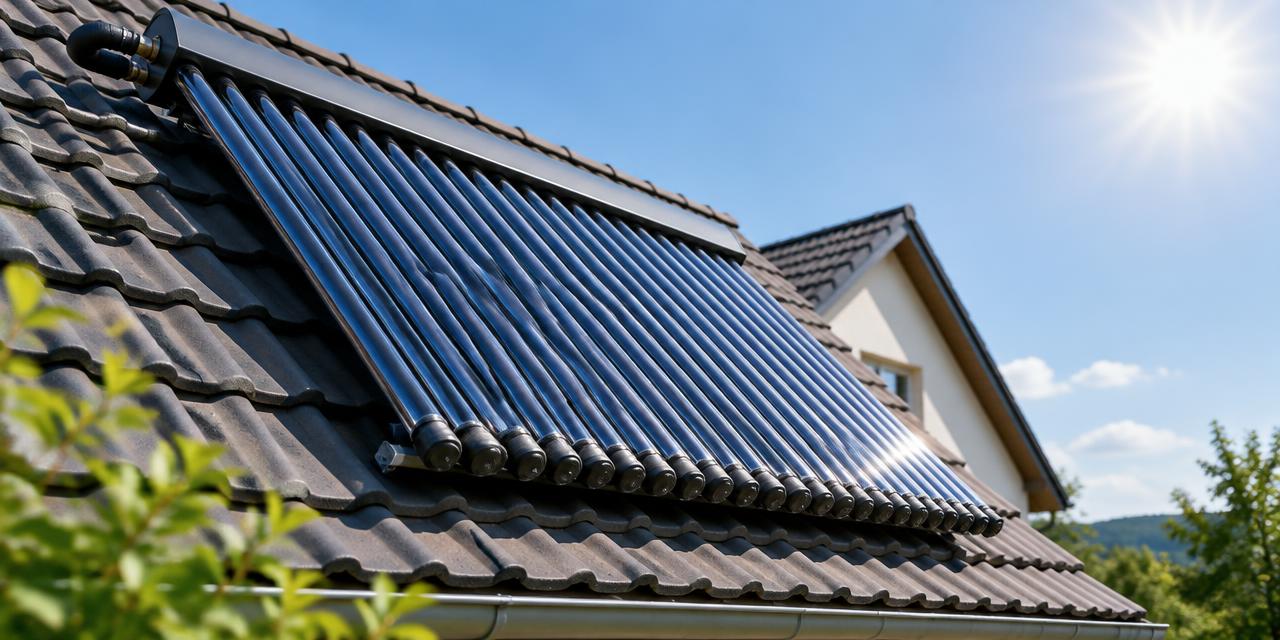
There are two main types of collectors : flat plate collectors, which are robust and versatile, and vacuum tube collectors, which are more efficient, especially in winter or during low sunlight.
Your choice should take into account the slope and orientation of your roof to maximize the annual yield, estimated at approximately 1172 kWh/kWc/year for an optimal south-facing installation.
It is crucial to note that combining collectors and heat pumps requires a rigorous sizing study to ensure harmony between the systems and prevent premature equipment wear.
Storage options also play a central role. The choice of a large-capacity domestic hot water tank or a combined system capable of supporting heating will depend on the number of occupants and the overall energy performance of your building.
High-end solutions include intelligent regulation capable of optimizing storage based on weather forecasts. Proper sizing will prevent summer overheating while ensuring a constant supply.
Before validating a quote, ensure that the chosen materials comply with Swiss standards and are adapted to the severity of the 49 frost days recorded annually in the region to ensure the durability of your investment.
The building stock in Yverdon-les-Bains is varied, presenting different challenges for the integration of solar thermal according to the age of the building.
For houses built before 1990, it is imperative to check for the potential presence of asbestos in insulation or ducts before any intervention on the roof or hydraulic network.
Older buildings often have outdated distribution networks that may need to be upgraded to support a new efficient thermal installation.
If your house is over 20 years old, it is recommended to couple the solar installation with a check of your roof insulation, as the effectiveness of the panels will be limited if heat losses through the roof are too high.
For newer constructions, integration is generally facilitated by better-prepared roofs and distribution networks often compatible with modern systems. Nevertheless, one must remain vigilant regarding the structural load on the roof frame.
As housing is a scarce resource in Yverdon-les-Bains, any value-enhancing renovation is an opportunity to maintain the quality of the building stock while responding to the issues of housing shortages.
If in doubt about the load-bearing structure of your building, do not hesitate to commission a civil engineer who will confirm the feasibility of installing thermal panels without risking compromising the integrity of the roof or existing insulation, which is essential for your thermal comfort.
This guide does not establish a permit exemption. If your building or area is protected, check the constraints specific to your project.
It is imperative to submit your grant application before the actual start of work. Any project started without prior validation risks not being eligible for aid. Check the official website regularly for current criteria.
Tax-wise, investments aimed at saving energy and protecting the environment, including solar thermal, benefit from a 100% deduction of their cost.
If the expenses are higher than your net income, the balance can be carried forward over the next two tax periods.
Regarding real estate taxation, the taxpayer can choose between deducting actual expenses or a flat-rate deduction for maintenance, depending on the age of the building and its use.
However, in the event of carrying forward energy investment costs, the flat-rate deduction option is excluded for that tax period.
Remember that only expenses you actually incur are deductible: if you receive a subsidy, this amount is deducted from the calculation basis of your deductible expenses.
Good tax planning, combined with a well-prepared grant application, helps significantly reduce the final cost of your project in Yverdon-les-Bains.
The realization of a solar thermal project follows logical steps to guarantee the safety and performance of the installation. It all starts with a feasibility study and the application for financial support from the "Programme Bâtiments (VD)".
Once the positive response is received, you can request quotes from certified companies.
Seasonality is an important factor : although the work is feasible outside periods of intense cold, it is preferable to plan the installation during the months when frost days are less frequent.
With 49 frost days per year on average in Yverdon-les-Bains, favoring a period between spring and early autumn allows installers to work in optimal conditions.
After selecting the service provider, ordering the material, and preparing the site, the work begins with the installation of the supports on the roof, followed by the placement of the collectors and the setup of the hydraulic system.
The connection to the storage tank and regulation systems constitutes the final technical phase. Commissioning includes leak tests and fluid circulation tests. Only after a rigorous check of the overall proper functioning is the site closed.
Anticipating the schedule helps avoid inconveniences related to winter weather conditions and ensures a smooth transition to your new thermal autonomy.
Never neglect the importance of applying for grants before the start of the construction site, at the risk of losing any subsidy. Do not choose a sizing based on an approximate estimate, as this could lead to overheating or a lack of performance.
It is inadvisable to have the installation carried out by an unqualified provider or without verifying professional insurances. Do not underestimate the need for a structural roof study.
Finally, do not confuse solar thermal and solar photovoltaic, as their functions and sizing are radically different.
Checklist before requesting quotes : check if your building is listed or in a protected zone with the municipality; determine the condition of your roof and the date of the last renovation; have an energy assessment of your current hot water consumption carried out; ensure that your existing heating system is compatible with solar assistance; compare at least three detailed quotes covering equipment and services; confirm that the quote includes compliance and installation costs; ask for an estimate of the achievable savings to better evaluate the return on investment.
A solar thermal installation, although robust, requires regular maintenance to ensure its performance over several decades.
The heat transfer fluid must be checked periodically, notably to verify its pH and resistance to freezing, especially given the 49 annual frost days in Yverdon-les-Bains.
Annual or biennial maintenance allows checking the good condition of the collectors, the absence of leaks in the circuit, and the proper operation of the circulation pump.
A well-maintained system ensures not only constant hot water production but also extends the lifespan of all associated hydraulic components.
The durability of your installation also depends on the quality of the materials chosen from the start. By opting for certified equipment and high-quality components, you minimize the risk of breakdowns.
Remember to keep a log of your maintenance interventions, which will be a strong argument in case of resale of the property. A homeowner who can prove rigorous monitoring of their technical installations strengthens the value of their property.
In short, solar thermal in Yverdon-les-Bains is a sustainable investment that, through simple and professional maintenance, will effectively contribute to reducing your energy costs while respecting the municipality's climate goals.
1. Estimate
Set a budget range with the estimator.
2. Grants
Apply before work starts.
3. Quotes
Compare at least 3 quotes.
4. Permit
Check with the municipality whether a permit is needed.
5. Works
Follow the site and do a written handover.
Flat contribution or per m² of collectors.
Grants for solar thermal systems (hot water, heating support).
www.leprogrammebatiments.chCheck amounts and conditions with the provider before signing: apply before work starts in most cases.
1400 Yverdon-les-Bains · about 0 km
Based in Yverdon-les-Bains, Thermo Assistance Sàrl specializes in heating, sanitary, air conditioning, and renewable energy installations in French-speaking Switzerland.
groupe-thermo.ch1400 Yverdon-les-Bains · about 0 km
Based in Yverdon, Thermo Group specializes in heating, sanitary, ventilation, heat pumps, and solar installations across French-speaking Switzerland.
groupe-thermo.ch1400 Yverdon-les-Bains · about 0 km
Norline AG specializes in building technology, providing solutions for heating, cooling, photovoltaics, and floor insulation.
norline.ch1400 Yverdon-les-Bains · about 0 km
Family business in Yverdon-les-Bains specializing in plumbing, heating, tinsmithing, and roofing since 1953.
reganely.chSuggestions from the commercial register by distance and activity. Not an endorsement or partnership.
Most solar installations benefit from a simplified procedure or an exemption. However, systematically check with the local urban planning department, especially if your building is protected.
No, grants must be requested via the Buildings Program before work begins. Any application made after the start of the construction site is inadmissible.
Yes, but it requires a rigorous sizing study. This combination allows for excellent synergy if both systems are correctly integrated.
Investments aimed at saving energy are 100% deductible. The balance can be carried forward over the next two fiscal years if necessary.
Annual or biennial maintenance is recommended. This allows checking the state of the heat transfer fluid and the integrity of the hydraulic components.
Generally no, it serves as a supplement for hot water and heating. It covers a large part of the summer needs but requires additional heating in winter.
With 49 frost days per year and good irradiation, installations must be frost-resistant. The choice of low-temperature resistant components is crucial.
Estimated solar yield
1'172 kWh/kWc/an
toit ~30° sud, PR 0.8, estimation
Altitude
435 m
Heating degree days
2'845 Kj/an
20/12 °C
Frost days
49 jours/an
Solar irradiation
1'332 kWh/m²/an
horizontal
Winter design temperature
-5.1 °C
1er percentile des minimales
Mean temperature
11.3 °C
Source : Open-Meteo Historical Weather API (réanalyse ERA5, moyenne 2015-2024) · swisstopo – service d'altitude (MNT)
Source : energiestadt.ch
These rules apply across the whole canton, not only in this town.
Permits
Tax deductions
Source : Règlement sur la déduction des frais relatifs aux immeubles privés (RDFIP)