
Canton
Solar thermal — Buildings Programme (VD)
Flat contribution or per m² of collectors.
Grants for solar thermal systems (hot water, heating support).
www.leprogrammebatiments.chSolar water heating · Lausanne
At a glance
Small project
CHF 10'100 – CHF 23'600
Typical project
CHF 13'000 – CHF 30'200
Large project
CHF 17'800 – CHF 41'000
| Project | Quantity | Low | High | Per unit |
|---|---|---|---|---|
| Small project | 3 m² | CHF 10'100 | CHF 23'600 | CHF 5'500 |
| Typical project | 6 m² | CHF 13'000 | CHF 30'200 | CHF 3'500 |
| Large project | 11 m² | CHF 17'800 | CHF 41'000 | CHF 2'600 |
Computed with our estimator for Lausanne (regional factor included), standard finish. Only the project size changes.
Included
Not included
In Lausanne, the federal building register lists 9'079 residential buildings and 82'705 dwellings. These municipal benchmarks help put your home in context, but do not replace an individual assessment.
76 % built before 1980
Construction year does not reveal past renovations: check the current insulation condition.
43 % · Gas
This distribution describes recorded buildings, not your system's consumption or efficiency.
| Energy | Heating | Hot water |
|---|---|---|
| Gas | 43 % | 35.6 % |
| Heating oil | 32 % | 29.7 % |
| District heating | 19 % | 18.3 % |
| Heat pump | 3 % | 2.3 % |
| Electricity | 2 % | 4.4 % |
| Wood | 2 % | 1.3 % |
| Solar thermal | 0 % | 4.7 % |
Each line gives the share of buildings using that energy, separately for heating and for hot water. The two columns do not always reach 100%: some buildings combine two systems, or reported none.
A standard non-condensing boiler is usually older and less efficient.
24.7 % of buildings mix housing with shops or offices.
For your renovation projects in Lausanne, RegBL data provides essential insights. With 867 buildings under heritage protection out of 1951 identified, verifying your property's status and contacting the municipality early for permit requirements is vital. Additionally, the median house volume for the 2328 buildings is 850 m3, calculated using the SIA 416 standard. These volumetric figures, based on a measured sample of 350 units, are crucial for scaling your upcoming insulation or heating system upgrades. Please note that data coverage is partial for these indicators, so careful planning remains necessary for your specific renovation goals.
Source : Registre fédéral des bâtiments et des logements (RegBL), OFS, 2026. Existing residential buildings; percentages of recorded values.
Lausanne benefits from favorable sunshine with a global irradiation of 1363 kWh/m²/year, making solar thermal particularly relevant.8 °C, the energy transition is a climate necessity.
The Lausanne climate plan targets carbon neutrality by 2050, placing your investment at the heart of urban priorities.
Undertaking this work not only reduces your dependence on fossil fuels but also adds value to your property in a city with high sustainable standards.
The ideal time to install solar thermal collectors is often linked to the end-of-life of your current boiler or during a global building envelope renovation.
With an average of 53 days of frost per year, anticipating your hot water and heating needs before the cold season allows for optimized commissioning.
As a homeowner in Lausanne, you benefit from a favorable ecosystem, supported by a long tradition of exemplary energy management since 1996.
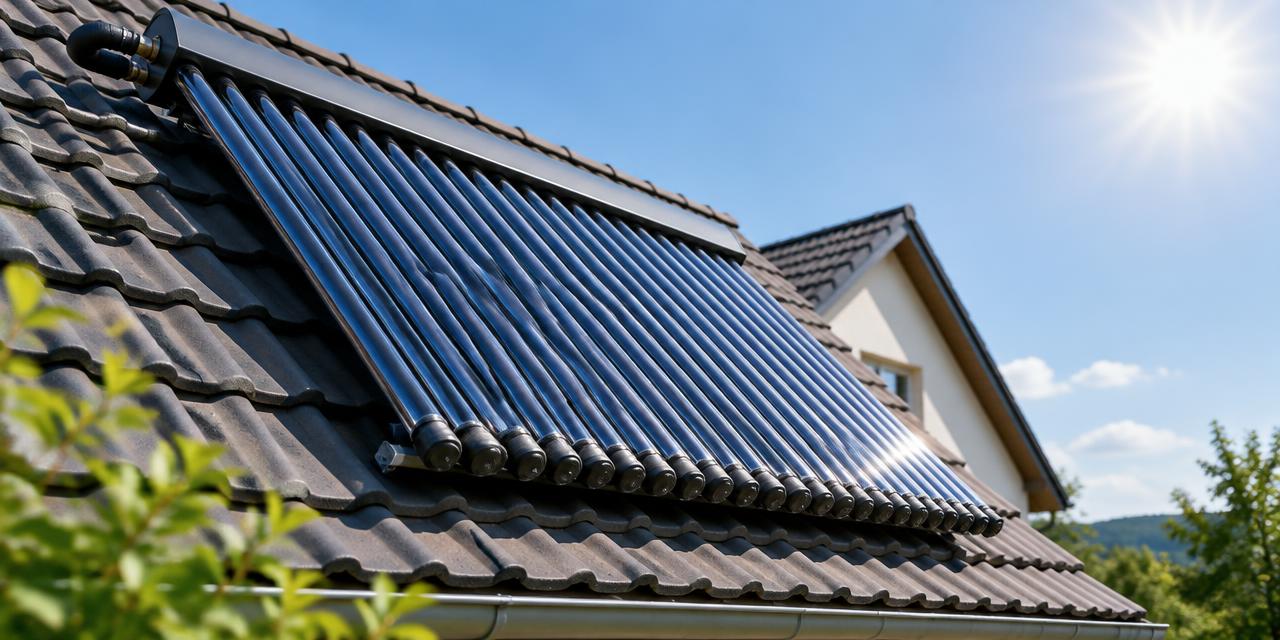
The choice between glazed flat plate collectors and vacuum tube collectors is the first major technical decision.
Flat plate collectors are robust and suitable for common hot water needs, while tube models offer higher efficiency in low light or during intermediate seasons.
Your project must also define whether the system is exclusively for domestic hot water production or includes heating support.
It is crucial to note that combining solar collectors with a heat pump requires a rigorous sizing study to ensure the hydraulic consistency of your installation.
The range of materials and architectural integration also influence the final result. Collectors can be mounted on top of the roof or integrated directly into the plane of the roof, which is often preferable for aesthetic or heritage reasons.
Remember that solar thermal collectors generally cover a large part of hot water in summer. The storage tank volume must be calculated precisely based on the number of occupants and the installed surface area to avoid energy waste.
Lausanne has a diverse building stock, with about 24% being single-family homes, many of which were built in eras requiring special vigilance.
For buildings prior to the 1990s, searching for hazardous substances, particularly asbestos in old insulation or seals, is an essential step before any work on the networks.
The condition of your roof and its supporting structure must be checked to ensure it can support the weight of the solar collectors and necessary fixings.
The overall thermal insulation of your house must also be taken into account so you don't invest in a high-performance renewable generation that would be lost through major thermal bridges.
The existing heating network plays a key role in the feasibility of solar support. A low-temperature distribution system is ideal for maximizing the efficiency of the panels.
If your building is old, the condition of the risers and the hot water tank must be evaluated, as a modern solar installation requires compatibility with recent regulation equipment.
Using local professionals is highly recommended to diagnose these critical points typical of the Vaud building stock, ensuring your renewable energy project integrates perfectly with the technical specifics of your home while respecting its existing structure.
This guide does not establish a permit exemption. If your building or area is protected, check the constraints specific to your project.
In addition, the Lausanne Industrial Services offer a municipal flat-rate of 4,000 CHF, which can be combined with the cantonal aid, for installations on existing buildings.
The order of steps is imperative : you must imperatively submit your aid request before starting work. Any request filed after the construction site has started will be systematically rejected by the instructing bodies.
Tax-wise, the Vaud law allows the deduction of investments aimed at saving energy up to 100%. These expenses concern the replacement of obsolete installations or the addition of new renewable technologies.
If you cannot deduct all costs during the investment year, the balance can be carried forward to the following two tax periods. However, you can only benefit from these deductions if you do not choose the flat-rate deduction for the building.
If you have received subsidies, these must be deducted from the costs incurred, as only your actual participation in the final bill is tax-deductible.
The realization of a solar thermal project follows structured steps that guarantee the quality of the final result. Everything begins with a feasibility study and the application for subsidies from cantonal and municipal authorities.
Once these fundings are validated, the choice of equipment is finalized according to actual needs. The next phase concerns administrative procedures, including the simplified building permit procedure if necessary, and validation by urban planning services.
It is recommended to plan this period in advance as it conditions the construction start date. Once authorizations are obtained, material ordering can be launched.
The installation itself is generally fast, but planning must take into account weather conditions to facilitate work for installers on the roof.
Although there are many frost days in Lausanne, spring or summer periods are often preferred to minimize heating interruptions, although work is feasible all year round.
After the installation of panels and commissioning of hydraulic systems, a performance test and training on regulation are provided to you.
The project ends with the acceptance of the work, an ideal time to check compliance with the initial estimate and ensure proper overall operation.
The success of your project relies on careful preparation to avoid common pitfalls. Never start work before receiving written confirmation of your municipal and cantonal grant applications.
A classic error is neglecting the condition of the roof : ensure it is in good condition before adding a heavy installation. Systematically check the compatibility of your existing storage tank with the new solar needs.
Do not forget to include a serious sizing study, especially if you plan to couple solar with a heat pump. Poor sizing can lead to system inefficiency in winter.
Here is your checklist for requesting quotes : 1. Check if your building is protected in the Vaud architectural census. 2. Request a global energy diagnostic to justify your technology choice. 3.
Ensure installers are certified to install this type of equipment. 4. Obtain at least three detailed quotes allowing a clear comparison of services. 5. Validate with your installer the position of the collectors for optimal sunshine without shading. 6.
Ensure the quote includes future maintenance. 7. Check the suitability between the collection surface and your hot water consumption habits.
A solar thermal installation, well-designed and properly installed, requires little maintenance, but this is crucial to ensure its durability.
It is advisable to check the pressure of the heat transfer circuit and the condition of the heat transfer fluids every few years by a qualified professional.
This preventive control prevents clogging of heat exchangers or premature degradation of internal components.
Cleaning the collector glass can be done if dust or dirt accumulation becomes significant, although Lausanne rains generally ensure good natural cleanliness. A well-maintained installation can work effectively for several decades.
Sustainability also involves performance tracking. It is recommended to record seasonal yields to identify any abnormal drop in efficiency, a possible sign of a fault in the regulation or a minor leak.
In a city like Lausanne, where the climate varies, the responsiveness of the control system is an asset. In case of need for repair, call a local company that knows the peculiarities of your installation and can intervene quickly.
A maintenance contract can guarantee the durability of your investment and ensure that your system contributes actively, in the long term, to the municipality's ambitious energy goals.
1. Estimate
Set a budget range with the estimator.
2. Grants
Apply before work starts.
3. Quotes
Compare at least 3 quotes.
4. Permit
Check with the municipality whether a permit is needed.
5. Works
Follow the site and do a written handover.
Flat contribution or per m² of collectors.
Grants for solar thermal systems (hot water, heating support).
www.leprogrammebatiments.chForfait communal de 4'000 CHF
Subvention forfaitaire des Services Industriels de Lausanne pour les installations solaires thermiques sur bâtiment existant, cumulable avec l'aide cantonale vaudoise.
www.lausanne.chCheck amounts and conditions with the provider before signing: apply before work starts in most cases.
1005 Lausanne · about 1.5 km
Atelier LTC is a Lausanne-based cooperative specializing in heating systems, solar thermal installations, and sheet metal work.
atelierltc.ch1005 Lausanne · about 1.5 km
Specialist in heating systems, heat pumps, sanitary services, and solar thermal installations with 24/7 emergency service in Lausanne and Zurich regions.
sanicalor.ch1003 Lausanne · about 2.2 km
Lausanne-based engineering and general contractor specializing in energy-efficient renovations, HVAC, building envelopes, and solar systems.
constech.ch1003 Lausanne · about 2.2 km
RT Réseaux thermiques SA specializes in energy services, renewable energy, and thermal network heating solutions.
rtsystem.chSuggestions from the commercial register by distance and activity. Not an endorsement or partnership.
Yes, they work even in diffuse light, although the yield is reduced. Vacuum tube collectors are more efficient in these conditions than flat plate collectors.
It is possible, but you must check the roof structure and asbestos before any installation. A preliminary study by a professional is strongly recommended.
This municipal grant is intended for installations on existing buildings. It is necessary to submit the application before starting work to benefit from it.
Solar thermal produces heat for hot water and heating. Solar photovoltaic converts radiation into electricity.
The procedure is often simplified or exempted from a permit, unless the building is protected. Always check with the municipal services before starting.
Yes, energy saving investments are 100% deductible from Vaud taxes. This only applies if you do not choose the maintenance flat-rate.
No, they serve as support. A conventional heating system remains necessary for periods of extreme cold and low sunshine.
Estimated solar yield
1'199 kWh/kWc/an
toit ~30° sud, PR 0.8, estimation
Altitude
493 m
Heating degree days
2'914 Kj/an
20/12 °C
Frost days
53 jours/an
Solar irradiation
1'363 kWh/m²/an
horizontal
Winter design temperature
-4.8 °C
1er percentile des minimales
Mean temperature
11.1 °C
Source : Open-Meteo Historical Weather API (réanalyse ERA5, moyenne 2015-2024) · swisstopo – service d'altitude (MNT)
Source : lausanne.ch
These rules apply across the whole canton, not only in this town.
Permits
Tax deductions
Source : Règlement sur la déduction des frais relatifs aux immeubles privés (RDFIP)