
Canton
Solar thermal — Buildings Programme (VD)
Flat contribution or per m² of collectors.
Grants for solar thermal systems (hot water, heating support).
www.leprogrammebatiments.chSolar water heating · Pully
At a glance
Small project
CHF 10'100 – CHF 23'600
Typical project
CHF 13'000 – CHF 30'200
Large project
CHF 17'800 – CHF 41'000
| Project | Quantity | Low | High | Per unit |
|---|---|---|---|---|
| Small project | 3 m² | CHF 10'100 | CHF 23'600 | CHF 5'500 |
| Typical project | 6 m² | CHF 13'000 | CHF 30'200 | CHF 3'500 |
| Large project | 11 m² | CHF 17'800 | CHF 41'000 | CHF 2'600 |
Computed with our estimator for Pully (regional factor included), standard finish. Only the project size changes.
Included
Not included
In Pully, the federal building register lists 1'930 residential buildings and 10'205 dwellings. These municipal benchmarks help put your home in context, but do not replace an individual assessment.
69 % built before 1980
Construction year does not reveal past renovations: check the current insulation condition.
53 % · Gas
This distribution describes recorded buildings, not your system's consumption or efficiency.
| Energy | Heating | Hot water |
|---|---|---|
| Gas | 53 % | 45.5 % |
| Heating oil | 37 % | 34.8 % |
| District heating | 1 % | 0.4 % |
| Heat pump | 6 % | 5.2 % |
| Electricity | 2 % | 4.2 % |
| Wood | 1 % | 0.8 % |
| Solar thermal | 0 % | 6.1 % |
Each line gives the share of buildings using that energy, separately for heating and for hot water. The two columns do not always reach 100%: some buildings combine two systems, or reported none.
A standard non-condensing boiler is usually older and less efficient.
11.8 % of buildings mix housing with shops or offices.
For your renovation projects in Pully, RegBL figures provide essential benchmarks. With 6 buildings identified as protected heritage out of 126 known properties, contacting the municipality early is vital to secure your permits. The median house volume is 1165 m3 according to SIA 416, which is crucial for scaling your insulation works or heating system upgrades. Please note that data coverage is partial, as the volume is only measured for 126 houses out of 612 recorded in the municipality. These metrics help you assess the scale of your construction work and accurately estimate renovation costs for your home.
Source : Registre fédéral des bâtiments et des logements (RegBL), OFS, 2026. Existing residential buildings; percentages of recorded values.
Pully benefits from favorable sunshine, making solar thermal particularly relevant for meeting your domestic hot water needs.
At an altitude of 426 meters and with a temperate climate, installing collectors significantly reduces reliance on fossil fuels for most of the year.
Solar thermal collectors generally cover a large portion of summer hot water needs, optimizing your annual energy consumption. The city's commitment, as a certified Energy City, actively encourages this transition.
The ideal time to undertake this work is often when replacing your boiler or during a comprehensive renovation of your heating system.
It is strategically wise to plan this work before the significant frost periods, with an average of 44 frost days per year, to ensure optimal installation before winter. Early planning allows for better integration of the system into the existing structure.
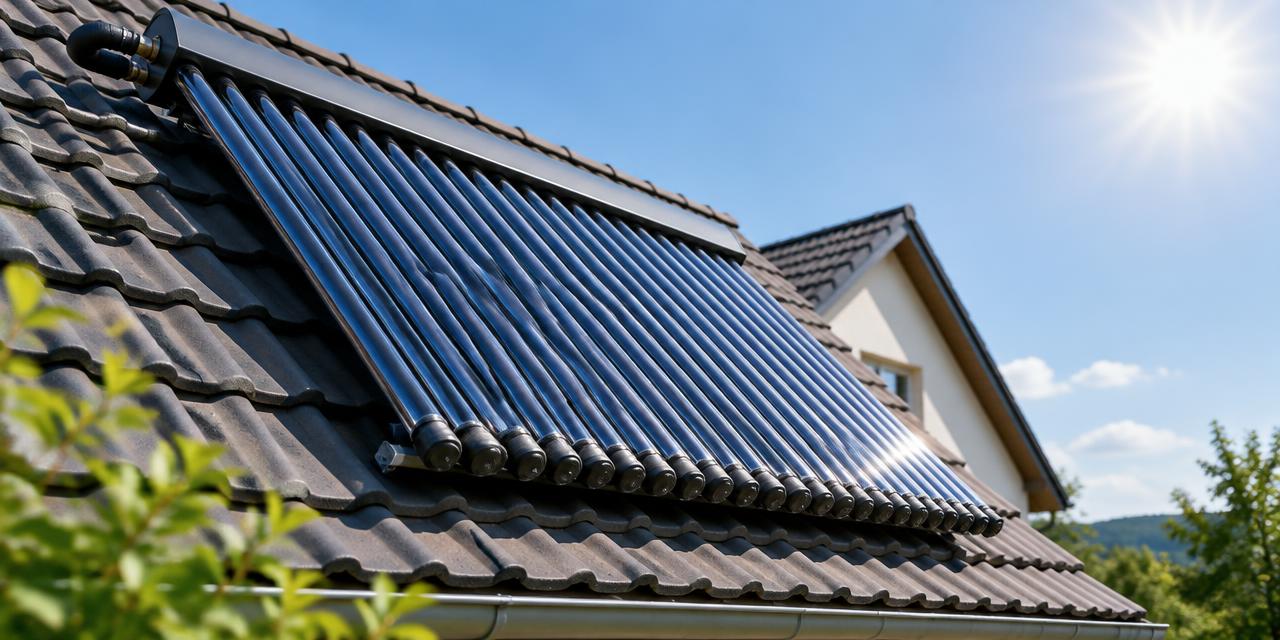
The sizing and choice of collectors are crucial to the success of your installation. You must choose between flat plate collectors, often used for hot water, and evacuated tube collectors, which are more efficient in cold weather.
The choice will depend on your specific hot water needs and available roof space. Combining collectors with a heat pump requires a rigorous sizing study to ensure optimal efficiency year-round, especially during days of intense cold.
There are different quality levels depending on the materials and desired durability. Forced circulation systems, unlike thermosiphon systems, offer greater flexibility for roof installation.
It is essential to engage a qualified professional capable of analyzing the slope and orientation of your roof to maximize performance.
A preliminary thermal study helps validate the best technical and economic compromise while ensuring the long-term viability of your investment.
Pully's building stock consists of structures from a wide variety of eras. If your house was built before 1990, special vigilance is required regarding the potential presence of asbestos in construction materials or insulation.
When installing collectors, it is necessary to check the condition of your roof, its watertightness, and its structural capacity to support the weight of the installation.
Existing distribution networks must also be compatible with the new solar system to avoid unnecessary energy loss.
6 °C, makes it essential to properly insulate the pipes transporting the heat transfer fluid to prevent external thermal losses.
For older houses, prior energy renovation of the building envelope can greatly improve the overall performance of the solar installation.
It is advisable to have a technical diagnosis carried out by a specialized firm that will identify any constraints related to your specific structure before any detailed planning.
This guide does not establish a permit exemption. If your building or area is protected, check the constraints specific to your project.
It is imperative to submit your application before starting the work, otherwise, you may lose your right to financial aid. Be sure to consult the official website to know the specific eligibility criteria for your project.
Regarding taxation, investments aimed at saving energy are tax-deductible. The deduction rate is 100% of the costs borne by the owner.
If the cost of the work exceeds your net taxable income, it is possible to carry over the balance to the next two tax periods. Note, however, that you cannot combine this deduction with the flat-rate deduction for maintenance expenses.
This is an important annual choice to make when filing your tax return, taking into account that subsidies already received must be deducted from the total costs.
The execution of a solar project follows several key stages. It all begins with a feasibility study and the subsidy application. Once this is validated and permits are obtained, the technical planning phase can begin. The choice of craftsmen is crucial.
The construction period should be chosen to minimize inconvenience.
Although no season is strictly prohibited, it is preferable to avoid periods of intense frost for exterior work on the roof, facilitating the work of installers and ensuring secure commissioning.
The construction site generally begins with roof preparation, followed by the installation of mounting systems and the collectors themselves. Next, the hydraulic connection to the storage tank and your existing heating system is carried out.
The pressure test, filling the circuit with heat transfer fluid, and commissioning complete the intervention.
Good construction oversight ensures your installation meets standards, guaranteeing the performance and durability of your new renewable energy source.
Avoid classic mistakes by not starting your work before receiving confirmation of your subsidy. Another common mistake is neglecting the analysis of the roof structure's condition before placing heavy loads on the roof.
Ensure that the installer provides a sizing study that takes into account your actual needs and not an overestimated one. Also, check that the chosen components are of high quality to avoid premature maintenance costs.
Before requesting quotes, prepare your checklist : check the date of your last roof renovation, examine the insulation level of your house, gather your heating system plans, identify if your building is protected or in a heritage area, and list your annual heating bills.
By asking precise questions about the warranty of the collectors and the expected performance when requesting quotes, you ensure that you select the most reliable provider.
This rigorous preparation is the key to the success and profitability of your installation.
1. Estimate
Set a budget range with the estimator.
2. Grants
Apply before work starts.
3. Quotes
Compare at least 3 quotes.
4. Permit
Check with the municipality whether a permit is needed.
5. Works
Follow the site and do a written handover.
Flat contribution or per m² of collectors.
Grants for solar thermal systems (hot water, heating support).
www.leprogrammebatiments.chCheck amounts and conditions with the provider before signing: apply before work starts in most cases.
1005 Lausanne · about 3.8 km
Atelier LTC is a Lausanne-based cooperative specializing in heating systems, solar thermal installations, and sheet metal work.
atelierltc.ch1005 Lausanne · about 3.8 km
Specialist in heating systems, heat pumps, sanitary services, and solar thermal installations with 24/7 emergency service in Lausanne and Zurich regions.
sanicalor.ch1003 Lausanne · about 4 km
Lausanne-based engineering and general contractor specializing in energy-efficient renovations, HVAC, building envelopes, and solar systems.
constech.ch1003 Lausanne · about 4 km
RT Réseaux thermiques SA specializes in energy services, renewable energy, and thermal network heating solutions.
rtsystem.chSuggestions from the commercial register by distance and activity. Not an endorsement or partnership.
Solar thermal is ideal for hot water but usually acts as a supplement. For full heating, a hybrid system with a heat pump is often required.
The system works thanks to global radiation, not just in direct sunlight. Even with cloudy skies, the collectors capture the necessary energy to preheat water.
In Pully, the procedure is simplified. However, if your building is protected, an authorization is still necessary to guarantee the exterior appearance.
If the mountings are correctly installed by a qualified professional, there is no risk. The seal must be checked before any installation.
Yes, because modern systems use antifreeze fluids. Annual performance remains high despite winter cold spells.
You can deduct the actual costs remaining after subtracting subsidies. However, it is not possible to combine the energy deduction with the flat-rate deduction.
A periodic check every few years is enough to verify the seals and the level of the heat transfer fluid. This ensures a long life for your system.
Estimated solar yield
1'199 kWh/kWc/an
toit ~30° sud, PR 0.8, estimation
Altitude
426 m
Heating degree days
2'776 Kj/an
20/12 °C
Frost days
44 jours/an
Solar irradiation
1'363 kWh/m²/an
horizontal
Winter design temperature
-4.2 °C
1er percentile des minimales
Mean temperature
11.6 °C
Source : Open-Meteo Historical Weather API (réanalyse ERA5, moyenne 2015-2024) · swisstopo – service d'altitude (MNT)
Source : Pully.ch - Energie
These rules apply across the whole canton, not only in this town.
Permits
Tax deductions
Source : Règlement sur la déduction des frais relatifs aux immeubles privés (RDFIP)