
Solartech concept SA
1005 Lausanne · about 3.8 km
Lausanne-based company specializing in the installation of photovoltaic panels, battery storage, and heat pumps.
solartech-group.chHome solar battery · Pully
At a glance
Small project
CHF 4'400 – CHF 10'000
Typical project
CHF 7'900 – CHF 16'900
Large project
CHF 13'600 – CHF 28'000
| Project | Quantity | Low | High | Per unit |
|---|---|---|---|---|
| Small project | 5 kWh | CHF 4'400 | CHF 10'000 | CHF 1'300 |
| Typical project | 10 kWh | CHF 7'900 | CHF 16'900 | CHF 1'200 |
| Large project | 18 kWh | CHF 13'600 | CHF 28'000 | CHF 1'100 |
Computed with our estimator for Pully (regional factor included), standard finish. Only the project size changes.
Included
Not included
In Pully, the federal building register lists 1'930 residential buildings and 10'205 dwellings. These municipal benchmarks help put your home in context, but do not replace an individual assessment.
69 % built before 1980
Construction year does not reveal past renovations: check the current insulation condition.
53 % · Gas
This distribution describes recorded buildings, not your system's consumption or efficiency.
| Energy | Heating | Hot water |
|---|---|---|
| Gas | 53 % | 45.5 % |
| Heating oil | 37 % | 34.8 % |
| District heating | 1 % | 0.4 % |
| Heat pump | 6 % | 5.2 % |
| Electricity | 2 % | 4.2 % |
| Wood | 1 % | 0.8 % |
| Solar thermal | 0 % | 6.1 % |
Each line gives the share of buildings using that energy, separately for heating and for hot water. The two columns do not always reach 100%: some buildings combine two systems, or reported none.
A standard non-condensing boiler is usually older and less efficient.
11.8 % of buildings mix housing with shops or offices.
For your renovation projects in Pully, RegBL figures provide essential benchmarks. With 6 buildings identified as protected heritage out of 126 known properties, contacting the municipality early is vital to secure your permits. The median house volume is 1165 m3 according to SIA 416, which is crucial for scaling your insulation works or heating system upgrades. Please note that data coverage is partial, as the volume is only measured for 126 houses out of 612 recorded in the municipality. These metrics help you assess the scale of your construction work and accurately estimate renovation costs for your home.
Source : Registre fédéral des bâtiments et des logements (RegBL), OFS, 2026. Existing residential buildings; percentages of recorded values.
In Pully, with an altitude of 426 m and significant annual global solar irradiation, solar potential is a valuable resource. The city, labeled Energy City since 2017, actively encourages energy transition through the Ecowatt program.
Installing a storage battery is particularly relevant if your photovoltaic system produces a surplus that you do not consume during the day.
With 2776 heating degree-days per year, energy demand is constant, and storing produced electricity allows for better coverage of your nighttime needs.
The ideal time to install a storage system is during the review of your photovoltaic installation or if you notice your self-consumption rate is low.
During the winter period, when heating is in high demand, having a reserve allows for better management of household energy.
By anticipating this work, you fully align with the goals of the City of Pully Energy Concept, aiming to rationalize consumption and promote the use of renewable energies within the municipal territory.
The choice of a battery depends primarily on your actual consumption profile in the evening and at night, and not just on the power installed on your roof. A battery is useful if your solar production significantly exceeds your daytime consumption.
It is essential to check technical compatibility with your existing inverter before any purchase, as hybrid systems or AC-coupled solutions offer different flexibility depending on the age of your system.
Lithium iron phosphate (LiFePO4) technologies are now the standard for their durability and safety. There are different levels of quality regarding the allowed depth of discharge and the number of guaranteed cycles.
It is advisable to consult technical data sheets to favor equipment with a long lifespan.
Finally, sizing must remain consistent : too large a capacity is an unnecessary investment, while too small a capacity will not allow you to cover your essential nighttime electricity needs.
The building stock in Pully is varied, ranging from old villas to more recent constructions.
For buildings dating from before 1990, caution is required during any technical intervention, particularly regarding the state of electrical installations and the possible presence of old materials.
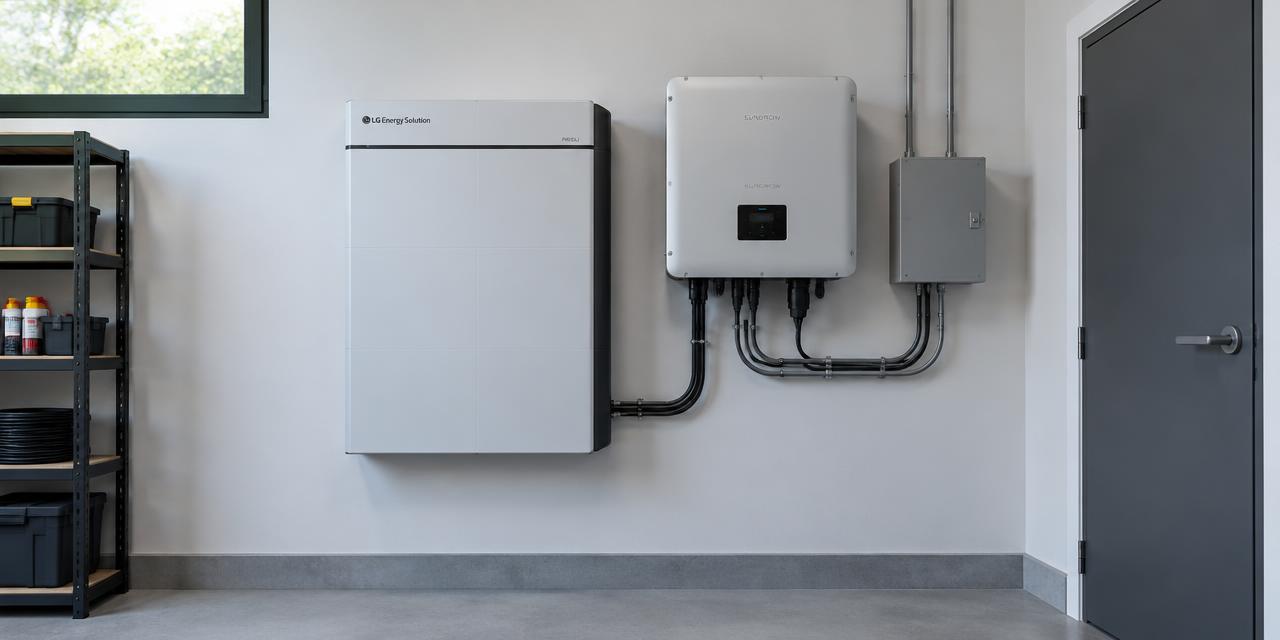
If you are planning integration in a basement or garage, ensure that the space is ventilated and that the temperature remains moderate, as solar storage batteries are sensitive to extreme thermal conditions.
The thermal insulation of your house indirectly influences your storage need., via a heat pump) can be better managed by a battery. It is recommended to check the state of the electrical panel during the feasibility study.
An update to standards may be required before installing the storage system. In case of doubt, hire a qualified electrician to validate that your current grid will support the addition of a storage unit without risk of overload or technical failure.
This guide does not establish a permit exemption. If your building or area is protected, check the constraints specific to your project.
These investments concern the replacement of obsolete installations or the addition of new elements, such as a storage battery in an existing building., after deducting any subsidies received.
A crucial aspect of taxation is the handling of carry-forwards. If your investments cannot be fully deducted during the year they are incurred, the balance can be carried forward over the next two tax periods.
Note that this option is exclusive : if you choose to deduct actual costs including your energy investments, you cannot claim the flat-rate deduction for the maintenance of your property during the same period.
It is highly recommended to plan your work and check your tax intentions with your advisor before starting the process, as the rules for cumulation are strict.
The execution of a storage battery project unfolds in several logical stages. After validating your quote, the first phase consists of an in-depth technical study of your existing electrical installation.
Once the material is ordered, the physical installation generally requires only a short on-site intervention by qualified professionals.
It is preferable to schedule this work outside of periods of extreme cold, with Pully recording an average of 44 frost days per year, to facilitate access and technical handling that can sometimes be delicate outdoors or in unheated areas.
The commissioning includes configuring the energy management software and performing functional tests with your inverter. Once these tests are completed, the final inspection marks the end of the process.
It is important to allow sufficient time for these software configuration steps, which ensure the optimal performance of your battery. By anticipating your needs, you ensure a smooth transition to increased energy autonomy without disrupting your daily life.
The most common error is underestimating the necessary capacity or unnecessarily oversizing the system. Take the time to analyze your actual consumption records before asking for quotes.
A battery is useful if your solar production significantly exceeds your daytime consumption, never forget that. Before validating a technical choice, systematically ensure the compatibility of the battery model with your current inverter.
Here is a checklist to effectively prepare : check first if your photovoltaic system is sufficiently productive; ask a professional to measure your actual nighttime consumption; validate the space available in a tempered and ventilated room; ensure that your electrical panel complies with current safety standards; check with the municipality if any heritage restrictions apply to your building; compare several quotes clearly detailing the equipment, installation, and commissioning; finally, confirm that the installer provides training on the use of the management software.
1. Estimate
Set a budget range with the estimator.
2. Grants
Apply before work starts.
3. Quotes
Compare at least 3 quotes.
4. Permit
Check with the municipality whether a permit is needed.
5. Works
Follow the site and do a written handover.
No specific grant listed for this work. Maintenance tax deductions may still apply.
1005 Lausanne · about 3.8 km
Lausanne-based company specializing in the installation of photovoltaic panels, battery storage, and heat pumps.
solartech-group.ch1090 La Croix (Lutry) · about 5.3 km
Atmosclear SA specializes in the development and installation of renewable energy production units.
atmosclear.com1004 Lausanne · about 5.4 km
Company specializing in the installation of photovoltaic systems, battery storage solutions, and charging stations.
elec.ch1004 Lausanne · about 5.4 km
Fixide Power Systems Sàrl specializes in uninterruptible power supply systems and battery solutions for businesses and individuals throughout Switzerland.
fixide.chSuggestions from the commercial register by distance and activity. Not an endorsement or partnership.
Its profitability depends on your self-consumption rate. The more you use your own electricity rather than feeding it back into the grid, the faster you recoup your investment.
Modern lithium systems require practically no maintenance. An annual visual and software check by a professional is, however, recommended to ensure performance.
Generally, no authorization is required for an indoor installation. Check with the municipality to confirm that no local heritage rules apply.
It is better to install it in a tempered room. Exposure to extreme temperatures decreases the lifespan and efficiency of the cells.
Self-consumption is the portion of your solar production that you consume directly on-site. The battery allows you to increase this portion by shifting the use of the surplus.
Yes, investments for saving energy are 100% deductible. You can carry the balance over to the next two tax years.
Most problems are software communication errors between the battery and the inverter. A system update usually fixes these issues quickly.
Estimated solar yield
1'199 kWh/kWc/an
toit ~30° sud, PR 0.8, estimation
Source : Open-Meteo Historical Weather API (réanalyse ERA5, moyenne 2015-2024)
Source : Pully.ch - Energie
These rules apply across the whole canton, not only in this town.
Tax deductions
Source : Règlement sur la déduction des frais relatifs aux immeubles privés (RDFIP)