
Axians Suisse SA
1920 Martigny · about 0 km
Axians Switzerland (ETAVIS) provides electrical engineering services including the installation of photovoltaic systems, heat pumps, and energy storage solutions.
etavis.chHome solar battery · Martigny
At a glance
Small project
CHF 4'400 – CHF 10'000
Typical project
CHF 7'900 – CHF 16'900
Large project
CHF 13'600 – CHF 28'000
| Project | Quantity | Low | High | Per unit |
|---|---|---|---|---|
| Small project | 5 kWh | CHF 4'400 | CHF 10'000 | CHF 1'300 |
| Typical project | 10 kWh | CHF 7'900 | CHF 16'900 | CHF 1'200 |
| Large project | 18 kWh | CHF 13'600 | CHF 28'000 | CHF 1'100 |
Computed with our estimator for Martigny (regional factor included), standard finish. Only the project size changes.
Included
Not included
In Martigny, the federal building register lists 2'727 residential buildings and 11'916 dwellings. These municipal benchmarks help put your home in context, but do not replace an individual assessment.
47 % built before 1980
Construction year does not reveal past renovations: check the current insulation condition.
22 % · District heating
This distribution describes recorded buildings, not your system's consumption or efficiency.
| Energy | Heating | Hot water |
|---|---|---|
| Gas | 21 % | 14.2 % |
| Heating oil | 21 % | 16.6 % |
| District heating | 22 % | 16.3 % |
| Heat pump | 13 % | 8.8 % |
| Electricity | 18 % | 40.4 % |
| Wood | 5 % | 1 % |
Each line gives the share of buildings using that energy, separately for heating and for hot water. The two columns do not always reach 100%: some buildings combine two systems, or reported none.
A standard non-condensing boiler is usually older and less efficient.
11.6 % of buildings mix housing with shops or offices.
For homeowners in Martigny, official RegBL figures offer essential insights for renovation planning. With 4 heritage-protected buildings out of 2630 total, verify your property status and contact the municipality early to secure necessary permits. Regarding scale, data coverage is partial: out of 1453 houses, only 70 have volumes measured per SIA 416, with a median of 579 m3. This figure is critical for planning heating and insulation upgrades effectively. Please be aware that volume measurements are limited to a small subset of properties, and no records regarding the renovation year are currently available for this municipality.
Source : Registre fédéral des bâtiments et des logements (RegBL), OFS, 2026. Existing residential buildings; percentages of recorded values.
In Martigny, located at an altitude of 471 meters, the climate provides favorable sunlight with global irradiation estimated at 1423 kWh/m²/year. This geographical setup makes the installation of solar panels particularly relevant.
However, solar production is not always synchronized with your daily electricity consumption.
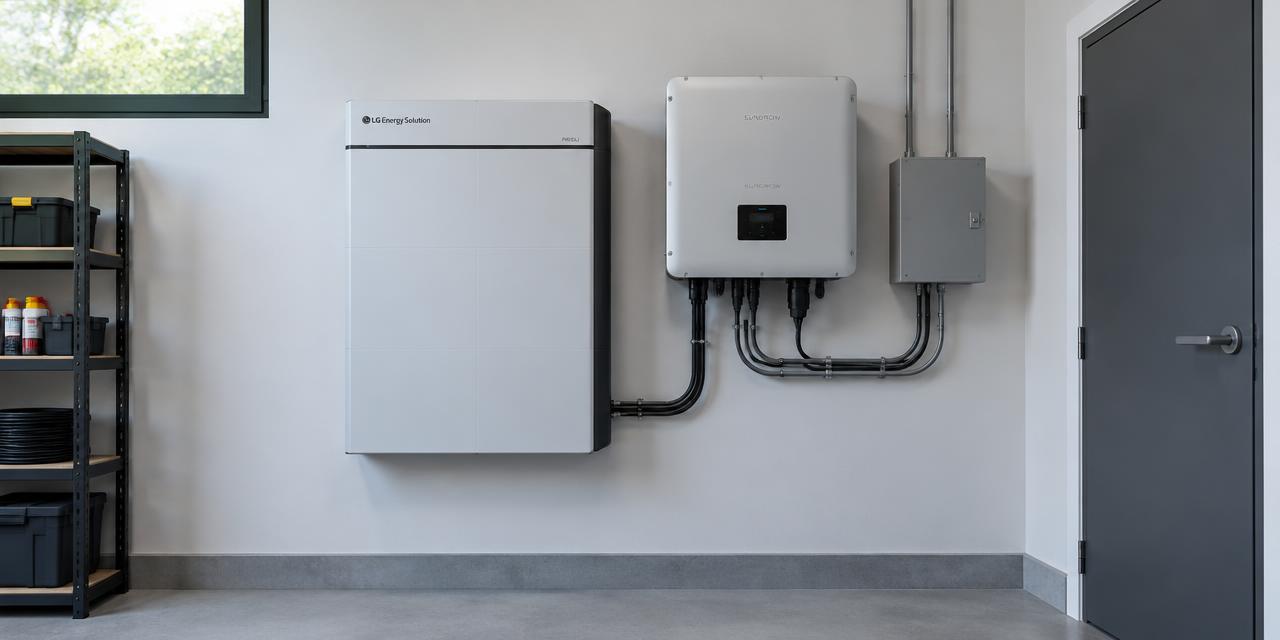
This is where a storage battery comes in : it allows you to store the surplus produced during sunny hours for use during your evening or early morning needs, when your system is inactive.
Considering these works is wise if your production significantly exceeds your daytime consumption.
5 °C, imposes specific technical conditions.2 °C, the system must be chosen for its robustness and ability to maintain performance despite thermal variations.
Undertaking this energy upgrade not only increases your independence from the grid but also optimizes the overall yield of your south-facing roof, with a yield estimated at 1252 kWh/kWp/year.
Sizing a storage system is a critical step that is not based on the power of your panels, but on your actual consumption during sunless periods.
A common mistake is oversizing the battery relative to the peak power of the installation, whereas the goal should be to cover evening and night-time needs.
Before any purchase, it is imperative to verify the technical compatibility between the chosen battery and your existing inverter.
Some systems require specific hybrid inverters, while others can be added via 'AC-coupling' to an installation already in service.
Cell technology, mostly lithium-ion today, offers different performance tiers depending on the desired lifespan, cycle count, and permissible depth of discharge.
There are also smart control options that allow you to prioritize battery charging over grid injection, or even manage other connected home appliances.
When selecting components, ensure you choose equipment suitable for local winter temperatures, as battery discharge performance can be affected by unconditioned or too-cold environments. Discuss capacity warranties over the long term with your installer.
The building stock in Martigny presents varied challenges depending on its age. For buildings prior to the 1990s, special attention must be paid to the compliance of existing electrical installations.
Adding a battery often requires upgrading the main electrical panel, as safety standards have evolved significantly. Additionally, it is necessary to assess the condition of the insulation of the technical room where the battery will be installed.
A room that is too cold or damp can reduce the energy efficiency and lifespan of the cells. If your building has been recently renovated, ensure that the wiring intended for photovoltaics allows for the easy integration of a storage module.
For older homes, space constraints in cramped technical rooms are common. Modern technology now allows for modular systems, often wall-mountable, but the load-bearing capacity of walls must be checked, especially for old masonry.
The risk of hazardous materials, such as asbestos in old insulation, must be considered during any heavy intervention on the electrical grid or wall penetrations.
In any case, a site visit by a qualified electrician is essential to assess whether the existing infrastructure can support the addition of an intelligent energy management system without requiring major adaptation work on the internal network.
If your property is located in one of these protected sectors, aesthetic constraints may be stricter, although this mainly concerns solar panels on the roof rather than the battery located inside.
It is highly recommended to consult municipal services before any planning to check if your building is subject to any particular approval as part of the future Zone Usage Plan (PAZ) and the Building and Zone Regulation (RCCZ).
For the indoor installation of a battery, no specific building permit is generally required, unless the works involve major structural modifications or an extension of the building.
However, you must ensure that the electrical installation complies with current standards and have the commissioning validated by the local grid operator. In areas of historical importance, the enhancement of buildings remains a priority.
We recommend contacting the municipality's construction desk to confirm the specifics of your plot. This proactive step helps to avoid any delays or refusals linked to a lack of knowledge of heritage protection zones.
It is crucial to follow a rigorous process to be eligible for potential aid: the application must be submitted and validated before the start of work. Any installation started before obtaining a grant confirmation risks being ineligible.
Taxation also plays an important role : in many cases, investments made to save energy and protect the environment can be deducted from taxable income, according to current cantonal rules.
The battery installation project in Martigny is broken down into several key stages. It all starts with the energy assessment and the choice of equipment with your installer. Once the quote is accepted and aid requested, the actual project begins.
The ideal season for this work is during periods when temperatures do not drop below freezing, to facilitate the handling of electronic equipment and avoid thermal constraints for battery storage.
In Martigny, although winters involve 50 frost days, indoor work can be scheduled outside of peak cold periods if necessary, to ensure optimal comfort during system installation.
The work generally lasts a few days. It includes preparation of the support, installation of storage units, electrical wiring, and integration into the existing management system.
Commissioning is the final step, including performance testing and validation by the grid operator. It is recommended to schedule the work during intermediate seasons to anticipate the period of maximum solar production.
Anticipating the schedule also ensures that components are available and that workers are free, avoiding unnecessary interruptions during phases of high solar production.
To succeed in your project in Martigny, first avoid neglecting the state of your existing electrical installation. Never order a battery without verifying its compatibility with your current inverter.
Do not underestimate the importance of the location : a room that is too cold will impair the battery's performance. Before requesting quotes, make sure you have your annual electricity consumption bills to properly size the capacity.
Also check if your building is subject to heritage protection rules. Always request several comparative quotes detailing labor and equipment.
Checklist : - Verify the age of your electrical installation. - Obtain an annual consumption diagnosis. - Confirm the available space in the technical room. - Ensure the system is compatible with the existing inverter.
- Check heritage protection zones in Martigny. - Request financial aid before any signature. - Choose a certified installer familiar with Valais specifics. - Plan for simple annual maintenance for the management system.
1. Estimate
Set a budget range with the estimator.
2. Grants
Apply before work starts.
3. Quotes
Compare at least 3 quotes.
4. Permit
Check with the municipality whether a permit is needed.
5. Works
Follow the site and do a written handover.
No specific grant listed for this work. Maintenance tax deductions may still apply.
1920 Martigny · about 0 km
Axians Switzerland (ETAVIS) provides electrical engineering services including the installation of photovoltaic systems, heat pumps, and energy storage solutions.
etavis.ch1920 Martigny · about 0 km
Martigny-based company founded in 1959, specializing in electrical installations, telephony, electronics, and telecommunications.
salaminsa.ch1921 Martigny-Croix · about 5.9 km
Baksi Services is a general contractor specialized in construction, comprehensive renovations, and project management in French-speaking Switzerland.
baksi.ch1907 Saxon · about 8.8 km
Électricité Sédunoise SA provides comprehensive services in electrical installations, high and low voltage, and solar solutions in Valais.
elsed.chSuggestions from the commercial register by distance and activity. Not an endorsement or partnership.
The lifespan depends on the technology, but it is generally between 10 and 15 years. Regular maintenance and installation in a temperature-controlled area extend this duration.
It depends on your technical configuration. Some systems offer a backup option, while others shut down for safety to prevent injecting current into the grid.
It is better to install the battery in a space with stable temperature. An unheated garage may be sufficient if temperatures remain moderate.
No, the installation must be carried out by a qualified electrician to ensure safety and compliance with standards. This is also a condition for subsidies.
The battery is linked to the inverter rather than the panels. You must verify that the inverter supports coupling with a storage system.
Profitability depends on your self-consumption rate. The more you consume your own energy, the faster the return on investment.
Physical installation generally takes one to two days. Timelines mainly depend on material availability and your installer's schedule.
Estimated solar yield
1'252 kWh/kWc/an
toit ~30° sud, PR 0.8, estimation
Source : Open-Meteo Historical Weather API (réanalyse ERA5, moyenne 2015-2024)