
Canton
Solar thermal — Valais
Per current schedule.
Valais support for solar thermal systems.
www.leprogrammebatiments.chSolar water heating · Martigny
At a glance
Small project
CHF 10'100 – CHF 23'600
Typical project
CHF 13'000 – CHF 30'200
Large project
CHF 17'800 – CHF 41'000
| Project | Quantity | Low | High | Per unit |
|---|---|---|---|---|
| Small project | 3 m² | CHF 10'100 | CHF 23'600 | CHF 5'500 |
| Typical project | 6 m² | CHF 13'000 | CHF 30'200 | CHF 3'500 |
| Large project | 11 m² | CHF 17'800 | CHF 41'000 | CHF 2'600 |
Computed with our estimator for Martigny (regional factor included), standard finish. Only the project size changes.
Included
Not included
In Martigny, the federal building register lists 2'727 residential buildings and 11'916 dwellings. These municipal benchmarks help put your home in context, but do not replace an individual assessment.
47 % built before 1980
Construction year does not reveal past renovations: check the current insulation condition.
22 % · District heating
This distribution describes recorded buildings, not your system's consumption or efficiency.
| Energy | Heating | Hot water |
|---|---|---|
| Gas | 21 % | 14.2 % |
| Heating oil | 21 % | 16.6 % |
| District heating | 22 % | 16.3 % |
| Heat pump | 13 % | 8.8 % |
| Electricity | 18 % | 40.4 % |
| Wood | 5 % | 1 % |
Each line gives the share of buildings using that energy, separately for heating and for hot water. The two columns do not always reach 100%: some buildings combine two systems, or reported none.
A standard non-condensing boiler is usually older and less efficient.
11.6 % of buildings mix housing with shops or offices.
For homeowners in Martigny, official RegBL figures offer essential insights for renovation planning. With 4 heritage-protected buildings out of 2630 total, verify your property status and contact the municipality early to secure necessary permits. Regarding scale, data coverage is partial: out of 1453 houses, only 70 have volumes measured per SIA 416, with a median of 579 m3. This figure is critical for planning heating and insulation upgrades effectively. Please be aware that volume measurements are limited to a small subset of properties, and no records regarding the renovation year are currently available for this municipality.
Source : Registre fédéral des bâtiments et des logements (RegBL), OFS, 2026. Existing residential buildings; percentages of recorded values.
Martigny benefits from a privileged geographical location at 471 meters above sea level with attractive annual global solar radiation for solar thermal energy.
5 °C and about 50 frost days, your installation will effectively contribute to covering hot water needs, particularly during months with optimal sunshine.
Undertaking these works is advisable during the renovation of your heat production system or when replacing a boiler for a coherent integration.
The building stock in Martigny, like many regions in Valais, presents an architectural diversity that requires a preliminary thermal study.
By considering local heating needs and the 2482 Kj/year heating demand, the integration of solar thermal energy helps reduce dependence on fossil fuels.
Planning this intervention before completely renewing your technical installations guarantees better synergy, ensuring that your storage and distribution system is perfectly sized to optimize every kilowatt-hour captured.
The sizing of a solar thermal installation depends mainly on the number of occupants and the available roof surface.
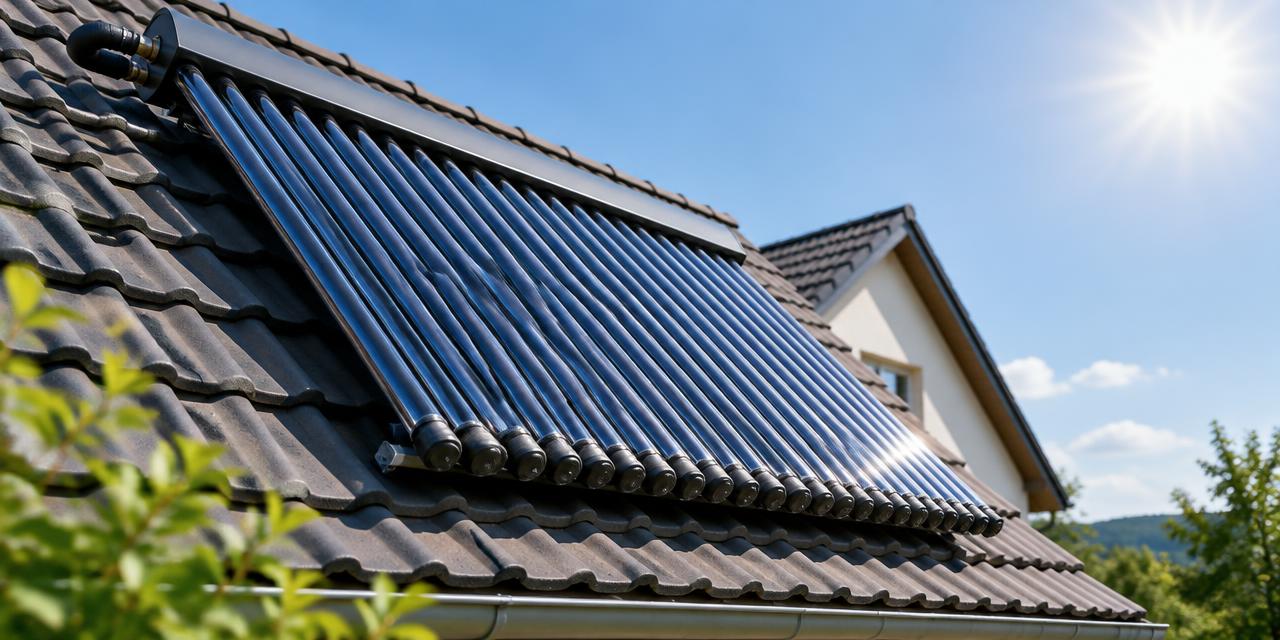
It is essential to distinguish between flat plate collectors and vacuum tube collectors, the latter offering higher efficiency in cold weather, which can be an advantage given local conditions.
The quality of materials, particularly the capacity of the storage tank, also influences overall performance. A rigorous sizing study is necessary if you plan to combine solar collectors with a heat pump to ensure optimal efficiency.
The range options vary depending on the sophistication of the control system and the level of pipe insulation. A well-designed system ensures a significant coverage of hot water needs in summer.
You must also consider visual integration on the roof, as solutions vary between overlay mounting or full integration. The choice of components should prioritize durability in the face of seasonal variations.
In advance, discuss with your installer the specifics of your building, such as precise orientation towards the south or potential obstacles to shading.
In Martigny, the building stock is heterogeneous. For buildings dating from before 1990, it is imperative to check for the potential presence of asbestos in building materials, particularly in insulation or certain façade elements, before any work on the roof.
Older structures often require verification of the roof's load-bearing capacity to support the additional weight of solar collectors. In addition, the state of existing distribution networks must be checked to ensure compatibility with new thermal components.
In more recent neighborhoods, thermal insulation is generally better managed, which facilitates the integration of solar systems without major energy loss. However, the complexity of current heating systems requires meticulous planning of the connection.
For any project, a comprehensive energy diagnostic is advised to identify whether building envelope improvement works should precede the solar installation.
By following these steps, you ensure increased longevity for your solar heating system, while avoiding additional costs linked to structural surprises during construction.
These data are expected to be integrated into the future Zoning Plan (PAZ) and the Construction and Zoning Regulations (RCCZ) by 2025.
Before any solar panel installation, it is paramount to check with the Martigny urban planning department whether your building is located in a protected zone or an ISOS perimeter, as aesthetic or conservation constraints could apply.
Although the sources do not indicate specific restrictive rules beyond the general protection of historical sites, the future homologation of the PAZ and RCCZ is a point of vigilance for any homeowner.
We strongly recommend that you consult the municipal authorities before submitting a permit application or ordering equipment.
They will be able to confirm the exact procedure to follow for your specific plot and validate the compliance of your project with the regulations in force, thus ensuring that your installation respects local requirements regarding the preservation of the urban environment.
It is imperative to follow the correct order of steps : you must file your subsidy application before the start of work. Any installation started or completed without prior agreement cannot benefit from cantonal financial support.
This rule ensures project compliance with established technical criteria.
To optimize your project, inquire about specific conditions for combining subsidies. Taxation related to energy renovations can also offer advantages, sometimes allowing maintenance costs or energy value improvements to be deducted from your income tax.
However, as each situation is unique, it is recommended to inquire with the cantonal tax administration or a specialized advisor.
Priority must always be given to verifying eligibility before entering into any contract with a company, to secure the financing of your solar investment.
A solar thermal project follows a structured sequence. Everything starts with the energy audit phase and the grant application, followed by obtaining the necessary municipal permits. Once funding is confirmed, the installer is chosen and equipment ordered.
Construction itself begins with roof preparation, installation of mounting systems, and collector installation.
Then comes the hydraulic connection to the storage tank and the commissioning of the control system, which requires precise adjustments to optimize yield.
The best time to carry out this work is ideally in the spring or late summer.
It is preferable to avoid periods of extreme cold, characterized in Martigny by about fifty frost days per year, to facilitate work on the roof and ensure commissioning under optimal conditions.
Adherence to these steps, from design to handover, ensures the long-term performance of your system. There are no fixed deadlines imposed by law, but careful planning allows for anticipating the availability of contractors and components.
Avoid the common error of sizing the installation without considering the actual hot water consumption of your household. Never neglect the step of checking local heritage constraints before incurring any expenses.
It is also risky to sign a contract before receiving confirmation of eligibility for financial aid. Checklist before your quotes: Check if your roof requires prior structural renovation. Ensure that the orientation of your roof slope is optimal.
List your precise hot water needs and the number of occupants. Check if you are in a protected area. Prepare your complete subsidy application. Ask your installer for a realistic yield simulation.
Do not focus solely on the immediate cost of the installation, but consider the durability and quality of the proposed after-sales service. An under-sized or poorly insulated installation will negate the expected benefits.
Ensure that the installer has the required skills to integrate solar thermal energy into your existing heating installation, especially if it includes a heat pump.
A transparent quote, including all steps from installation to connection, is an indicator of professionalism.
1. Estimate
Set a budget range with the estimator.
2. Grants
Apply before work starts.
3. Quotes
Compare at least 3 quotes.
4. Permit
Check with the municipality whether a permit is needed.
5. Works
Follow the site and do a written handover.
Per current schedule.
Valais support for solar thermal systems.
www.leprogrammebatiments.chCheck amounts and conditions with the provider before signing: apply before work starts in most cases.
1920 Martigny · about 0 km
Thermex SA is a company specializing in heating, ventilation, air conditioning, and renewable energy solutions for the sanitary sector.
thermex.ch1920 Martigny · about 0 km
DDS Sàrl, based in Martigny, specializes in water treatment, sludge removal for heating circuits, and descaling of sanitary installations.
dds-detartrage.ch1920 Martigny · about 0 km
Bestazzoni SA is a company based in Martigny specializing in sanitary installations, heating, ventilation, and heat pumps.
bestazzoni.ch1932 Les Valettes (Bovernier) · about 4.4 km
A family business operating since 1938, specializing in roofing, tinsmithing, facade work, heating, and sanitary installations.
jmsarrasin.chSuggestions from the commercial register by distance and activity. Not an endorsement or partnership.
Yes, they work even in cold weather, especially if the sky is clear. Although their efficiency is lower in winter, they provide part of the water preheating.
In Martigny, this depends on the heritage zone where your building is located. It is imperative to consult the urban planning department before taking any action.
A well-maintained installation can operate for 20 to 25 years. Regular checking of fluids and regulation is advised.
No, solar thermal energy is generally a complementary system for hot water. It does not replace a main heat source such as a boiler or heat pump.
Yes, Valais subsidies apply as soon as technical criteria are met. You just need to submit the file before starting the work.
It is highly recommended to maximize overall efficiency. An energy audit helps prioritize insulation work before the solar aspect.
All information and forms are available on the building program website. Consult them before hiring your installer.
Estimated solar yield
1'252 kWh/kWc/an
toit ~30° sud, PR 0.8, estimation
Altitude
471 m
Heating degree days
2'482 Kj/an
20/12 °C
Frost days
50 jours/an
Solar irradiation
1'423 kWh/m²/an
horizontal
Winter design temperature
-8.2 °C
1er percentile des minimales
Mean temperature
12.5 °C
Source : Open-Meteo Historical Weather API (réanalyse ERA5, moyenne 2015-2024) · swisstopo – service d'altitude (MNT)