
Grichting & Valterio Electro SA
1950 Sion · about 0 km
Company specializing in electrical installations, automation, security, and energy solutions in the Valais region.
grichting-valterio.chHome solar battery · Sion
At a glance
Small project
CHF 4'400 – CHF 10'000
Typical project
CHF 7'900 – CHF 16'900
Large project
CHF 13'600 – CHF 28'000
| Project | Quantity | Low | High | Per unit |
|---|---|---|---|---|
| Small project | 5 kWh | CHF 4'400 | CHF 10'000 | CHF 1'300 |
| Typical project | 10 kWh | CHF 7'900 | CHF 16'900 | CHF 1'200 |
| Large project | 18 kWh | CHF 13'600 | CHF 28'000 | CHF 1'100 |
Computed with our estimator for Sion (regional factor included), standard finish. Only the project size changes.
Included
Not included
In Sion, the federal building register lists 5'099 residential buildings and 21'572 dwellings. These municipal benchmarks help put your home in context, but do not replace an individual assessment.
50 % built before 1980
Construction year does not reveal past renovations: check the current insulation condition.
56 % · Gas
This distribution describes recorded buildings, not your system's consumption or efficiency.
| Energy | Heating | Hot water |
|---|---|---|
| Gas | 56 % | 45.3 % |
| Heating oil | 19 % | 18.3 % |
| District heating | 1 % | 1 % |
| Heat pump | 13 % | 7.5 % |
| Electricity | 8 % | 25.4 % |
| Wood | 4 % | 0.6 % |
| Solar thermal | 0 % | 1.2 % |
Each line gives the share of buildings using that energy, separately for heating and for hot water. The two columns do not always reach 100%: some buildings combine two systems, or reported none.
A standard non-condensing boiler is usually older and less efficient.
9.2 % of buildings mix housing with shops or offices.
When planning renovations in Sion, RegBL data provides essential benchmarks despite partial coverage. Regarding heritage, 14 buildings are officially protected out of 4882 listed, necessitating early contact with the municipality for permit applications. For house volume, a median of 677.5 m3 is available based on 118 measurements per SIA 416 standards, serving as a useful scale for calculating heating and insulation requirements. As most volume figures and renovation years remain unknown in the registry, professional on-site evaluation is still required to determine the actual scope of your project and ensure accurate cost estimations for your specific property renovation.
Source : Registre fédéral des bâtiments et des logements (RegBL), OFS, 2026. Existing residential buildings; percentages of recorded values.
The city of Sion benefits from a significant global irradiation of 1421 kWh/m²/year, making it a prime location for photovoltaics.9 °C and an altitude of 515 meters, the local climate favors stable solar yields.
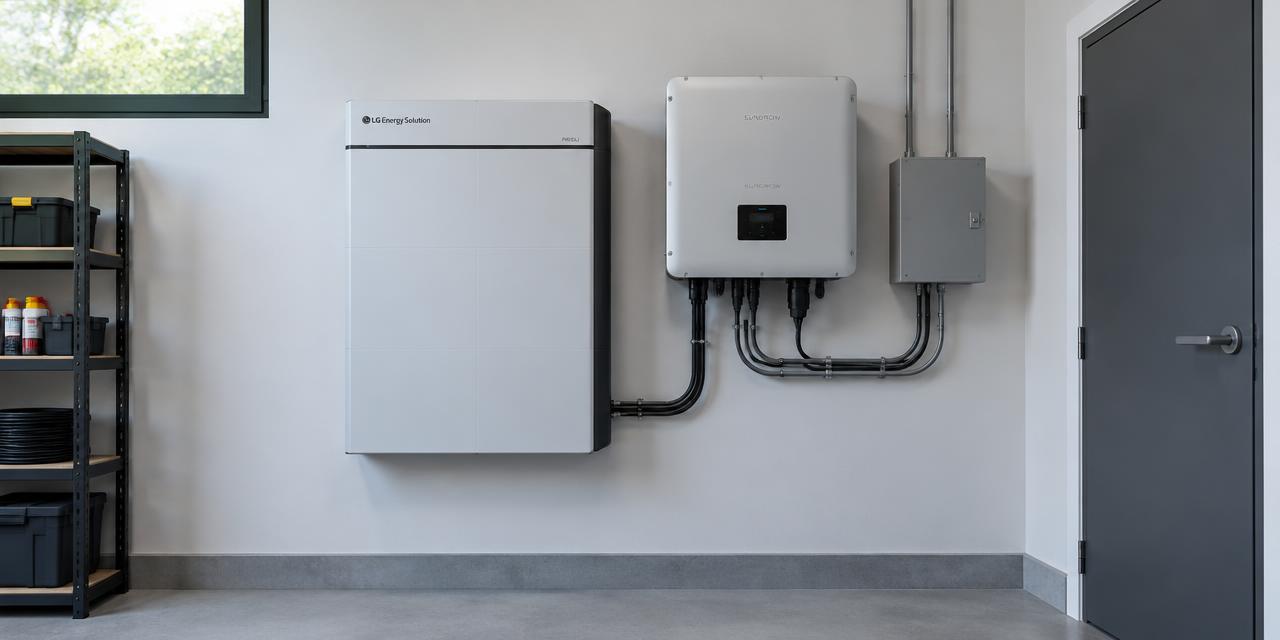
Installing a battery is particularly relevant if your solar production significantly exceeds your daytime consumption, allowing you to store the surplus for your evening needs.
The local context, driven by the Sion region Climate Plan (including Arbaz, Ayent, Grimisuat, Saint-Léonard, Savièse, Sion, and Veysonnaz), aims to reduce overall energy consumption.
By adding a battery to your existing setup, you align your home with these sustainability goals.
If you are renovating your roof or replacing an old heating system, this is the perfect time to add this storage capacity, thereby optimizing the total investment in your energy efficiency.
The sizing of your battery should be based on your actual evening consumption rather than just the peak power of your panels. A battery is unnecessary if oversized, as it will never be fully utilized.
It is essential to verify compatibility with your existing inverter: systems can be DC or AC coupled, a choice that depends heavily on your current configuration.
Current battery technologies, mainly based on lithium, offer different lifespans and depths of discharge. Some high-end models feature intelligent energy management functions, capable of prioritizing power-hungry appliances based on real-time sunlight.
When selecting, pay attention to the system's scalability, as your electricity needs may increase in the future, particularly with the installation of an electric vehicle charging station or a heat pump.
The building stock in Sion presents various challenges depending on the construction era.
For older buildings, especially those built before 1990, careful attention must be paid to materials such as asbestos when performing work on the electrical grid or load-bearing walls.
Furthermore, the overall thermal insulation of the building indirectly influences your storage needs, as a well-insulated house allows for better management of electric heating in the evening.
7 °C, the location of your battery must be carefully chosen. Install it in a temperate indoor space, as extreme temperatures affect battery chemistry and discharge capacity.
Household electrical grids in older buildings might require an upgrade to handle the load peaks induced by dynamic energy management.
It is advisable to commission a professional to conduct a preliminary audit of the existing electrical system before ordering any equipment.
For non-classified buildings located in protected zones, the project is generally authorized subject to adequate integration. Each request is subject to individual evaluation.
It is imperative to consult the urban planning department before launching your project, especially for sensitive hillside zones where increased requirements regarding color, surface, and shape regularity are imposed.
If your project includes an extension on a flat roof visible from above, be aware that this is generally prohibited. Ensure that your installation strictly respects the medieval aspect of the city.
For classification grades 4 and 4+, authorization is more accessible, but still requires compliance with local landscape integration criteria.
Currently, there are no specific aid programs mentioned as cumulative for storage batteries alone; therefore, you should inquire directly with the municipality about current communal programs under the Sion region Climate Plan.
Regarding taxation, it is recommended to check the possibilities of deducting maintenance and energy improvement costs in your tax return. Works aimed at saving energy are often deductible from income tax.
Keep all payment receipts and detailed invoices carefully. Before signing any contract with a company, ensure you know the available aid to avoid missing out on a subsidy opportunity, as conditions often evolve based on local political decisions.
The installation process of a solar system and its battery follows a rigorous sequence. The first step is a technical feasibility study. Once municipal authorizations are obtained, the equipment can be ordered.
The installation itself is relatively quick, focusing on installing electrical components and integrating them with your existing inverter.
Regarding seasonality, Sion records about 57 days of frost per year. It is preferable to avoid periods of intense cold for exterior roof work, as materials become brittle. Favor temperate periods in spring or autumn for more comfortable installation.
The final connection and commissioning require a qualified electrician to validate compliance with current standards. The total time depends on the availability of materials and your installer's schedule, so it is advisable to plan several months in advance.
The most common error is sizing the battery based on production power rather than consumption needs. Always check the battery's compatibility with your inverter before making any purchase.
Never neglect the location : a battery installed in an unheated garage will lose performance. Ensure the selected company has the necessary qualifications for electrical work.
Checklist before requesting quotes : 1. Check if your building is subject to heritage protection rules. 2. Obtain your actual annual electricity consumption. 3. Identify the ideal location for the battery in a temperate area. 4.
Request a check of your current electrical panel's compliance. 5. List potentially available local subsidies. 6. Require a detailed quote including installation and commissioning. 7.
Verify the manufacturer's warranty conditions regarding the battery capacity over the years.
1. Estimate
Set a budget range with the estimator.
2. Grants
Apply before work starts.
3. Quotes
Compare at least 3 quotes.
4. Permit
Check with the municipality whether a permit is needed.
5. Works
Follow the site and do a written handover.
No specific grant listed for this work. Maintenance tax deductions may still apply.
1950 Sion · about 0 km
Company specializing in electrical installations, automation, security, and energy solutions in the Valais region.
grichting-valterio.ch1950 Sion · about 0 km
OIKEN Solutions SA is a company specializing in electrical installations, home automation, and photovoltaic solar energy solutions.
oiken.ch1950 Sion · about 0 km
Valais-based company specializing in the manufacture and installation of modular, repairable solar storage batteries with a lifetime guarantee.
evolium.ch1950 Sion · about 0 km
swisspro specializes in electrical installations, building automation, and energy charging infrastructure solutions.
swisspro.chSuggestions from the commercial register by distance and activity. Not an endorsement or partnership.
It is not essential but becomes very useful if your production exceeds your daytime consumption. It allows you to store the surplus for use in the evening.
Favor a temperate indoor space, such as a laundry room or a technical room. Avoid unheated garages where winter temperatures affect performance.
Yes, each installation is evaluated individually, especially in protected zones or the old town. Consult the urban planning department before taking any action.
You must absolutely file your grant application before starting the work. Any request made after will generally not be accepted.
This is not automatic; precise technical compatibility must be verified. A professional will need to confirm the necessary coupling type.
Intense cold can harm battery capacity if it is located outside. Indoor installation in a temperate space ensures optimal efficiency.
Solar panels on visible flat roof annexes are generally prohibited in Sion. Check local rules before planning this location.
Estimated solar yield
1'250 kWh/kWc/an
toit ~30° sud, PR 0.8, estimation
Source : Open-Meteo Historical Weather API (réanalyse ERA5, moyenne 2015-2024)
Source : Sion.ch