
Domelec Sàrl
3960 Corin-de-la-Crête · about 0 km
Domelec Sàrl is a Valais-based company specializing in photovoltaic installations, battery storage, and optimized energy home automation.
domelec.chHome solar battery · Sierre
At a glance
Small project
CHF 4'000 – CHF 9'300
Typical project
CHF 7'400 – CHF 15'700
Large project
CHF 12'700 – CHF 25'900
| Project | Quantity | Low | High | Per unit |
|---|---|---|---|---|
| Small project | 5 kWh | CHF 4'000 | CHF 9'300 | CHF 1'200 |
| Typical project | 10 kWh | CHF 7'400 | CHF 15'700 | CHF 1'100 |
| Large project | 18 kWh | CHF 12'700 | CHF 25'900 | CHF 1'000 |
Computed with our estimator for Sierre (regional factor included), standard finish. Only the project size changes.
Included
Not included
In Sierre, the federal building register lists 2'768 residential buildings and 9'985 dwellings. These municipal benchmarks help put your home in context, but do not replace an individual assessment.
59 % built before 1980
Construction year does not reveal past renovations: check the current insulation condition.
64 % · Gas
This distribution describes recorded buildings, not your system's consumption or efficiency.
| Energy | Heating | Hot water |
|---|---|---|
| Gas | 64 % | 44.6 % |
| Heating oil | 20 % | 18.5 % |
| Heat pump | 5 % | 3.9 % |
| Electricity | 10 % | 31 % |
| Wood | 2 % | 0.7 % |
| Solar thermal | 0 % | 1.1 % |
Each line gives the share of buildings using that energy, separately for heating and for hot water. The two columns do not always reach 100%: some buildings combine two systems, or reported none.
A standard non-condensing boiler is usually older and less efficient.
6.5 % of buildings mix housing with shops or offices.
For your renovation plans in Sierre, RegBL data provides essential guidance, despite partial data coverage. With a median building volume of 502 m3 based on 27 units measured under SIA 416 standards, you can effectively scale heating or insulation upgrades. Regarding heritage protection, 4 out of the 77 recorded buildings are officially protected. It is vital to contact the municipality early in your planning phase to determine your property's status. This proactive step helps you navigate potential permit requirements and ensures your renovation project complies with local regulations concerning protected sites or historical preservation.
Source : Registre fédéral des bâtiments et des logements (RegBL), OFS, 2026. Existing residential buildings; percentages of recorded values.
Sierre benefits from a global irradiation of 1451 kWh/m²/year, making the municipality an excellent location for photovoltaics.3 °C and a solar yield estimated at 1277 kWh/kWc, installing panels is often profitable.
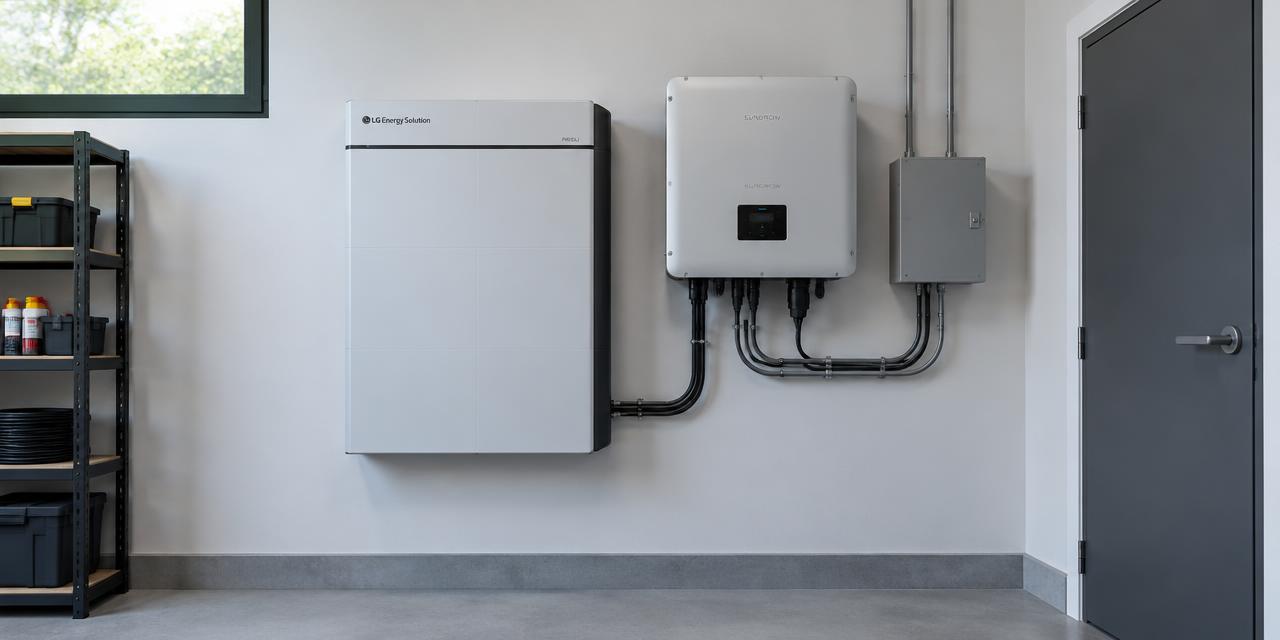
However, production concentrates during sunny hours, while domestic consumption peaks in the evening. Adding a battery helps smooth this curve by storing excess energy generated during the day for use after sunset.
The ideal time to consider this investment is either during the initial installation of your panels or when upgrading your existing electrical system. If your consumption significantly exceeds your daytime production, storage becomes a strategic lever.
Considering the 72 days of frost and the winter design temperature of -10 °C, intelligent energy management increases your home's autonomy and limits grid dependency during cold periods.
The sizing of your battery should be based on your actual night-time consumption rather than the raw power of your roof. Several battery technologies exist, with lithium-iron-phosphate (LiFePO4) being the most common for its durability and safety.
Storage capacity is expressed in kilowatt-hours (kWh). A common mistake is oversizing the system, which reduces overall profitability. Therefore, analyze your load profiles to choose a module consistent with your real needs.
Compatibility with your inverter is the second critical point. Ensure that the chosen model communicates perfectly with your existing installation. Some systems are modular, allowing for additional capacity to be added later if your needs evolve.
Options also include Energy Management Systems (EMS) that automatically optimize charging and discharging based on local weather and dynamic tariffs, providing increased comfort and better operational efficiency.
In Sierre, the building stock is diverse, ranging from old houses to recent constructions compliant with current energy standards. When installing a battery, the state of the internal electrical network is paramount.
For houses built before 1990, a thorough check of electrical installations is recommended before any intervention.
It is essential to ensure that the electrical panel can accommodate modern components without requiring a complete upgrade, which could impact the project's budget.
Furthermore, thermal insulation plays an indirect but major role. With 2988 Kj/year in heating requirements, better-insulated buildings consume less energy for thermal comfort, leaving more solar surplus available to charge the battery.
In older areas, it may be wise to couple the storage installation with a review of the building envelope's efficiency.
The configuration of cellars or garages, where batteries are often installed, must also comply with cantonal fire safety and ventilation regulations.
The city of Sierre, a recipient of the Energy City Gold label, actively encourages the energy transition. However, the installation of a home battery is considered an internal technical intervention.
As a general rule, it does not require a building permit in the strict sense if it does not alter the building's exterior appearance.
It is, however, imperative to contact the municipal planning department to validate your specific project, especially if your building is listed or located in a protected zone, in order to comply with current regulations.
In addition to the municipal administrative aspect, ensure you follow current safety standards for lithium-ion energy storage.
Grid connection must strictly be performed by a certified installer, capable of issuing the compliance documents required by the local grid operator.
These steps guarantee not only the safety of your installation but also ensure its technical and administrative acceptance for long-term operation in full compliance with regional requirements.
The golden rule for any grant application is to submit your file before the work begins. Any intervention started without prior approval risks disqualifying you from potential financial support.
Regarding taxation, inquire with the cantonal tax administration about possible deductions for investments related to energy efficiency and environmental protection.
These deductions can vary and must be documented precisely with paid invoices after the work is completed.
Keep a copy of all correspondence with municipal and cantonal authorities, as well as the technical specifications of the installed equipment, to justify the ecological nature of your investments in your annual tax returns.
The flow of a solar storage project generally follows a well-defined sequence. The first step involves obtaining an energy audit and comparative quotes from qualified companies. Once the choice is made, local administrative procedures must be finalized.
It is advisable to plan this work outside of periods of intense cold, although frost in Sierre (about 72 days per year) is not an insurmountable constraint for the installation itself, it is better to prefer intermediate seasons for better logistics.
After validation, the site work begins with site preparation, mounting supports, and electrical wiring connecting the system to your inverter.
Commissioning involves rigorous charging and discharging tests to verify communication with your home management system. Finally, project acceptance marks the end of the process.
Ensure you obtain complete documentation, including settings and maintenance protocols, upon handover of your new installation.
Never neglect to check the compatibility of your current inverter with the new battery system, as incompatibilities can lead to unforeseen costs.
It is imperative to assess your actual electricity needs during the evenings rather than relying solely on the peak power of your panels. Ensure you request several detailed quotes to compare the technical solutions offered by different installers.
Do not sign any contract before receiving written confirmation of your project's feasibility from municipal authorities.
Here is an essential checklist before starting your procedures: request an analysis of your actual annual consumption, verify that the installation site is dry and temperate, ensure the installer has local certification, check if you are eligible for subsidies, and demand a clearly defined manufacturer warranty.
Avoid choosing a battery solely based on its price; prioritize component quality and the reliability of after-sales service to ensure the longevity of your investment.
1. Estimate
Set a budget range with the estimator.
2. Grants
Apply before work starts.
3. Quotes
Compare at least 3 quotes.
4. Permit
Check with the municipality whether a permit is needed.
5. Works
Follow the site and do a written handover.
No specific grant listed for this work. Maintenance tax deductions may still apply.
3960 Corin-de-la-Crête · about 0 km
Domelec Sàrl is a Valais-based company specializing in photovoltaic installations, battery storage, and optimized energy home automation.
domelec.ch3963 Crans-Montana · about 4.7 km
Solartech Group provides sustainable energy solutions, including the installation of photovoltaic systems, battery storage, and heat pumps.
solartech-group.ch1958 Uvrier · about 9.4 km
ElectroSolar SA offers turnkey services for the installation and management of photovoltaic systems and battery storage.
electrosolar.ch1981 Vex · about 13.1 km
Solartechnology.ch Sàrl specializes in the development and installation of renewable energy systems, including photovoltaic and solar thermal solutions.
solartechnology.chSuggestions from the commercial register by distance and activity. Not an endorsement or partnership.
It is primarily useful if your solar production significantly exceeds your daytime consumption. This allows you to use your own energy at night.
Size the capacity based on your evening consumption, not the total panel power. An analysis of your profile is recommended.
Yes, always check compatibility with your existing inverter before purchasing. Any incompatibility would prevent the system from functioning properly.
Generally, no permit is required for indoor installations. However, check with the urban planning department to confirm based on your specific building.
Check with the municipal authorities of Sierre regarding the current energy program. Always submit your application before starting work.
The battery must be installed in a temperate room. Insulation and a stable ambient temperature are essential for performance.
Certain deductions are possible for environmental investments. Contact the cantonal tax administration for details based on your situation.
Estimated solar yield
1'277 kWh/kWc/an
toit ~30° sud, PR 0.8, estimation
Source : Open-Meteo Historical Weather API (réanalyse ERA5, moyenne 2015-2024)
Source : Ville de Sierre