
Canton
Facade insulation — Valais
Contribution per m² depending on requirements met.
Valais support for envelope insulation via the Buildings Programme.
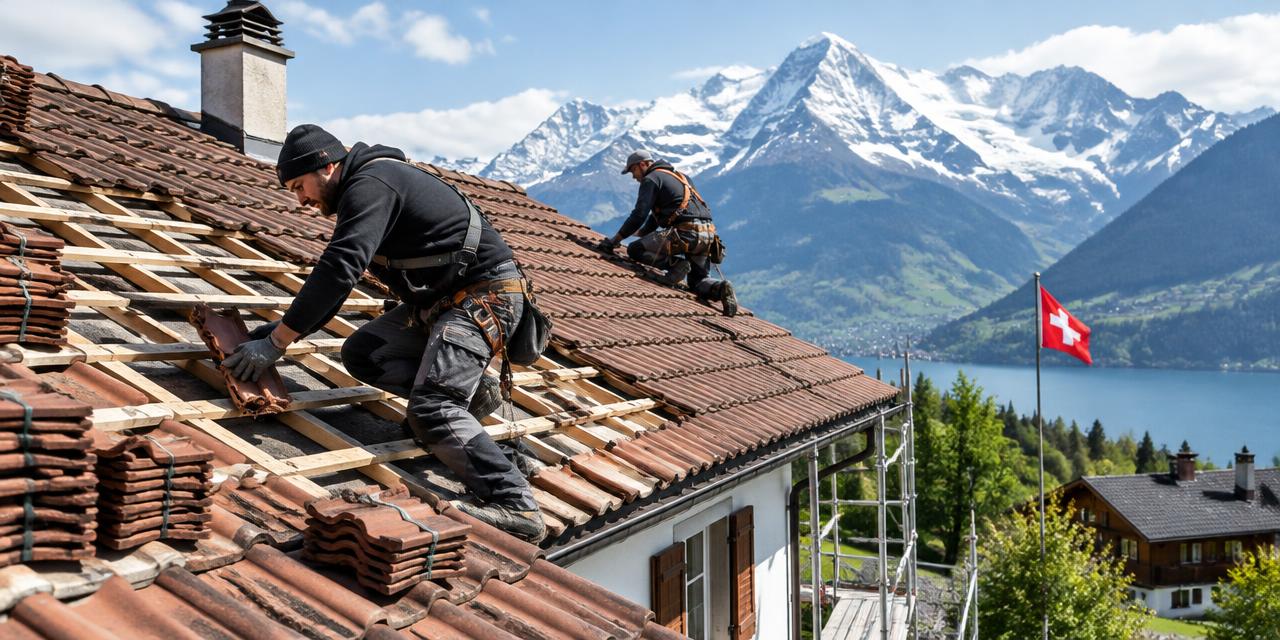
www.leprogrammebatiments.chRoof renovation · Sion
At a glance
Small project
CHF 16'400 – CHF 37'600
Typical project
CHF 29'700 – CHF 65'400
Large project
CHF 49'600 – CHF 107'200
| Project | Quantity | Low | High | Per unit |
|---|---|---|---|---|
| Small project | 70 m² | CHF 16'400 | CHF 37'600 | CHF 400 |
| Typical project | 140 m² | CHF 29'700 | CHF 65'400 | CHF 300 |
| Large project | 245 m² | CHF 49'600 | CHF 107'200 | CHF 300 |
Computed with our estimator for Sion (regional factor included), standard finish. Only the project size changes.
Included
Not included
In Sion, the federal building register lists 5'099 residential buildings and 21'572 dwellings. These municipal benchmarks help put your home in context, but do not replace an individual assessment.
50 % built before 1980
Construction year does not reveal past renovations: check the current insulation condition.
56 % · Gas
This distribution describes recorded buildings, not your system's consumption or efficiency.
| Energy | Heating | Hot water |
|---|---|---|
| Gas | 56 % | 45.3 % |
| Heating oil | 19 % | 18.3 % |
| District heating | 1 % | 1 % |
| Heat pump | 13 % | 7.5 % |
| Electricity | 8 % | 25.4 % |
| Wood | 4 % | 0.6 % |
| Solar thermal | 0 % | 1.2 % |
Each line gives the share of buildings using that energy, separately for heating and for hot water. The two columns do not always reach 100%: some buildings combine two systems, or reported none.
A standard non-condensing boiler is usually older and less efficient.
9.2 % of buildings mix housing with shops or offices.
When planning renovations in Sion, RegBL data provides essential benchmarks despite partial coverage. Regarding heritage, 14 buildings are officially protected out of 4882 listed, necessitating early contact with the municipality for permit applications. For house volume, a median of 677.5 m3 is available based on 118 measurements per SIA 416 standards, serving as a useful scale for calculating heating and insulation requirements. As most volume figures and renovation years remain unknown in the registry, professional on-site evaluation is still required to determine the actual scope of your project and ensure accurate cost estimations for your specific property renovation.
Source : Registre fédéral des bâtiments et des logements (RegBL), OFS, 2026. Existing residential buildings; percentages of recorded values.
The geographical location of Sion at 515 meters altitude imposes specific climatic constraints.7 °C, your roof is the primary protective barrier of your building.
Natural wear of materials, amplified by thermal variations, eventually compromises sealing and insulation.
Anticipating renovation before major signs of degradation helps avoid costly infiltrations in the structure. Given the heating needs of 2737 Kj/year, a poorly insulated roof represents significant energy loss.
Considerations should align with the Plan climat de Sion région, which actively encourages improving energy efficiency. Investing today means ensuring the long-term sustainability of your thermal comfort while meeting regional energy targets.
The choice of roofing materials must meet the technical requirements imposed by the Valais climate. At altitude, snow loads and frost directly influence the durability of tiles or metal materials.
The range of products, from classic clay tiles to more contemporary coverage solutions, defines not only the aesthetics but also the thermal resistance.
Integrating insulation is a crucial step. Insulating the roof at the same time as the covering is an opportunity often eligible for the Programme Bâtiments, thereby maximizing the efficiency of your investment.
If you are considering installing solar panels to take advantage of global irradiation of 1421 kWh/m²/year, their removal and reinstallation must be budgeted for in advance.
The estimated yield of 1250 kWh/kWc/year depends heavily on the orientation and quality of the chosen equipment. These technical parameters, combined with finish options, modulate the scope and final cost of your renovation project.
The real estate stock in Sion presents varied challenges depending on the construction year. Houses built before 1990 require special attention regarding the potential presence of asbestos in roofing materials or insulation.
An assessment is essential to identify these substances before any mechanical intervention, ensuring worker safety and compliance with environmental standards.
Older buildings often lack an effective thermal barrier, leading to massive heat loss through the roof. Ventilation and drainage networks must be checked to avoid any moisture or condensation issues after reinforcing the insulation.
For more recent structures, the challenge lies more in the compatibility of current heating systems with the new energy standards targeted by the authorities.
Understanding the technical history of your building allows you to adjust renovation works and avoid costly structural surprises when opening the roof.
The ban on installing solar panels has been lifted but remains subject to strict rules. For buildings of degrees 1, 2, and 3, solar installations are, depending on the classification, either prohibited or subject to a balancing of interests.
For non-listed buildings in protected sectors, solar installations are generally autorizable subject to strict compliance with their visual and structural integration.
Installation on flat-roof annexes is generally prohibited if visible from neighboring houses. In sensitive hillside areas, increased requirements are set, particularly regarding the color, surface area, and regularity of the panels.
Before any project, contact the municipal services to validate your intentions, as each request is evaluated individually according to the heritage value of your sector.
It is essential to follow the order of steps : the subsidy application must be submitted and validated before the start of the work.
The Programme Bâtiments is the main reference for thermal insulation work. Also, remember to check the specific conditions related to cantonal and communal incentives when applying.
Keep all work receipts and detailed invoices, as they are necessary both for the release of aid and for potential tax deductions. Since energy policies evolve, regularly check official websites to verify updated amounts and eligibility criteria.
Rigorous financial planning, including applying for aid in advance, is the guarantee of the economic success of your renovation.
The progression of a roofing project in Sion must take into account local weather conditions.
It is highly advisable to plan work outside periods of extreme cold, despite the 57 annual frost days, to ensure the quality of material installation and the safety of the workers.
The first phase consists of the technical study and the request for administrative authorizations, followed by the selection of companies.
Once authorizations are obtained, the work begins with the installation of safety measures and scaffolding. The next step is the removal of the old covering, revealing the structure for potential repairs.
If insulation is planned, it is installed before the new covering. Finally, the laying of tiles or the final coating is carried out. If solar panels are planned, they are installed in the final phase.
Coordination between the different trades is essential to minimize the time during which the roof is open, thus protecting the home from Valais weather.
The most common error is neglecting the state of the framework before installing a new covering. Imperatively check for the absence of asbestos in old materials if your house dates from before 1990.
Never forget to include the cost of removing and reinstalling solar panels in your budget. Do not sign any contract before having received municipal authorization.
Here is your checklist before requesting quotes : 1. Check the heritage classification of your building with the municipality. 2. Identify if roof insulation can be coupled with the renovation to obtain aid. 3.
Precisely list the areas of your roof that require structural repair. 4. Request an estimate of energy performance after work. 5. Demand detailed quotes including costs for site protection. 6.
Ensure that the proposed materials are adapted to the climatic constraints of altitude. 7. Check the liability insurance of the companies contacted.
1. Estimate
Set a budget range with the estimator.
2. Grants
Apply before work starts.
3. Quotes
Compare at least 3 quotes.
4. Permit
Check with the municipality whether a permit is needed.
5. Works
Follow the site and do a written handover.
Contribution per m² depending on requirements met.
Valais support for envelope insulation via the Buildings Programme.
www.leprogrammebatiments.chCheck amounts and conditions with the provider before signing: apply before work starts in most cases.
1950 Sion · about 0 km
Sion-based company specializing in wood construction, glulam or solid wood framing, and integral roofing systems.
fourniercharpente.ch1950 Sion · about 0 km
Nova DT Sàrl in Sion specializes in construction management, site supervision, and the coordination of general building and renovation projects.
novagroupe.ch1950 Sion · about 0 km
Valais-based company specializing in sanitary installations, heating, roofing, and terrace waterproofing with over 30 years of experience.
sanifer.ch1950 Sion · about 0 km
Sion-based company specializing in scaffolding assembly, work platforms, and story poles for high-altitude construction work.
cap3d.chSuggestions from the commercial register by distance and activity. Not an endorsement or partnership.
Yes, insulating at the same time is highly recommended. It is often a condition to be eligible for the Programme Bâtiments.
With 57 frost days per year, the choice of materials must be robust. Frost resistance is essential for durability.
It is authorized under strict conditions, especially in protected sectors. Consult the municipality to assess your individual case.
No, the application must be submitted and validated before the start of the site. This is an imperative rule of the programs.
If your building dates from before 1990, a diagnosis is mandatory. This protects your health and ensures legal compliance.
Yes, the removal and reinstallation of panels must be budgeted. This represents an additional cost during a renovation.
Yes, it encourages energy efficiency. Your work should aim for better insulation to align with these goals.
Altitude
515 m
Heating degree days
2'737 Kj/an
20/12 °C
Frost days
57 jours/an
Solar irradiation
1'421 kWh/m²/an
horizontal
Winter design temperature
-8.7 °C
1er percentile des minimales
Mean temperature
11.9 °C
Estimated solar yield
1'250 kWh/kWc/an
toit ~30° sud, PR 0.8, estimation
Source : swisstopo – service d'altitude (MNT) · Open-Meteo Historical Weather API (réanalyse ERA5, moyenne 2015-2024)
Source : batimag.ch
Source : Sion.ch