
Canton
Facade insulation — Valais
Contribution per m² depending on requirements met.
Valais support for envelope insulation via the Buildings Programme.
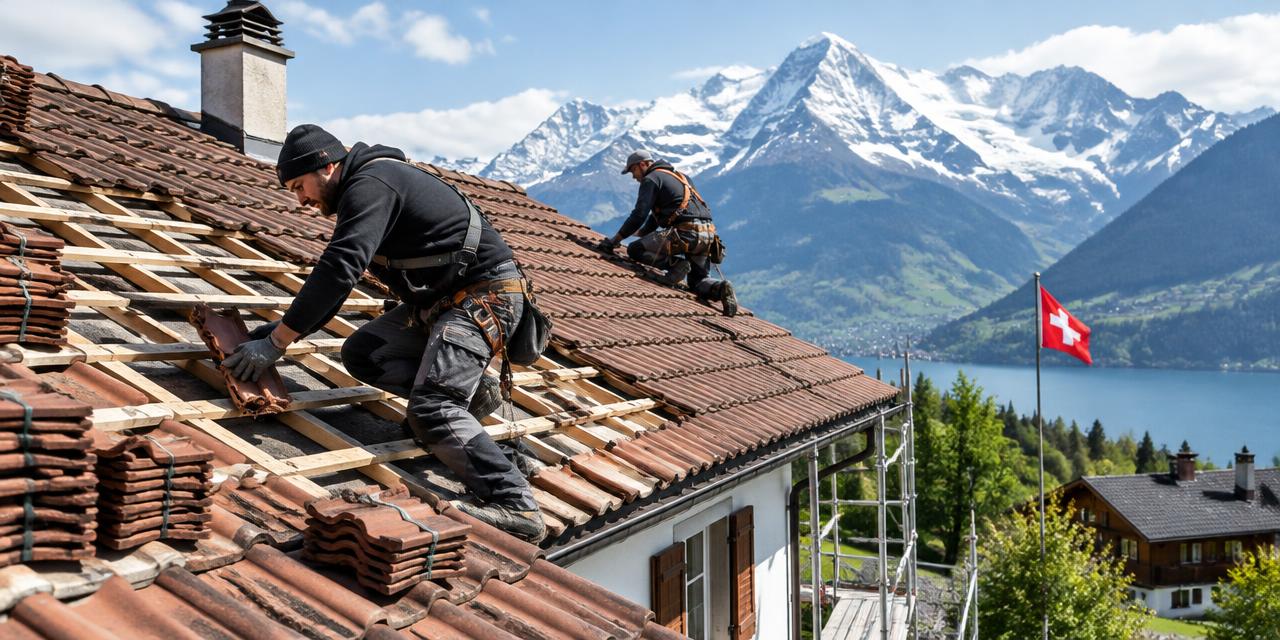
www.leprogrammebatiments.chRoof renovation · Brigue-Glis
At a glance
Small project
CHF 15'200 – CHF 34'900
Typical project
CHF 27'500 – CHF 60'700
Large project
CHF 46'000 – CHF 99'400
| Project | Quantity | Low | High | Per unit |
|---|---|---|---|---|
| Small project | 70 m² | CHF 15'200 | CHF 34'900 | CHF 300 |
| Typical project | 140 m² | CHF 27'500 | CHF 60'700 | CHF 300 |
| Large project | 245 m² | CHF 46'000 | CHF 99'400 | CHF 300 |
Computed with our estimator for Brigue-Glis (regional factor included), standard finish. Only the project size changes.
Included
Not included
In Brigue-Glis, the federal building register lists 1'980 residential buildings and 7'739 dwellings. These municipal benchmarks help put your home in context, but do not replace an individual assessment.
49 % built before 1980
Construction year does not reveal past renovations: check the current insulation condition.
71 % · Heating oil
This distribution describes recorded buildings, not your system's consumption or efficiency.
| Energy | Heating | Hot water |
|---|---|---|
| Gas | 3 % | 0.1 % |
| Heating oil | 71 % | 58.3 % |
| District heating | 1 % | 0.9 % |
| Heat pump | 11 % | 9.5 % |
| Electricity | 8 % | 26 % |
| Wood | 6 % | 2.5 % |
| Solar thermal | 0 % | 1.1 % |
Each line gives the share of buildings using that energy, separately for heating and for hot water. The two columns do not always reach 100%: some buildings combine two systems, or reported none.
A standard non-condensing boiler is usually older and less efficient.
8 % of buildings mix housing with shops or offices.
For your renovation projects in Brig-Glis, official RegBL figures provide vital planning metrics. While data on the renovation year is absent, the median building volume is 875 m3 per SIA 416 standards, a key metric for scaling heating or insulation upgrades. Heritage protection data remains partial, with 1605 buildings left unrecorded out of 1853. As no buildings are currently listed as protected, it is still advisable to contact the municipality early in your process. Discussing your plans proactively ensures that any potential structural modifications align with local expectations for properties located within this specific Swiss municipality.
Source : Registre fédéral des bâtiments et des logements (RegBL), OFS, 2026. Existing residential buildings; percentages of recorded values.
Roof renovation in Brig-Glis, located at an altitude of 685 meters, is a strategic decision for the long-term durability of your building.4°C and approximately 62 days of frost per year, your roof is subject to significant climatic constraints.
An aging roof quickly becomes the weak point of your insulation, leading to major heat losses while heating requirements, estimated at 3019 Kj/year, remain high in this Alpine region.
It is advisable to act before structural damage caused by frost or humidity appears. Undertaking this work not only reinforces the seal against the harsh winter conditions but also allows for the integration of modern solutions.
By taking into account the global solar irradiation of 1477 kWh/m²/year, you can optimize overall energy performance by combining the roof renovation with the installation of solar panels, thus aligning with the goals of the 2050 energy strategy of the city, which is an 'Energiestadt Gold'.
The choice of roofing materials is essential to meet the constraints of snow load and local temperature ranges. Several ranges are available to you, from traditional terracotta tiles, which are very resistant to frost cycles, to slate or metal solutions.
Each option presents different performance levels in terms of weight, durability, and aesthetics. Thermal insulation, for its part, must be chosen according to the current requirements of the Buildings Program to guarantee maximum efficiency.
Integrating photovoltaic solar systems is a major option in Brig-Glis. Given the favorable sunshine, the estimated yield can reach 1300 kWh/kWp/year on a south-facing roof.
It is imperative to budget for the removal and reinstallation of these systems if they are already present.
Finally, the choice of the waterproof underlay and the roof ventilation system is decisive in avoiding internal condensation, especially in a climate where the temperature difference between inside and outside is marked.
The building stock in Brig-Glis shows disparities depending on the construction era. For buildings constructed before 1990, particular vigilance is required regarding the potential presence of asbestos in roofing materials or old insulation.
It is strongly recommended to carry out a diagnosis before starting any demolition or roofing replacement work. These buildings often require complete insulation upgrades to meet current standards.
More recent constructions often benefit from a sounder structure but may require adaptations to integrate renewable technologies.
When renovating old roofs, it is common to discover problems related to electrical networks or water drainage that no longer meet current safety standards.
Insulating the roof at the same time as the covering is an ideal opportunity to improve the overall thermal performance of the building, in accordance with the city's goals, while sustainably increasing the value of your local real estate located in this demanding Alpine environment.
Before starting any project, it is essential to check with the municipal administration for the necessary authorizations, especially if your building is listed or located in a heritage protection zone.
Aesthetic requirements regarding tile colors or the integration of solar panels may vary by district. A building permit is frequently required for any significant change to the external appearance of the roof.
It is advisable to consult the urban planning services of Brig-Glis as early as possible. These services will be able to provide you with information on zoning plans and specific constraints for your plot.
Never neglect this step, as non-compliance with planning rules can lead to work suspensions.
By contacting the competent authorities, you ensure that your project respects local standards while contributing to the visual and architectural quality of the municipality, respecting its identity marked by its location in the mountains.
For your roof renovation work in Valais, financial support is available. Insulation of the building envelope, including the roof, is eligible for the Buildings Program.
This is a contribution per m² calculated according to the energy performance requirements achieved. The order of steps is imperative: you must mandatorily submit your application for financial aid before the start of the work.
No file submitted after the start of construction will be accepted for these grants.
It is strongly advised to consult the official website of the Buildings Program to learn about the specific eligibility conditions and the forms to be completed. Furthermore, ensure that your overall energy project is well structured to maximize aid.
By combining insulation with other renovation measures, you increase your chances of obtaining substantial support. Keep in mind that these aids are intended to encourage energy efficiency, in line with the objectives of the 2050 strategy.
Financial planning must be rigorous and validated before any signature with a roofing company.
A renovation project in Brig-Glis requires careful planning taking into account climatic conditions. Ideally, the work should be organized outside of periods of heavy frost.
Although the schedule varies depending on the scope of the project, the classic workflow begins with a preparation phase including obtaining permits, choosing materials, and confirming financial aid.
Setting up a secure scaffold and protection against the weather is the first visible step on the construction site.
Next, the removal of the old covering is carried out, followed by the inspection of the frame and the installation of the new insulation.
If you are installing solar panels, their prior removal and final reinstallation must be integrated into the overall schedule. Installing the new roof and finishing touches ends the process.
It is essential to coordinate these different phases with the trades involved. A realistic schedule helps avoid interruptions due to mountain weather conditions and ensures high-quality execution in compliance with current standards.
To succeed in your renovation, avoid neglecting the asbestos diagnosis if your house dates from before 1990. Never choose a company without checking its local references and ensure that financial aid has been validated before the work begins.
Forgetting to include the budget for the removal and reinstallation of solar panels is a classic mistake. Also check that your insulation meets current standards so as not to lose access to subsidies.
Before requesting quotes, prepare your checklist : make sure you have your roof plans, check your municipality's constraints with urban planning, determine your energy priorities, list existing solar equipment, and ask for several detailed, comparable quotes.
Ensure that each company includes protection measures against weather and frost in its offer. Good preparation ensures you stay within budget and that your work is compliant.
Rigor in selecting service providers is the best guarantee of a healthy and durable roof.
1. Estimate
Set a budget range with the estimator.
2. Grants
Apply before work starts.
3. Quotes
Compare at least 3 quotes.
4. Permit
Check with the municipality whether a permit is needed.
5. Works
Follow the site and do a written handover.
Contribution per m² depending on requirements met.
Valais support for envelope insulation via the Buildings Programme.
www.leprogrammebatiments.chCheck amounts and conditions with the provider before signing: apply before work starts in most cases.
3900 Gamsen · about 0 km
AS Gerüste AG, part of the Schaller Group, is a Valais-based company specializing in scaffolding assembly for various construction projects.
schallergroup.ch3900 Brig · about 0 km
Valais-based rope access specialist performing maintenance, cleaning, and repairs on hard-to-reach roofs and facades.
ibextec.ch3930 Visp · about 4.7 km
Frutiger AG is one of the largest construction companies in Switzerland, specializing in civil engineering, building construction, and comprehensive real estate solutions.
frutiger.com3930 Visp · about 4.7 km
SikaBau AG is a specialist company focused on building waterproofing, structural protection, and maintenance.
bau.sika.comSuggestions from the commercial register by distance and activity. Not an endorsement or partnership.
You can apply for grants via the Buildings Program for your roof insulation. It is imperative to submit the application before starting the work.
Yes, it is advisable to consult the municipality's urban planning office to check if a permit is required depending on the planned aesthetic modification.
Absolutely. Materials must be able to withstand the 62 days of frost per year and the specific snow loads in Brig-Glis.
You must use certified companies for asbestos removal. A prior diagnosis is strongly recommended for houses built before 1990.
This is an excellent option with an estimated yield of 1300 kWh/kWp/year. Budget for their removal and reinstallation during the work.
It is preferable to intervene during the warmer months to avoid risks related to the region's significant frost.
This helps reduce your heating requirements while accessing financial aid from the Buildings Program for the envelope.
Altitude
685 m
Heating degree days
3'019 Kj/an
20/12 °C
Frost days
62 jours/an
Solar irradiation
1'477 kWh/m²/an
horizontal
Winter design temperature
-8.4 °C
1er percentile des minimales
Mean temperature
11 °C
Estimated solar yield
1'300 kWh/kWc/an
toit ~30° sud, PR 0.8, estimation
Source : swisstopo – service d'altitude (MNT) · Open-Meteo Historical Weather API (réanalyse ERA5, moyenne 2015-2024)
Source : Stadtgemeinde Brig-Glis