
Canton
Solar thermal — Valais
Per current schedule.
Valais support for solar thermal systems.
www.leprogrammebatiments.chSolar water heating · Monthey
At a glance
Small project
CHF 10'100 – CHF 23'600
Typical project
CHF 13'000 – CHF 30'200
Large project
CHF 17'800 – CHF 41'000
| Project | Quantity | Low | High | Per unit |
|---|---|---|---|---|
| Small project | 3 m² | CHF 10'100 | CHF 23'600 | CHF 5'500 |
| Typical project | 6 m² | CHF 13'000 | CHF 30'200 | CHF 3'500 |
| Large project | 11 m² | CHF 17'800 | CHF 41'000 | CHF 2'600 |
Computed with our estimator for Monthey (regional factor included), standard finish. Only the project size changes.
Included
Not included
In Monthey, the federal building register lists 2'723 residential buildings and 9'846 dwellings. These municipal benchmarks help put your home in context, but do not replace an individual assessment.
51 % built before 1980
Construction year does not reveal past renovations: check the current insulation condition.
26 % · Gas
This distribution describes recorded buildings, not your system's consumption or efficiency.
| Energy | Heating | Hot water |
|---|---|---|
| Gas | 26 % | 24.8 % |
| Heating oil | 24 % | 23.4 % |
| District heating | 6 % | 4.9 % |
| Heat pump | 10 % | 8.8 % |
| Electricity | 25 % | 33.1 % |
| Wood | 9 % | 3 % |
Each line gives the share of buildings using that energy, separately for heating and for hot water. The two columns do not always reach 100%: some buildings combine two systems, or reported none.
A standard non-condensing boiler is usually older and less efficient.
6.3 % of buildings mix housing with shops or offices.
For your renovation projects in Monthey, reviewing the federal building register is a vital first step. Among 2659 buildings, the heritage status is known for 108, with 2 currently protected, necessitating early contact with local authorities regarding permits. Regarding building scale, we have volume data for 111 houses following the SIA 416 standard, showing a median of 725 m3, which is essential for estimating heating or insulation costs. Please note that data coverage is partial, as no renovation year figures are available. Utilizing these official figures helps homeowners plan their renovations effectively within the municipality.
Source : Registre fédéral des bâtiments et des logements (RegBL), OFS, 2026. Existing residential buildings; percentages of recorded values.
With an altitude of 407 meters and a global horizontal solar irradiation of 1385 kWh/m²/year, Monthey offers interesting potential for solar thermal installations.
Switching to this method of water heating is particularly relevant if you need to replace an aging boiler or renovate your domestic hot water production system.
As a municipality holding the Energy City Gold label, Monthey actively encourages the transition to local renewable energy in line with its 2023-2027 energy policy program.
7 °C, underline the importance of an installation sized to withstand winter rigors while taking advantage of summer radiation.
It is wise to undertake this work during a comprehensive energy renovation of your building envelope to combine solar thermal production with improved insulation.
Reducing your heat demand from the start ensures that your solar thermal system covers an optimal share of your annual consumption.
Taking advantage of technical renewal periods also allows for the harmonious integration of collectors on your roof while benefiting from synergies with the municipal energy policy program, which is focused on efficiency and sustainability.
The sizing of a solar thermal installation depends directly on your actual needs and the configuration of your roof.
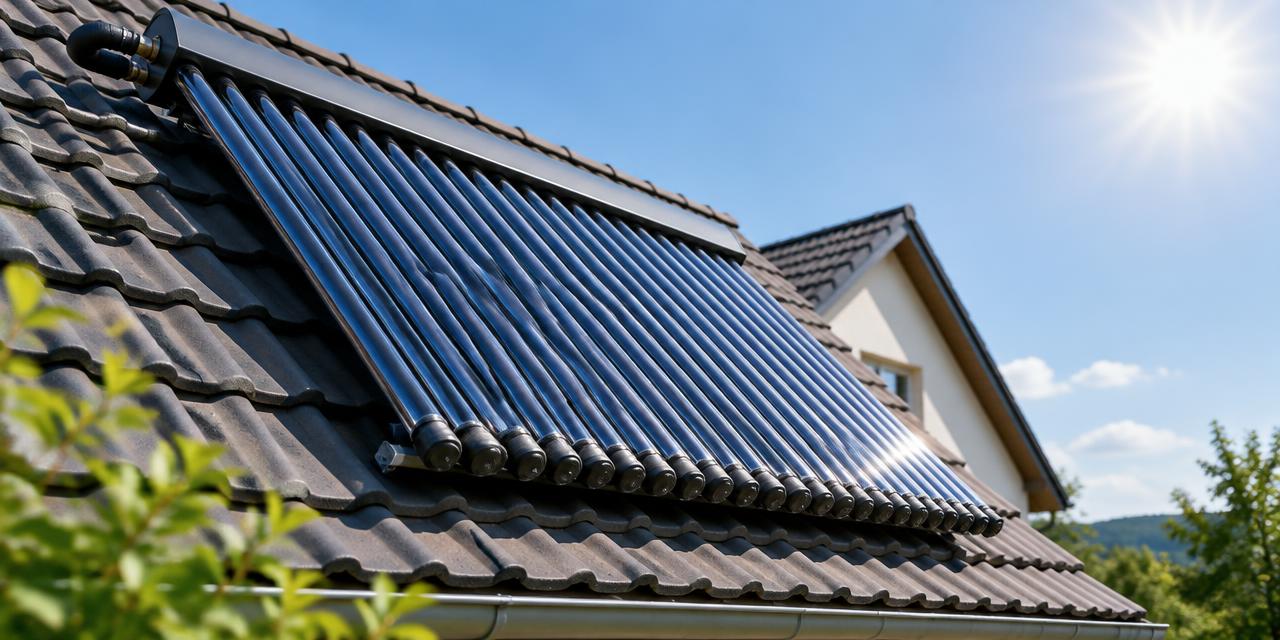
Solar thermal collectors generally cover a large part of the summer hot water demand, but their efficiency depends on the type of collector chosen: flat plate collectors are often favored for their robustness and ease of integration, while vacuum tube collectors offer better performance in the cold conditions of the Valais winter.
A feasibility study is essential to ensure that the available surface area is sufficient and well-oriented, ideally facing south.
Combining with other systems, such as a heat pump, requires rigorous sizing study. The goal is to avoid oversizing, which can lead to overheating issues in summer.
Many options exist, from simple thermosiphon systems to more complex forced circulation systems integrating intelligent storage tanks. The quality of the components, especially the insulation of the pipes, plays a crucial role in minimizing thermal losses.
By consulting local professionals, you can define a range of equipment adapted to your budget and the energy performance goals set by municipal policy, while ensuring the long-term durability of your equipment in local climatic conditions.
Monthey's real estate stock shows great diversity, reflecting different eras of construction.
For buildings constructed before 1990, it is imperative to identify the potential presence of hazardous materials, such as asbestos, in roofing elements or old insulation of distribution networks before any intervention.
Work on the roof for the installation of solar collectors must also take into account the state of the framework and existing waterproofing.
A roof whose lifespan is nearing its end should ideally be renovated simultaneously to avoid having to dismantle and reassemble the solar panels later.
Managing heat networks is another key point for older buildings. Optimization often involves bringing internal distribution up to standard to ensure compatibility with new energy sources.
If your house does not have high-performance thermal insulation, the efficiency of your solar system will be limited. It is recommended to perform an energy audit or have the general state of your building assessed by a qualified professional.
They can advise you on the measures to take to secure your work and maximize the return on your investment.
This preventive approach makes it possible to perpetuate your installation while enhancing your property value in accordance with the city's sustainability goals.
Although federal legislation facilitates the development of renewable energy, each municipality has its own specifics, especially if your building is located in a protected area, a historic sector, or is listed in the ISOS inventory.
It is crucial to contact the urban planning department of the municipality of Monthey before starting any project to confirm whether a building permit is required or if a simple notification is sufficient for your specific work.
Local regulations may impose conditions on architectural integration, such as the color of the panels or their layout on the roof, to preserve the appearance of the cityscape.
Never start work without receiving a clear response from the municipal administration. This early check will protect you from potential future administrative constraints.
By following local procedures, you facilitate obtaining the necessary agreements and ensure that your project fits perfectly into the vision of Monthey as an Energy City Gold.
Rigorous planning is the guarantor of your energy transition project's success, avoiding any infringement of current municipal or cantonal regulations.
For the canton of Valais, you can refer to the "Buildings Program" to find out the precise terms of encouragement for solar thermal installations according to the current scale.
The process usually begins with a consultation on the official website, where you can verify your eligibility based on technical criteria and the performance of your future installation.
In addition to direct subsidies, do not forget that certain investments in energy saving measures may also offer tax benefits. It is advisable to carefully keep all invoices and supporting documents related to the work for your tax return.
The combination of subsidies and tax benefits can significantly reduce the financial burden of your project. Ensure you understand the specific conditions for Valais aid before signing any quote.
A complete and well-prepared file from the start is the key to quickly validating your aid. By keeping an eye on developments in cantonal and municipal energy programs, you optimize your chances of effectively financing your transition to solar thermal.
The realization of a solar thermal project follows logical steps that ensure the durability of your installation. Once feasibility studies and grant applications have been carried out, the site generally begins with the preparation of the roof.
It is better to plan these interventions outside periods of deep frost, although the climate of Monthey allows for an extended intervention window, with ease of access and worker safety being paramount.
Installers begin by mounting the supports on your roof, a crucial step to ensure sealing and wind resistance.
Next, the collectors are put in place, followed by the installation of the hydraulic pipes connecting the roof to the technical room.
Inside, the work focuses on installing the storage tank and connecting it with your existing heating or hot water distribution system. The final phase consists of commissioning, filling the primary circuit with the heat transfer fluid, and functional testing.
It is recommended to schedule this work so that it does not interfere with periods of high heating consumption while allowing time for optimal commissioning.
Regular monitoring with your service provider ensures that each step proceeds in accordance with the performance expectations defined at the start.
One of the most frequent mistakes is signing a quote before having obtained confirmation of your eligibility for cantonal subsidies. Never neglect checking the compatibility of the new collectors with your current heating system before committing.
It is essential to ensure that the sizing study takes into account the actual sunshine on your roof and not an overly optimistic generic estimate.
Check that your roof does not have structural defects or leaks before installing the panels to avoid heavy subsequent dismantling costs. Make sure that the chosen company has the required certifications for thermal installations in Switzerland.
Here is an essential checklist before asking for quotes : 1. Carry out an energy audit to know your actual needs. 2. Check the end-of-life date of your current roof. 3. Identify if your building is listed or protected with the urban planning department. 4.
Prepare a complete file including house plans. 5. List your specific hot water needs according to the number of occupants. 6. Request several detailed quotes to compare technical solutions and costs. 7.
Confirm in writing that the company handles the compliance of the connections.
Once installed, your solar thermal system requires regular maintenance to ensure its energy efficiency over the long term.
The heat transfer fluid must be checked periodically, generally every three to five years, to verify its pH and frost resistance, especially in an area like Monthey where winter temperatures can drop below zero.
Improper maintenance of this fluid can lead to premature degradation of internal components, such as pumps or the heat exchanger.
It is also recommended to visually inspect the collectors for any dirt or obstructions that could reduce the capture of solar radiation.
The durability of your installation also depends on the attention you pay to the storage tank. An annual check of the anti-corrosion anode can prevent leaks and extend the life of the tank.
By choosing a maintenance contract with a qualified professional, you enjoy peace of mind and ensure that your installation remains in line with expected performance.
Sustainability is a pillar of Monthey's Energy City Gold policy, and properly maintaining your solar installation is a concrete way to contribute to the city's goals while protecting your real estate investment for decades to come.
1. Estimate
Set a budget range with the estimator.
2. Grants
Apply before work starts.
3. Quotes
Compare at least 3 quotes.
4. Permit
Check with the municipality whether a permit is needed.
5. Works
Follow the site and do a written handover.
Per current schedule.
Valais support for solar thermal systems.
www.leprogrammebatiments.chCheck amounts and conditions with the provider before signing: apply before work starts in most cases.
1870 Monthey · about 0 km
Groupe Thermo is a Swiss company specializing in the installation and maintenance of heating, plumbing, ventilation, and air conditioning systems.
groupe-thermo.ch1870 Monthey · about 0 km
Valais-based company specializing in plumbing, roofing, tinsmithing, and heating systems including solar thermal and heat pumps.
parchet.ch1873 Val-d'Illiez · about 6.8 km
HVAC engineering office specializing in heating, ventilation, plumbing, pool planning, and CECB energy audits.
hydrotec-cvs.ch1890 St-Maurice · about 7.8 km
Valais-based expert in heating, plumbing, roofing, as well as photovoltaic and solar thermal installations.
coutaz.chSuggestions from the commercial register by distance and activity. Not an endorsement or partnership.
A well-maintained installation can last between 20 and 25 years. Regular maintenance of the hydraulic components is essential to achieve this longevity.
Yes, the system works all year round, but its contribution is lower in winter. It then acts as a supplement to your main boiler.
This depends on the location of your building. Always contact the Monthey urban planning department before starting your project.
No, applications must mandatorily be submitted before the start of any work. Respect the order of procedures strictly.
Yes, it is an effective combination, but it requires a prior sizing study by an expert. This helps optimize overall efficiency.
A south-facing exposure is ideal for capturing maximum sunshine throughout the year. A roof study will confirm feasibility.
Call on a professional to inspect the condition of the framework and roofing. This will avoid structural problems during installation.
Estimated solar yield
1'219 kWh/kWc/an
toit ~30° sud, PR 0.8, estimation
Altitude
407 m
Heating degree days
2'711 Kj/an
20/12 °C
Frost days
64 jours/an
Solar irradiation
1'385 kWh/m²/an
horizontal
Winter design temperature
-9.7 °C
1er percentile des minimales
Mean temperature
11.6 °C
Source : Open-Meteo Historical Weather API (réanalyse ERA5, moyenne 2015-2024) · swisstopo – service d'altitude (MNT)
Source : monthey.ch