
Canton
Solar thermal — Fribourg
Per current schedule.
Fribourg support for solar thermal.
www.leprogrammebatiments.chSolar water heating · Murten
At a glance
Small project
CHF 9'400 – CHF 21'900
Typical project
CHF 12'100 – CHF 28'000
Large project
CHF 16'500 – CHF 38'000
| Project | Quantity | Low | High | Per unit |
|---|---|---|---|---|
| Small project | 3 m² | CHF 9'400 | CHF 21'900 | CHF 5'100 |
| Typical project | 6 m² | CHF 12'100 | CHF 28'000 | CHF 3'200 |
| Large project | 11 m² | CHF 16'500 | CHF 38'000 | CHF 2'400 |
Computed with our estimator for Murten (regional factor included), standard finish. Only the project size changes.
Included
Not included
In Murten, the federal building register lists 2'115 residential buildings and 4'731 dwellings. These municipal benchmarks help put your home in context, but do not replace an individual assessment.
53 % built before 1980
Construction year does not reveal past renovations: check the current insulation condition.
45 % · Heat pump
This distribution describes recorded buildings, not your system's consumption or efficiency.
| Energy | Heating | Hot water |
|---|---|---|
| Gas | 2 % | 1.6 % |
| Heating oil | 33 % | 24.6 % |
| District heating | 9 % | 8.2 % |
| Heat pump | 45 % | 28.3 % |
| Electricity | 4 % | 32.6 % |
| Wood | 7 % | 3.6 % |
| Solar thermal | 0 % | 1.1 % |
Each line gives the share of buildings using that energy, separately for heating and for hot water. The two columns do not always reach 100%: some buildings combine two systems, or reported none.
A standard non-condensing boiler is usually older and less efficient.
17.7 % of buildings mix housing with shops or offices.
When planning renovations in Murten, official building register data provides useful guidance, though coverage remains partial. The median building volume is 870 cubic meters, a critical metric for scaling heating systems or insulation upgrades. However, please note that this figure is derived from only 16 properties measured according to SIA 416 standards out of 1302 total residential buildings. Because the data set is limited, you should verify your property's specific volume dimensions early in the planning process to ensure that your renovation cost estimates are accurate and tailored to the actual structural scale of your home.
Source : OFS — RegBL (export communal complet). Existing residential buildings; percentages of recorded values.
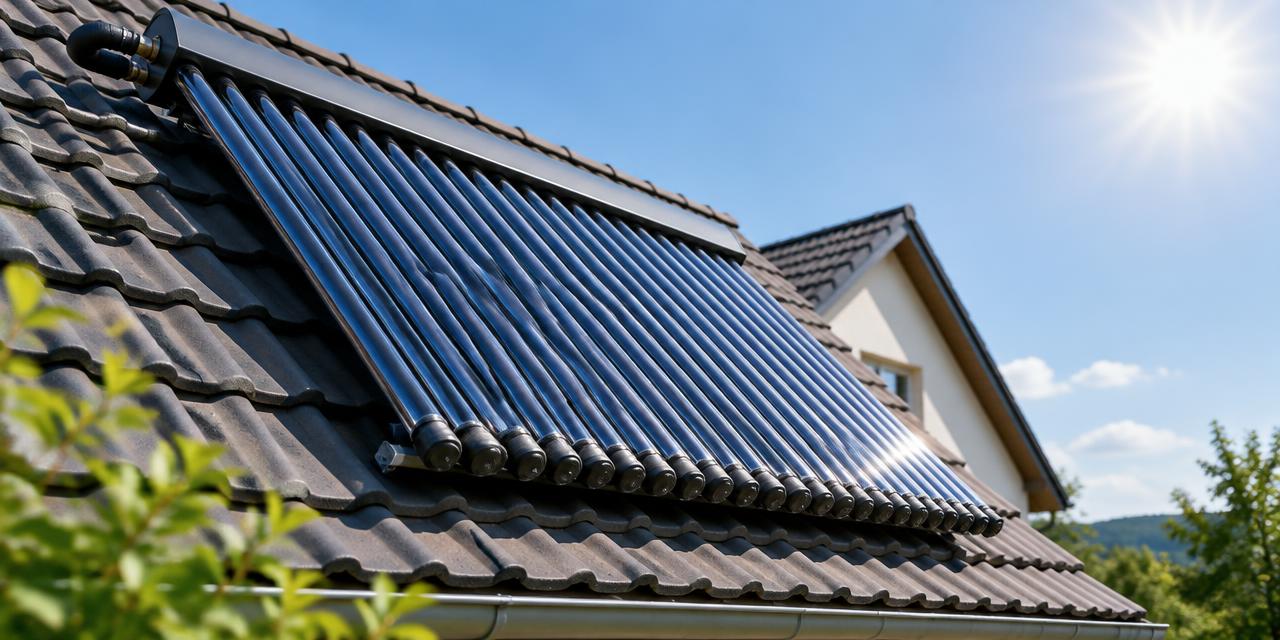
Solar thermal collectors usually cover much of summer hot water, reducing the strain on your boiler. This technology is perfectly suited to the needs of Swiss households.
By choosing this solution in Murten, you increase your property value while actively participating in the energy transition.
Remember that combining collectors with a heat pump requires a sizing study to guarantee maximum efficiency and avoid unnecessary costs during your installation process.
As many cantons subsidize collectors per square meter or per installation, the net investment cost can be significantly reduced. Before starting work in Murten, inquire about the current conditions of the Fribourg grant program.
The RenoIndex estimator helps you include these grants in your projected budget.
According to the Tax Administration of the Canton of Fribourg, investments in renewable energy and energy efficiency are deductible from your taxable income.
If your deductible expenses exceed the property's income, the surplus can be carried forward to the two following tax periods. For buildings over 10 years old, you can choose a 20% flat-rate deduction or deduct effective costs.
This tax flexibility is a key lever to amortize the cost of your solar thermal system while improving energy performance in Murten.
A successful installation is based on careful planning. Start by assessing your actual hot water needs and the solar radiation available on your roof.
Working with qualified installers in the Murten region ensures compliance with safety standards and simplified maintenance. Remember that overall efficiency depends as much on equipment quality as on technical integration.
To get a realistic price range for your specific project, use the RenoIndex estimator to anticipate the total costs of your transition to solar thermal energy.
1. Estimate
Set a budget range with the estimator.
2. Grants
Apply before work starts.
3. Quotes
Compare at least 3 quotes.
4. Permit
Check with the municipality whether a permit is needed.
5. Works
Follow the site and do a written handover.
Per current schedule.
Fribourg support for solar thermal.
www.leprogrammebatiments.chCheck amounts and conditions with the provider before signing: apply before work starts in most cases.
1580 Avenches · about 7.6 km
Echa-Gerüst SA specializes in the rental, assembly, and disassembly of secure scaffolding for all types of renovation or construction projects.
echa-gerust.ch1580 Avenches · about 7.6 km
Consultancy specializing in energy transitions, offering global renovation solutions to improve building thermal performance and energy efficiency.
econovia.ch1588 Cudrefin · about 8.1 km
Cudrefin-based company specializing in heating, sanitary installations, solar thermal energy, and professional gas equipment.
dicesare.ch1588 Cudrefin · about 8.1 km
Based in Cudrefin, Maeder Frères SA provides sanitary installations, roof sheet metal work and solar thermal installations in the area between Vully-les-Lacs and Cudrefin.
maeder-freres.chSuggestions from the commercial register by distance and activity. Not an endorsement or partnership.
In Fribourg, you can deduct investments in renewable energy. For buildings over 10 years old, a 20% flat-rate deduction is possible, or you can deduct effective costs. Excess expenses can be carried forward to the two following tax periods.
Use the free RenoIndex estimator. It allows you to obtain a price range in Swiss francs tailored to your situation for a solar thermal installation, including the specifics of your renovation project.
Yes, in the Canton of Fribourg, if deductible expenses related to energy investments exceed the building's income for the current tax period, the surplus can be carried forward to the two following tax periods.
The combination requires a sizing study. While complementary, it is essential to consult a professional to evaluate if this solution is adapted to your home's configuration and your specific hot water needs.
These rules apply across the whole canton, not only in this town.
Tax deductions
Source : Administration Cantonale des Impôts du Canton de Fribourg