
Canton
Solar thermal — Fribourg
Per current schedule.
Fribourg support for solar thermal.
www.leprogrammebatiments.chSolar water heating · Fribourg
At a glance
Small project
CHF 10'100 – CHF 23'600
Typical project
CHF 13'000 – CHF 30'200
Large project
CHF 17'800 – CHF 41'000
| Project | Quantity | Low | High | Per unit |
|---|---|---|---|---|
| Small project | 3 m² | CHF 10'100 | CHF 23'600 | CHF 5'500 |
| Typical project | 6 m² | CHF 13'000 | CHF 30'200 | CHF 3'500 |
| Large project | 11 m² | CHF 17'800 | CHF 41'000 | CHF 2'600 |
Computed with our estimator for Fribourg (regional factor included), standard finish. Only the project size changes.
Included
Not included
In Fribourg, the federal building register lists 3'307 residential buildings and 22'990 dwellings. These municipal benchmarks help put your home in context, but do not replace an individual assessment.
75 % built before 1980
Construction year does not reveal past renovations: check the current insulation condition.
48 % · Gas
This distribution describes recorded buildings, not your system's consumption or efficiency.
| Energy | Heating | Hot water |
|---|---|---|
| Gas | 48 % | 44.4 % |
| Heating oil | 23 % | 20.9 % |
| District heating | 13 % | 9.7 % |
| Heat pump | 11 % | 10.5 % |
| Electricity | 4 % | 11 % |
| Wood | 2 % | 1.1 % |
| Solar thermal | 0 % | 2 % |
Each line gives the share of buildings using that energy, separately for heating and for hot water. The two columns do not always reach 100%: some buildings combine two systems, or reported none.
A standard non-condensing boiler is usually older and less efficient.
19.1 % of buildings mix housing with shops or offices.
For your renovation projects in Fribourg, the official RegBL figures provide essential context for homeowners. Regarding heritage protection, one building is officially designated as protected out of 2916 structures, highlighting the need to contact the municipality early to secure permits if your property is affected. Please note that data coverage is partial, as the renovation year is unknown for all buildings. Furthermore, information regarding house volume according to the SIA 416 standard is currently unavailable, as all 876 houses fall under other categories. This makes it necessary to perform independent assessments when planning the scale of heating or insulation works.
Source : Registre fédéral des bâtiments et des logements (RegBL), OFS, 2026. Existing residential buildings; percentages of recorded values.
In Fribourg, located at an altitude of 587 meters, the climate imposes specific requirements for thermal management.1 °C, heating and hot water production are major energy concerns.
The available global solar irradiation, reaching 1346 kWh/m²/year on horizontal surfaces, offers real potential for solar thermal energy.
Investing in this technology is particularly relevant when replacing your aging hot water system or during a comprehensive renovation aimed at reducing reliance on fossil fuels.
Anticipating this work allows for better integration of solar collectors into your roof, minimizing labor costs if you are planning other roofing work.
Thermal comfort, optimized by reducing primary energy needs, sustainably enhances your Fribourg property while meeting cantonal energy goals.
7 °C, ensures that your installation is sized to function effectively even during the most intense cold periods of the year.
The sizing of your solar thermal installation must be based on your actual consumption. Solar thermal collectors generally cover a large part of the summer hot water demand, significantly reducing the load on your main boiler.
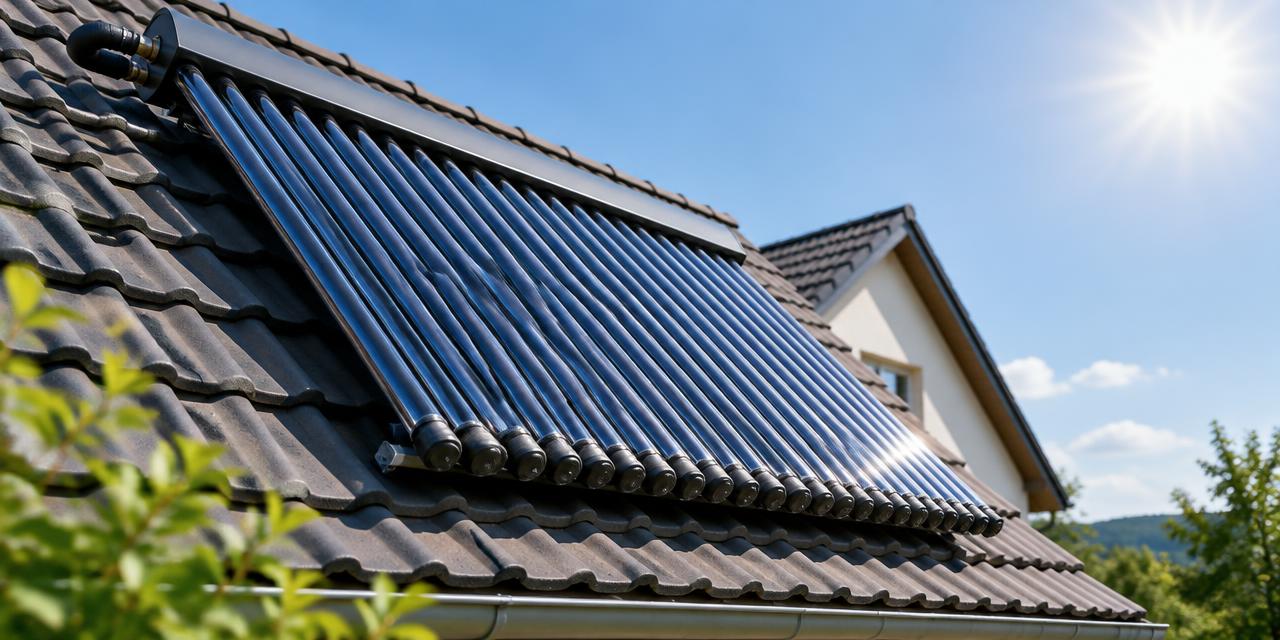
There are two main types of collectors : flat plate collectors, which are robust and suitable for roof integration, and vacuum tube collectors, which offer higher efficiency, especially when weather conditions are less favorable or during transition periods.
For maximum efficiency, combining collectors and a heat pump requires a rigorous sizing study. This analysis helps avoid system oversizing and guarantees optimal compatibility between the different components of your boiler room.
The choice of materials, whether selective collectors or high-performance storage tanks, directly influences the durability of your installation.
Remember that the success of your project relies on a balanced design where solar energy provides an ideal complement to your main heat source, maximizing the self-consumption of the energy produced.
Fribourg's building stock presents varied challenges depending on the era of construction. If your house was built before 1990, it is imperative to conduct an asbestos diagnostic before any intervention on the roof or supporting structure.
Old insulation materials may require special protective measures to ensure health and safety during construction.
In addition, older roofs were not always designed to support the additional load of thermal collectors and mounting structures, which requires verification by an engineer or a specialized roofer.
Existing water distribution and heating systems must also be inspected to ensure they are compatible with a solar system.
In some sectors, local planning prioritizes the development of district heating, information that is useful to check in municipal planning documents to ensure the long-term viability of your investment.
Finally, the state of the overall building envelope insulation influences the final efficiency of your system; it is often recommended to combine the solar installation with an improvement in roof sealing to avoid thermal losses.
If your building is listed or located in a heritage protection zone, stricter rules apply regarding the visual appearance and integration of the collectors on the roof.
It is essential to consult your municipality's urban planning or technical department before launching any order, as each sector has its own aesthetic and regulatory constraints.
The procedure generally begins with the submission of a complete file, including plans and photos showing the insertion of solar panels on the building.
Never start work without having obtained the necessary written authorization, under penalty of having to dismantle the installation.
Local authorities are there to guide you on architectural integration requirements, particularly to prevent reflections or supports from distorting the appearance of historic districts.
A proactive approach to the municipality greatly facilitates the validation of your project while ensuring perfect compliance with local regulations.
The amounts are calculated according to the current scale, and it is advisable to consult the latest updates on the official Buildings Program portal to learn the precise granting conditions.
In terms of taxation, investments in renewable energy and energy efficiency improvements are deductible from your taxable income.
For buildings over 10 years old, you benefit from a flat-rate deduction of 20% of the rental value or rental income, while for buildings under 10 years old, this rate is 10%. It is important to note that actual expenses can also be deducted instead.
If your deductible expenses exceed the property's income for the current tax year, the excess investment costs can be carried forward to the two following tax periods, offering valuable flexibility for managing your renovation budget.
The implementation of a solar thermal installation follows a structured schedule. The first step always consists of obtaining authorizations and confirmation of financial aid, a phase that should not be overlooked.
Once these validations are obtained, the on-site preparation phase begins with material delivery and roof securing.
It is recommended to favor frost-free periods of the year, although Fribourg's climate is variable; roof work is faster and safer when temperatures are mild.
The actual installation of supports and collectors is followed by connection to the hydraulic circuit and the storage tank in your boiler room.
The project concludes with commissioning tests and checking the circuit for leaks, ensuring that the system operates in accordance with current safety standards.
By avoiding periods of intense frost, you ensure optimal working conditions for the craftsmen, which contributes to the overall quality of the installation and reduces the risks associated with handling on potentially slippery or weakened surfaces.
To ensure the success of your project, avoid starting work without a prior thermal feasibility study. Never neglect applying for financial aid before signing any quotes or starting the construction site.
Ensure that the chosen professional has the necessary certifications for installing renewable equipment. Do not underestimate the aesthetic constraints imposed by the municipal urban planning department.
Verify that your roof is in a condition to support the load of the panels before ordering.
Here is an essential checklist before requesting quotes : check the age of your current heating system, confirm if roof renovation work is planned soon, consult your last energy bill to know your hot water needs, ensure you have access to ownership documents, identify shaded areas on your roof throughout the day, ask if your building is subject to local heritage protection rules, and finally, list the financial aid accessible for your specific project.
1. Estimate
Set a budget range with the estimator.
2. Grants
Apply before work starts.
3. Quotes
Compare at least 3 quotes.
4. Permit
Check with the municipality whether a permit is needed.
5. Works
Follow the site and do a written handover.
Per current schedule.
Fribourg support for solar thermal.
www.leprogrammebatiments.chCheck amounts and conditions with the provider before signing: apply before work starts in most cases.
1700 Fribourg · about 0 km
VB Charpente Sàrl is a Fribourg-based company specializing in carpentry, roofing, tinsmithing, skylights, and solar installations.
vbcharpente.ch1700 Fribourg · about 0 km
Fribourg-based company specializing in tinwork, roofing, plumbing, heating systems, and solar panel installations.
jr-sarl.ch1763 Granges-Paccot · about 2.2 km
Based in Granges-Paccot, Cossa Cotting Sanitaires SA provides plumbing and heating installations, bathroom renovations, and maintenance and repair of these systems.
cossa-cotting.ch1763 Granges-Paccot · about 2.2 km
Swiss Therm installation Sàrl specializes in sanitary installations, heating systems, ventilation, air conditioning, and solar panels.
swiss-therm.chSuggestions from the commercial register by distance and activity. Not an endorsement or partnership.
No, solar thermal is a complement to your heat production system. It mainly covers hot water in the summer but requires a backup source in the winter.
Fribourg aid is managed via the Buildings Program. You must check the official website for current amounts.
It is strongly advised against installing the system yourself. Technical expertise is required for sizing and hydraulic safety.
Yes, a building permit is often necessary, especially in protected areas. Contact your municipality before taking any steps.
It depends on the structural soundness of the roof. A technical verification is essential to ensure that the framework can support the loads.
A well-maintained system can last several decades. Periodic checks ensure the longevity of the collectors and fluids.
Yes, energy investments are deductible from your taxable income. You can also carry forward any excess over two years.
Estimated solar yield
1'184 kWh/kWc/an
toit ~30° sud, PR 0.8, estimation
Altitude
587 m
Heating degree days
3'233 Kj/an
20/12 °C
Frost days
79 jours/an
Solar irradiation
1'346 kWh/m²/an
horizontal
Winter design temperature
-7.7 °C
1er percentile des minimales
Mean temperature
10.1 °C
Source : Open-Meteo Historical Weather API (réanalyse ERA5, moyenne 2015-2024) · swisstopo – service d'altitude (MNT)
Source : Ville de Fribourg
These rules apply across the whole canton, not only in this town.
Tax deductions
Source : Administration Cantonale des Impôts du Canton de Fribourg