
Canton
Solar thermal — Geneva
Depending on system sizing.
Geneva support for solar hot water production.
www.ge.chSolar water heating · Carouge
At a glance
Small project
CHF 10'100 – CHF 23'600
Typical project
CHF 13'000 – CHF 30'200
Large project
CHF 17'800 – CHF 41'000
| Project | Quantity | Low | High | Per unit |
|---|---|---|---|---|
| Small project | 3 m² | CHF 10'100 | CHF 23'600 | CHF 5'500 |
| Typical project | 6 m² | CHF 13'000 | CHF 30'200 | CHF 3'500 |
| Large project | 11 m² | CHF 17'800 | CHF 41'000 | CHF 2'600 |
Computed with our estimator for Carouge (regional factor included), standard finish. Only the project size changes.
Included
Not included
In Carouge, the federal building register lists 1'146 residential buildings and 11'591 dwellings. These municipal benchmarks help put your home in context, but do not replace an individual assessment.
63 % built before 1980
Construction year does not reveal past renovations: check the current insulation condition.
74 % · Gas
This distribution describes recorded buildings, not your system's consumption or efficiency.
| Energy | Heating | Hot water |
|---|---|---|
| Gas | 74 % | 64.2 % |
| Heating oil | 16 % | 15 % |
| District heating | 7 % | 7.3 % |
| Heat pump | 2 % | 1.1 % |
| Electricity | 1 % | 3.4 % |
| Solar thermal | 0 % | 6.9 % |
Each line gives the share of buildings using that energy, separately for heating and for hot water. The two columns do not always reach 100%: some buildings combine two systems, or reported none.
A standard non-condensing boiler is usually older and less efficient.
38.4 % of buildings mix housing with shops or offices.
For your renovation projects in Carouge, the RegBL data shows partial coverage regarding key building metrics. While 20 buildings are officially noted under heritage considerations, information regarding past renovation years is unavailable for the entire building stock. Additionally, the building volume for the 229 houses is not measured according to the SIA 416 standard, which is typically vital for scaling insulation or heating upgrades. Given these data gaps, it is highly recommended that you contact the municipal authorities early in your planning process to obtain precise details about your specific property before estimating your total renovation costs.
Source : Registre fédéral des bâtiments et des logements (RegBL), OFS, 2026. Existing residential buildings; percentages of recorded values.
Carouge, a 'Cité de l'énergie Gold' label holder since 2008, is firmly committed to reaching carbon neutrality by 2050.
With an altitude of 382 meters and an annual global solar irradiation of 1378 kWh/m²/year, the municipality benefits from a real solar potential for domestic hot water heating.
Undertaking these works not only allows for alignment with the cantonal climate plan but also sustainably optimizes the energy consumption of your building.
The ideal time to install a solar thermal solution is often during the replacement of your aging boiler or during a comprehensive roof renovation.
9 °C and about 46 frost days per year, it is crucial to integrate these systems before the maintenance requirements of your heating network become critical.
Anticipating these works allows for better sizing of the installation based on your household's actual needs, while adding long-term value to your real estate asset in a municipality undergoing significant energy transition.
Sizing is the key to success. Solar thermal collectors generally cover a large part of the domestic hot water during the summer period, thus reducing the load on your boiler.
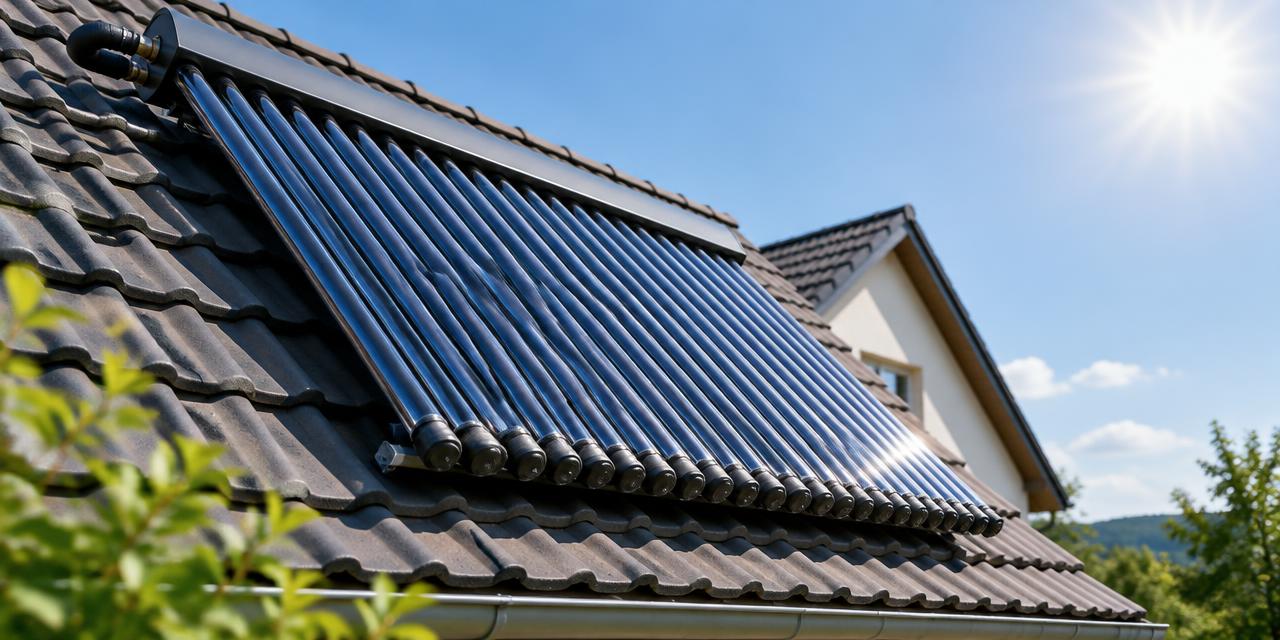
Various technologies exist, from flat plate collectors to vacuum tube collectors, depending on the desired efficiency and the orientation of your roof.
It is common to consider hybridization with a heat pump, which requires a rigorous sizing study to ensure the hydraulic consistency of the entire system.
In the context of Carouge, the choice of materials must take into account aesthetic integration. Mounting options on frames or in-roof integration allow for compliance with urban planning requirements.
Also, consider the storage capacity : a well-insulated tank is essential to retain the heat produced during sunny days to meet nighttime needs.
Precise planning with a qualified professional will save you from extra costs related to systems that are oversized or unsuitable for your specific annual consumption.
The building stock of Carouge shows great diversity, from historic Vieux-Carouge to more industrial or modern residential areas. Each era of construction imposes specific constraints.
For older buildings, overall thermal insulation is often a necessary prerequisite before any solar installation to avoid useless energy losses.
Checking the condition of the roof structure is an essential step when requesting quotes, particularly for houses built before the 1990s where the presence of regulated materials like asbestos requires careful management.
The existing heating network must also be analyzed. If you have a high-temperature system, coupling with solar thermal may require hydraulic adjustments or the replacement of certain heat emitters.
For more recent buildings, integration is easier, but it must be ensured that the distribution networks are compatible with new control technologies.
Topography and shading, frequent in dense urban environments, must be rigorously evaluated to ensure the energy profitability of your project.
A pilot project conducted by the Federal Office of Culture has demonstrated that it is possible to harmonize heritage preservation and solar energy, but every request requires rigorous landscape integration.
For protected roofs or those located in site plans, the authorization procedure is strict in order to preserve the unique architectural aspect of the municipality.
If your building is not in a protected sector, a simplified procedure via prior declaration can sometimes be considered, particularly if the installations comply with zoning regulations and demonstrate satisfactory integration.
For any complex installation, it is strongly advised to contact the Office of Urbanism before submitting your file.
Federal and cantonal rules require that heritage restrictions remain proportionate and are not more restrictive than what is legitimately necessary to protect the building stock. Never start work without having received the official authorization.
It is imperative to follow the correct order of steps : the subsidy application must be submitted and validated before the actual start of work. Any project started without a prior application risks making your project ineligible for these public subsidies.
You can check the details and forms on the official energy website of Geneva to get the latest updates.
Beyond direct aid, it is important to note that energy renovation works can sometimes benefit from tax deductibility according to the legislation in force in the canton.
We recommend that you keep all proof of your expenses, installation invoices, and certificates of compliance.
Coordination with your municipality of Carouge, which is very active on these energy issues, may also guide you on any additional local programs, thus ensuring that your investment is supported by all accessible financial levers.
The realization of a solar thermal project follows a structured cycle. The first phase is the feasibility study and the submission of the building permit, which can be synchronized with the subsidy application.
Once the authorization is obtained, technical planning is finalized. The worksite itself is generally fast because it involves roof installation and hydraulic connections to your technical room.
It is advisable to avoid periods of extreme cold, characterized by the 46 frost days recorded annually, to ensure safe working conditions for roofers and technicians working on your roof.
Commissioning includes a test and adjustment phase for the circulators and electronic control to ensure that the system interacts correctly with your current heating. By scheduling the project during a period of mild weather, you ensure a smooth installation.
The typical sequence therefore includes : administrative validation, delivery of equipment, installation of collectors, integration into the existing hydraulic system, pressurization, and finally the functional testing phase before the final acceptance of the works by the owner.
The main mistake is to ignore the sizing study phase, leading to inefficient installations. It is essential to check if your roof is technically capable of supporting the weight and stresses of the collectors.
Before requesting quotes, make sure your project complies with the urban planning rules of Carouge. Solicit several local companies and compare their proposals on the basis of a common technical description.
Do not forget that combining collectors and a heat pump requires a specific study to avoid any functional conflict.
Here is your checklist : Check the age of your boiler to know if a complete replacement is not more sensible. Confirm the availability of financial aid before any written commitment.
Make sure you have a certificate of acoustic compliance if you are installing a supplementary heat pump. Check the condition of your roof and the necessity of concomitant renovation works.
Ask companies how they plan to manage the landscape integration imposed by the Vieux-Carouge. Obtain the necessary permits before signing any contract. Compare the guarantees offered on the equipment.
1. Estimate
Set a budget range with the estimator.
2. Grants
Apply before work starts.
3. Quotes
Compare at least 3 quotes.
4. Permit
Check with the municipality whether a permit is needed.
5. Works
Follow the site and do a written handover.
Depending on system sizing.
Geneva support for solar hot water production.
www.ge.chCheck amounts and conditions with the provider before signing: apply before work starts in most cases.
1227 Carouge GE · about 0 km
Energie 3 SA provides energy concepts, sustainability consulting, and installation of renewable energy and building service systems.
energie3.ch1227 Les Acacias · about 0 km
Geneva-based engineering firm specializing in building thermics and the design of HVAC and renewable energy systems.
eco-building.ch1227 Carouge GE · about 0 km
Geneva-based HVAC specialist providing installation and maintenance of heating systems, heat pumps, air conditioning, and ventilation.
idclimat.ch1227 Carouge GE · about 0 km
Geneva-based company specializing in the installation, maintenance, and repair of heating systems, heat pumps, ventilation, and solar thermal energy.
senalada.chSuggestions from the commercial register by distance and activity. Not an endorsement or partnership.
Generally no, solar thermal mainly covers summer hot water. It must be coupled with a backup system for the winter.
Yes, a building permit is required for any solar installation in Carouge. The procedure is particularly strict in Vieux-Carouge.
Yes, the canton of Geneva offers aid for solar thermal. The application must be made mandatorily before the start of works.
It is possible under strict conditions. Careful integration is essential and the Office of Urbanism must validate the project.
The work is generally fast, focusing on the roof and technical room. The duration depends on the complexity of your current network.
It allows for optimizing yield and avoiding extra costs related to poor sizing. It is crucial for coupling with a heat pump.
A shading study is necessary before any project. If sunlight is insufficient, another energy solution will be more profitable.
Estimated solar yield
1'213 kWh/kWc/an
toit ~30° sud, PR 0.8, estimation
Altitude
382 m
Heating degree days
2'695 Kj/an
20/12 °C
Frost days
46 jours/an
Solar irradiation
1'378 kWh/m²/an
horizontal
Winter design temperature
-4.5 °C
1er percentile des minimales
Mean temperature
11.9 °C
Source : Open-Meteo Historical Weather API (réanalyse ERA5, moyenne 2015-2024) · swisstopo – service d'altitude (MNT)
Source : Énergie - Ville de Carouge
These rules apply across the whole canton, not only in this town.
Permits
Source : Guide Installations Solaires et Thermopompes - Canton de Genève