
Canton
Solar thermal — Geneva
Depending on system sizing.
Geneva support for solar hot water production.
www.ge.chSolar water heating · Genève
At a glance
Small project
CHF 10'100 – CHF 23'600
Typical project
CHF 13'000 – CHF 30'200
Large project
CHF 17'800 – CHF 41'000
| Project | Quantity | Low | High | Per unit |
|---|---|---|---|---|
| Small project | 3 m² | CHF 10'100 | CHF 23'600 | CHF 5'500 |
| Typical project | 6 m² | CHF 13'000 | CHF 30'200 | CHF 3'500 |
| Large project | 11 m² | CHF 17'800 | CHF 41'000 | CHF 2'600 |
Computed with our estimator for Genève (regional factor included), standard finish. Only the project size changes.
Included
Not included
In Genève, the federal building register lists 7'296 residential buildings and 115'225 dwellings. These municipal benchmarks help put your home in context, but do not replace an individual assessment.
78 % built before 1980
Construction year does not reveal past renovations: check the current insulation condition.
64 % · Gas
This distribution describes recorded buildings, not your system's consumption or efficiency.
| Energy | Heating | Hot water |
|---|---|---|
| Gas | 64 % | 56.8 % |
| Heating oil | 25 % | 23.3 % |
| District heating | 8 % | 7.4 % |
| Heat pump | 1 % | 0.8 % |
| Electricity | 0 % | 3.7 % |
| Wood | 1 % | 0.4 % |
| Solar thermal | 0 % | 5.5 % |
Each line gives the share of buildings using that energy, separately for heating and for hot water. The two columns do not always reach 100%: some buildings combine two systems, or reported none.
A standard non-condensing boiler is usually older and less efficient.
43.7 % of buildings mix housing with shops or offices.
For your renovation plans in Geneva, the official RegBL figures provide vital context. With 60 buildings out of 6768 officially designated for heritage protection, it is crucial to contact municipal authorities early to discuss permit requirements for your property. Regarding building volume, data based on the SIA 416 standard is currently unavailable for the 777 houses listed, as all values are marked as unknown. Due to this partial data coverage, homeowners must obtain a professional on-site assessment to accurately determine the scope and scale of necessary heating or insulation upgrades before beginning any renovation works.
Source : Registre fédéral des bâtiments et des logements (RegBL), OFS, 2026. Existing residential buildings; percentages of recorded values.
In Genève, at an altitude of 374 m and with a global annual solar irradiation of 1378 kWh/m²/year, the potential for solar thermal is real. The energy transition of the local building stock has become a priority, notably to reduce dependence on fossil fuels.
With 2752 heating degree days, energy demand is constant, making the efficiency of hot water production systems crucial.
It is timely to consider these works when your current installation reaches the end of its life or during a global renovation aimed at improving your building's energy performance.
Integrating thermal collectors allows for covering a large portion of hot water needs during summer periods, thus reducing the demand on your boiler. By acting now, you anticipate the growing sustainability requirements in Genève.
The local climate, despite 50 frost days per year, allows for efficient operation thanks to current technologies. Early planning allows you to align your project with cantonal climate goals while increasing the long-term value of your property.
Dimensioning is the defining step for any solar thermal installation. It is essential to precisely calculate the collector surface area needed to meet your needs without oversizing the system, which could lead to stagnation problems.
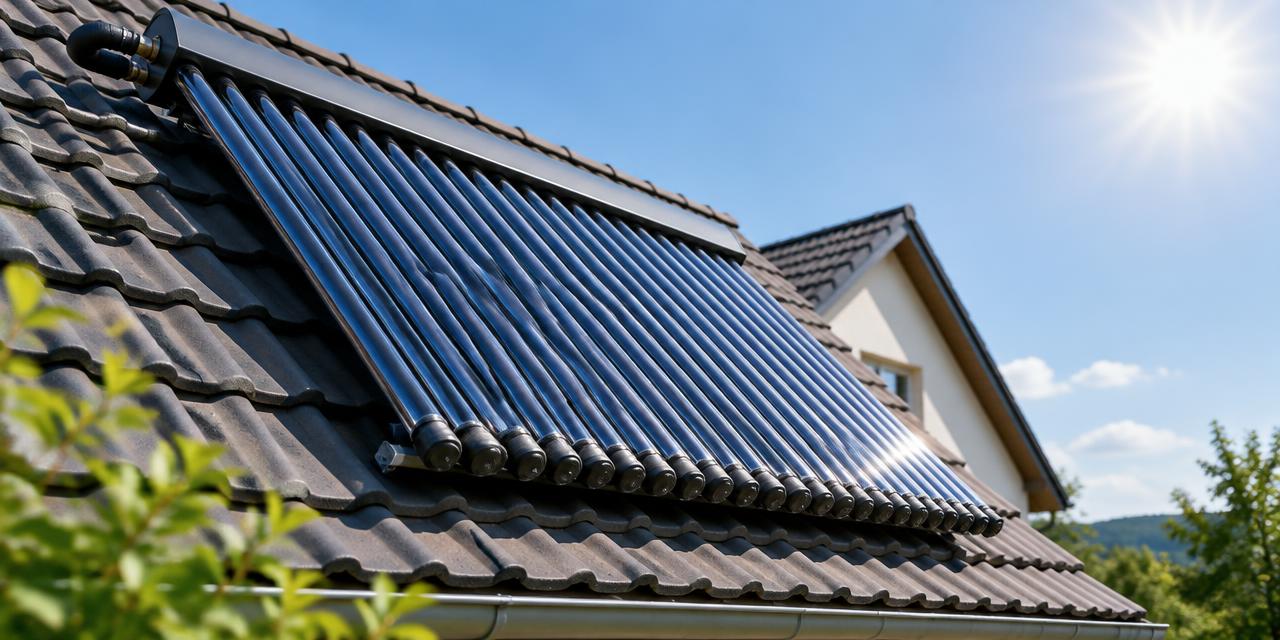
Solar thermal collectors generally cover a large part of hot water in summer, but the choice between flat plate or vacuum tube collectors will influence efficiency, especially during periods of low sunshine.
The type of storage tank must also be chosen according to your actual consumption and the space available in your basement.
If you plan to couple your system with a heat pump, a rigorous sizing study is essential to ensure the proper functioning of the whole system. The choice of materials for distribution circuits must meet sustainability standards to minimize heat loss.
Intelligent control options now allow for optimized management of produced heat.
It is recommended to discuss with professionals about the different ranges of collectors available on the Swiss market, in order to find the ideal balance between performance, durability, and initial investment.
Each component, from heat transfer fluid to insulation, plays a role in the overall longevity of the installation.
The Genève building stock presents great diversity, from old buildings to recent constructions.
For buildings prior to 1990, special attention must be paid during the installation of solar systems, particularly regarding the potential presence of asbestos or sensitive materials in roof structures.
The state of the framework must be checked before any fixing of collectors to ensure stability and watertightness.
The existing distribution networks in old houses are not always optimized for solar integration, sometimes requiring compliance work to avoid unnecessary energy losses.
Roof insulation is also a key factor. A poorly insulated roof limits the overall gain of your investment. In the canton of Genève, the building configuration can involve technical integration challenges, especially for individual houses.
It is necessary to ensure that the central heating system is compatible with solar input. Structural analysis also allows anticipating risks related to the weight of the collectors and constraints related to snow or wind.
A thorough examination of the roof condition by an expert is an essential step to avoid unforeseen restoration costs at the time of installing the collectors.
If your building is located in a heritage protection zone, the rules are stricter.
For listed properties, buildings included in the inventory, or located in the Old Town, the installation is authorized only on terrace roofs, flat roofs, or annexes, with a mandatory flat installation.
Installation on buildings located in an ISOS A village zone requires a building permit with special attention paid to visual integration.
Federal law takes precedence over local aesthetic regulations for "sufficiently adapted" installations, allowing for a simple announcement in many cases. However, for individually protected buildings or those located in a site plan, constraints remain high.
It is recommended to check your specific situation with your municipality, as being in an ISOS perimeter does not forbid the project, but imposes increased vigilance.
Always follow the procedures before starting the work to ensure the administrative compliance of your installation.
It is crucial to follow a strict order : you must imperatively submit your request for aid to the competent authorities before the start of work.
Any installation started before obtaining validation or without respecting official procedures could make your project ineligible for available financial support.
Regularly consult the official energy website of the canton of Genève to obtain updated forms and precise technical guidelines. In addition to direct subsidies, certain tax measures may apply depending on your situation.
Keep in mind that aid is designed to encourage energy efficiency. Combining these supports with a well-dimensioned installation maximizes your return on investment.
Do not forget to keep all vouchers and detailed invoices, as they will be required for the payment of the aid. Administrative rigor is your best ally to secure this local funding intended to promote the energy transition of your home.
The project workflow starts with a technical and administrative study phase. The first step is to validate the feasibility of the project through a site visit.
Once this step is completed, you submit your permit application to the Office of Urban Planning if necessary. In parallel, you submit your subsidy application.
Construction planning must take into account seasonal constraints; although there is no prohibited season, it is preferable to avoid marked frost periods, with 50 frost days per year in Genève, to facilitate roof work and ensure the safety of workers.
Once authorizations are received, equipment delivery occurs. Work begins with the installation of mounting elements, followed by the installation of the collectors themselves.
The hydraulic connection to the storage tank and existing heating systems constitutes the next phase. Pressure and commissioning tests are carried out to verify the airtightness and proper operation of the heat transfer fluid.
Finally, the official startup and verification of settings complete the project. Each step requires close coordination with your craftsmen to meet deadlines and ensure the quality of the execution.
To ensure the success of your project, avoid neglecting the structural analysis of your roof before any intervention. Never sign a work contract before obtaining a positive response from your official subsidy application.
It is common to forget to check the compatibility of the old heating system, which can lead to performance issues. Ensure that the selected company has the technical skills for integration specific to the Genève building stock.
Do not underestimate the importance of acoustics and landscape integration, as they determine whether permits are obtained.
Checklist before requesting quotes : 1. Check the condition of your roof and insulation with an independent professional. 2. Consult municipal regulations to confirm heritage protection zones. 3. List your actual domestic hot water needs for precise sizing. 4.
Identify the ideal location for the storage tank in your basement. 5. Request several comparative quotes by specifying local technical requirements. 6. Check company references regarding similar solar installations. 7.
Prepare your financial aid application file before the start of work. By following these steps, you secure your project against technical and administrative unforeseen events.
1. Estimate
Set a budget range with the estimator.
2. Grants
Apply before work starts.
3. Quotes
Compare at least 3 quotes.
4. Permit
Check with the municipality whether a permit is needed.
5. Works
Follow the site and do a written handover.
Depending on system sizing.
Geneva support for solar hot water production.
www.ge.chCheck amounts and conditions with the provider before signing: apply before work starts in most cases.
1204 Genève · about 0.1 km
Chris Energies is a Geneva-based company specializing in the installation, maintenance, and repair of heating systems, heat pumps, as well as photovoltaic and solar thermal equipment.
chris-energies.ch1205 Genève · about 0.8 km
Geneva-based specialist since 1988 in thermal installations, heating systems, and sanitary equipment for industrial and residential sectors.
desprazsa.ch1205 Genève · about 0.8 km
Léman Ventilation SNC specializes in the installation, maintenance, and repair of heating, ventilation, and sanitary systems.
h2o-leman.ch1207 Genève · about 1.4 km
The register lists sanitary installations, sheet metal roofing, roof coverings, heat pump heating and solar thermal systems; the supplied website concerns a company in La Sagne and does not establish photovoltaic services for the Geneva business.
jaquet-sa.chSuggestions from the commercial register by distance and activity. Not an endorsement or partnership.
No, solar thermal is mainly used for domestic hot water production. It helps reduce energy consumption but requires a backup heating system for full needs.
It is possible under strict conditions, notably on flat roofs or terrace roofs. A building permit is required and visual integration must be validated by heritage authorities.
A well-maintained solar thermal installation can operate efficiently for over 20 years. Regular maintenance is however recommended to maintain performance.
Most solar installations require a prior declaration or permit. In some simplified cases, a simple announcement suffices, but always check with the Office of Urban Planning.
Yes, this combination is entirely possible. It does, however, require a rigorous sizing study to ensure effective synergy between the two systems.
You must imperatively submit your aid application before the start of work. No aid will be paid for projects already underway.
Yes, the Genève climate allows for efficient use of solar thermal energy. Despite frost days, annual irradiation is sufficient to guarantee an interesting yield.
Estimated solar yield
1'213 kWh/kWc/an
toit ~30° sud, PR 0.8, estimation
Altitude
374 m
Heating degree days
2'752 Kj/an
20/12 °C
Frost days
50 jours/an
Solar irradiation
1'378 kWh/m²/an
horizontal
Winter design temperature
-4.7 °C
1er percentile des minimales
Mean temperature
11.7 °C
Source : Open-Meteo Historical Weather API (réanalyse ERA5, moyenne 2015-2024) · swisstopo – service d'altitude (MNT)
These rules apply across the whole canton, not only in this town.
Permits
Source : Guide Installations Solaires et Thermopompes - Canton de Genève