
Fri Solar Sàrl
1700 Fribourg · about 3.2 km
Fri Solar Sàrl, based in Fribourg, specializes in the installation of photovoltaic systems and battery storage for both residential and commercial clients.
frisolar.chHome solar battery · Villars-sur-Glâne
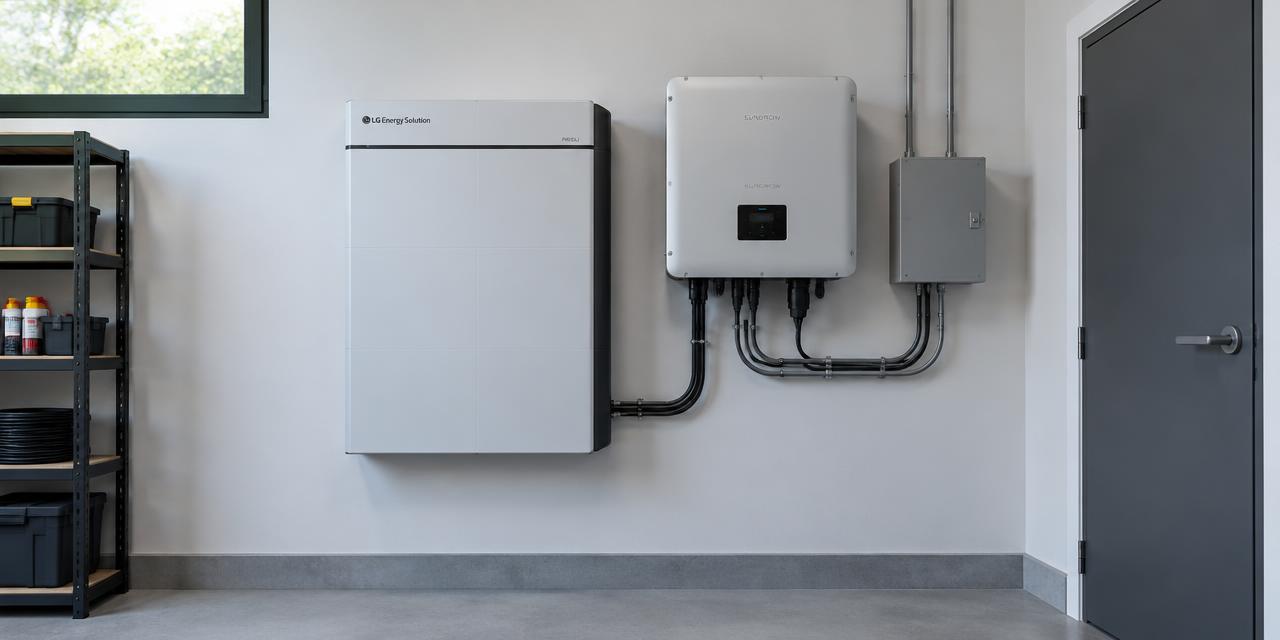
At a glance
Small project
CHF 4'400 – CHF 10'000
Typical project
CHF 7'900 – CHF 16'900
Large project
CHF 13'600 – CHF 28'000
| Project | Quantity | Low | High | Per unit |
|---|---|---|---|---|
| Small project | 5 kWh | CHF 4'400 | CHF 10'000 | CHF 1'300 |
| Typical project | 10 kWh | CHF 7'900 | CHF 16'900 | CHF 1'200 |
| Large project | 18 kWh | CHF 13'600 | CHF 28'000 | CHF 1'100 |
Computed with our estimator for Villars-sur-Glâne (regional factor included), standard finish. Only the project size changes.
Included
Not included
In Villars-sur-Glâne, the federal building register lists 1'440 residential buildings and 5'779 dwellings. These municipal benchmarks help put your home in context, but do not replace an individual assessment.
41 % built before 1980
Construction year does not reveal past renovations: check the current insulation condition.
31 % · Gas
This distribution describes recorded buildings, not your system's consumption or efficiency.
| Energy | Heating | Hot water |
|---|---|---|
| Gas | 31 % | 34.3 % |
| Heating oil | 21 % | 18.3 % |
| District heating | 19 % | 9.2 % |
| Heat pump | 19 % | 20.4 % |
| Electricity | 8 % | 15.3 % |
| Wood | 2 % | 0.9 % |
| Solar thermal | 0 % | 1.8 % |
Each line gives the share of buildings using that energy, separately for heating and for hot water. The two columns do not always reach 100%: some buildings combine two systems, or reported none.
A standard non-condensing boiler is usually older and less efficient.
6.9 % of buildings mix housing with shops or offices.
For homeowners in Villars-sur-Glâne, RegBL figures provide critical planning context. Eight buildings are under heritage protection, requiring early contact with municipal authorities for permit feasibility. Regarding scale, the median house volume is 830 m3 based on SIA 416, which helps gauge the scope of necessary heating or insulation upgrades. Please be aware that data coverage is partial; volume measurements are available for only 43 out of 749 houses, and heritage status is known for just 75 out of 1388 total buildings. Always verify these figures with local documentation before finalizing your renovation budget.
Source : Registre fédéral des bâtiments et des logements (RegBL), OFS, 2026. Existing residential buildings; percentages of recorded values.
With an altitude of 664 meters and weather conditions involving about 96 days of frost per year, the building stock in Villars-sur-Glâne requires precise energy management.3°C.
Given these realities, installing a battery storage system becomes relevant when your photovoltaic production exceeds your daytime needs. The Municipal Climate Plan, adopted in late 2024, encourages this transition toward better energy efficiency.
It is wise to undertake these works when your existing solar installation is no longer sufficient to cover your nighttime needs, or during a comprehensive renovation of your electrical system.
A battery allows you to store the energy produced during the day for use during periods of less sunlight.
Considering a global irradiation of 1354 kWh/m²/year, securing your electrical autonomy is a logical step for any owner wishing to optimize their carbon footprint while meeting the municipality's climate goals.
The success of your energy storage depends primarily on sizing it according to your actual evening consumption rather than just the peak power of your panels.
A battery is only truly useful if your solar production significantly exceeds your daytime consumption. It is essential to check compatibility with your existing inverter before any purchase, as hybrid systems can simplify integration.
Battery ranges vary according to chemical technology, often based on lithium, and offer modular storage capacities.
The choice of components influences the lifespan and efficiency of your installation. Some options include intelligent energy flow management capable of anticipating local weather to optimize charging.
Also consider the physical location of the storage : a temperate technical room is necessary to preserve the integrity of the battery cells against thermal variations.
Working with certified installers ensures that the technical specifications correspond exactly to your household's consumption profile in Villars-sur-Glâne.
Villars-sur-Glâne features a variety of building types, from 1970s villas to highly insulated new constructions.
Before 1990, it is imperative to remain vigilant regarding old materials, particularly the possible presence of asbestos in insulation or electrical conduits when opening walls to route cables.
The electrical network of older homes often needs to be brought up to code to support the integration of an intelligent management system and a battery.
For recent constructions, integration is easier but requires special attention to the building's airtightness. Comprehensive energy renovation, including better insulation, goes hand-in-hand with solar optimization.
If you plan to add a battery, ensure your electrical panel has the space required to accommodate the new circuit breakers and the control system.
A preliminary technical assessment will verify the robustness of the existing domestic network, avoiding unforeseen compliance costs during battery installation.
However, each project may have specifics related to the zoning plan or the municipal architectural heritage.
Before launching your project, it is highly recommended to consult the technical services of the municipality of Villars-sur-Glâne to check if any specific regulations apply to your plot or neighborhood.
Compliance with fire safety standards is an absolute obligation for domestic energy storage. Your installer must ensure that the equipment meets current regulations, particularly regarding ventilation and safety distances from living areas.
Transparency with local authorities, by requesting necessary information before signing work contracts, is the best guarantee to avoid unnecessary administrative blockages.
Do not neglect this initial verification step, as it often determines the eligibility of your application.
A crucial point is the carry-forward rule : if deductible expenses exceed the net income of the property for the current tax period, the excess can be carried forward to the following two tax periods.
Ensure you keep all detailed invoices to justify your deductions to the tax administration.
Regarding maintenance, you have a choice : either deduct the actual costs or apply a flat rate of 20% of the rental value for buildings older than 10 years. For buildings less than 10 years old, the flat rate is set at 10%.
It is imperative to request information or confirm your eligibility with the tax authorities before starting the work.
Careful planning allows you to maximize these tax advantages, transforming your battery project into a tax-efficient investment in the long term.
The installation of a domestic battery is a quick operation, usually spread over a short period after the planning phase. It all begins with a technical audit of your existing solar installation to validate system compatibility.
Once this step is complete, the choice of equipment is finalized based on actual needs. Seasonality has little impact on the installation, as the work takes place almost entirely indoors, regardless of the 96 days of frost per year in Villars-sur-Glâne.
The construction site begins with the installation of the intelligent control system, followed by the connection of the batteries to the inverters. Technicians then perform charge tests and configure the energy management software.
Once electrical compliance is validated by safety tests, commissioning is carried out, including training on monitoring your self-consumption.
By anticipating your administrative needs in advance, you ensure a smooth process, without depending on external weather conditions for the technical realization of your storage project.
Avoid sizing your battery solely based on the total power of your solar panels. Make sure to check the technical compatibility between the chosen battery and your current inverter before signing anything.
Do not neglect the space available in your technical room, as this equipment requires good air circulation. Before requesting quotes, make a list of your average nighttime electricity consumption to better target the useful capacity.
Check with your municipality if specific local standards apply to your neighborhood. Demand a clear simulation of the expected yield based on your roof's sunlight from your installer.
Finally, budget for a possible upgrade to your electrical panel to avoid surprises during the work.
1. Estimate
Set a budget range with the estimator.
2. Grants
Apply before work starts.
3. Quotes
Compare at least 3 quotes.
4. Permit
Check with the municipality whether a permit is needed.
5. Works
Follow the site and do a written handover.
No specific grant listed for this work. Maintenance tax deductions may still apply.
1700 Fribourg · about 3.2 km
Fri Solar Sàrl, based in Fribourg, specializes in the installation of photovoltaic systems and battery storage for both residential and commercial clients.
frisolar.ch1700 Fribourg · about 3.2 km
Electrical engineering office in Fribourg specializing in inspection, compliance, electrical panels, and energy consulting.
lexel.ch1700 Fribourg · about 3.2 km
Solesa SA specializes in electrical installations and renewable energy systems, including consulting and maintenance in Fribourg.
solesa.com.ar1723 Marly · about 3.7 km
French-Swiss specialist in energy renovation: installation of photovoltaic panels, heat pumps, batteries, and home insulation.
helvetiqua.chSuggestions from the commercial register by distance and activity. Not an endorsement or partnership.
Profitability depends on your self-consumption rate. The more you consume your produced energy in the evening, the more relevant the investment is.
Current lithium batteries generally offer a lifespan of 10 to 15 years depending on usage. A temperate environment promotes this longevity.
Yes, extreme temperatures affect performance. It is crucial to install the battery in an insulated technical room.
Generally no for an interior installation, but always check with the technical services of Villars-sur-Glâne.
Yes, investments in energy efficiency are deductible. If expenses exceed income, carry-forward over two years is possible.
Compatibility depends mainly on your inverter. A preliminary technical study is necessary to ensure proper operation.
Regular software monitoring is enough to track cell health. Prefer a professional for an annual check if necessary.
Estimated solar yield
1'192 kWh/kWc/an
toit ~30° sud, PR 0.8, estimation
Source : Open-Meteo Historical Weather API (réanalyse ERA5, moyenne 2015-2024)
Source : Commune de Villars-sur-Glâne
These rules apply across the whole canton, not only in this town.
Tax deductions
Source : Administration Cantonale des Impôts du Canton de Fribourg