
Canton
Solar PV — one-off payment (Fribourg)
Calculated on capacity (kWp).
Federal one-off payment for PV installations in the canton of Fribourg.
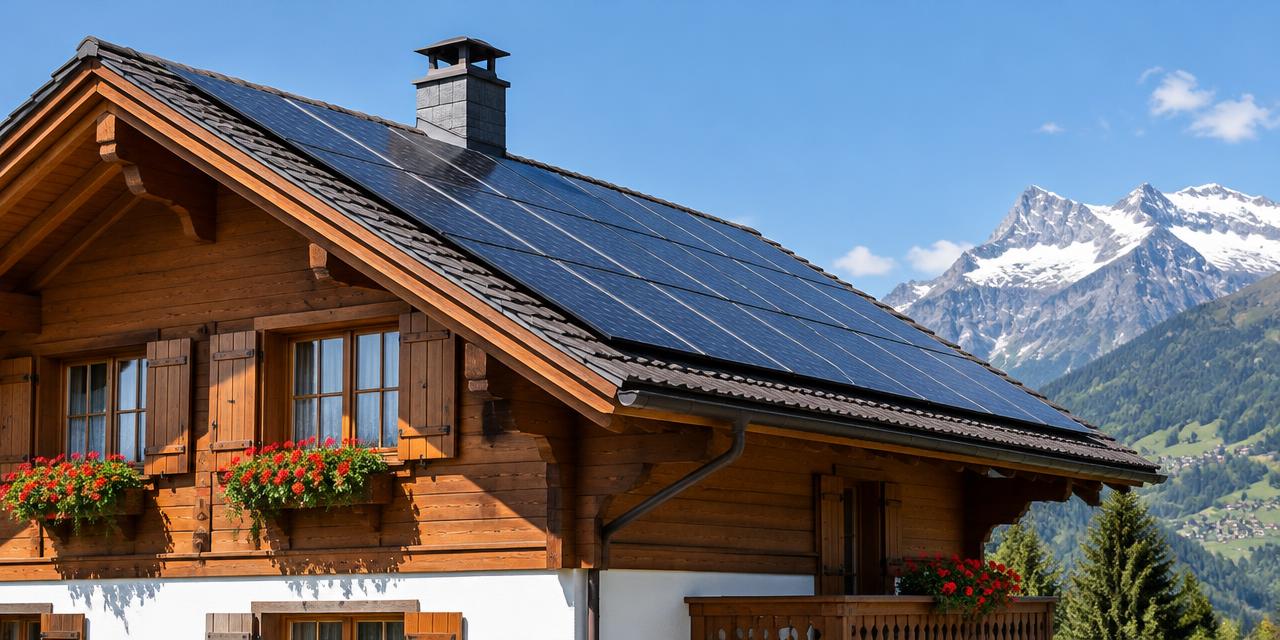
www.pronovo.chSolar panels · Villars-sur-Glâne
At a glance
Small project
CHF 9'800 – CHF 18'500
Typical project
CHF 18'100 – CHF 32'900
Large project
CHF 31'400 – CHF 55'800
| Project | Quantity | Low | High | Per unit |
|---|---|---|---|---|
| Small project | 5 kWc | CHF 9'800 | CHF 18'500 | CHF 2'800 |
| Typical project | 10 kWc | CHF 18'100 | CHF 32'900 | CHF 2'500 |
| Large project | 18 kWc | CHF 31'400 | CHF 55'800 | CHF 2'400 |
Computed with our estimator for Villars-sur-Glâne (regional factor included), standard finish. Only the project size changes.
Included
Not included
In Villars-sur-Glâne, the federal building register lists 1'440 residential buildings and 5'779 dwellings. These municipal benchmarks help put your home in context, but do not replace an individual assessment.
41 % built before 1980
Construction year does not reveal past renovations: check the current insulation condition.
31 % · Gas
This distribution describes recorded buildings, not your system's consumption or efficiency.
| Energy | Heating | Hot water |
|---|---|---|
| Gas | 31 % | 34.3 % |
| Heating oil | 21 % | 18.3 % |
| District heating | 19 % | 9.2 % |
| Heat pump | 19 % | 20.4 % |
| Electricity | 8 % | 15.3 % |
| Wood | 2 % | 0.9 % |
| Solar thermal | 0 % | 1.8 % |
Each line gives the share of buildings using that energy, separately for heating and for hot water. The two columns do not always reach 100%: some buildings combine two systems, or reported none.
A standard non-condensing boiler is usually older and less efficient.
6.9 % of buildings mix housing with shops or offices.
For homeowners in Villars-sur-Glâne, RegBL figures provide critical planning context. Eight buildings are under heritage protection, requiring early contact with municipal authorities for permit feasibility. Regarding scale, the median house volume is 830 m3 based on SIA 416, which helps gauge the scope of necessary heating or insulation upgrades. Please be aware that data coverage is partial; volume measurements are available for only 43 out of 749 houses, and heritage status is known for just 75 out of 1388 total buildings. Always verify these figures with local documentation before finalizing your renovation budget.
Source : Registre fédéral des bâtiments et des logements (RegBL), OFS, 2026. Existing residential buildings; percentages of recorded values.
With an altitude of 664 meters and a climate marked by approximately 96 frost days per year, Villars-sur-Glâne requires deep reflection on the energy efficiency of its building stock.
Heating needs, illustrated by heating degree days reaching 3,472 kJ/year, underscore the importance of reducing reliance on fossil fuels.
The global solar irradiation of 1,354 kWh/m²/year offers interesting potential for owners looking to produce their own electricity.
The ideal time to consider this installation is often during a roof renovation or when wishing to modernize your energy system. The Communal Climate Plan, adopted at the end of 2024, strongly encourages these initiatives.
By integrating solar panels before your roof reaches its wear limit, you optimize the durability of your investment.3 °C.
The sizing of a photovoltaic installation relies on several technical variables. For a south-facing roof with an inclination of about 30°, the estimated yield can reach 1,192 kWh/kWp/year.
The choice of solar panels, whether monocrystalline or polycrystalline, as well as inverter technology, will directly influence the overall energy yield. It is essential to choose components adapted to the available surface area and the typology of your roof.
Integration options also play a major role. 'On-roof' systems are often preferred for their simplicity and reduced costs, while 'in-roof' systems offer a cleaner aesthetic, especially for new builds.
Profitability will depend largely on your ability to consume electricity on-site, which may justify adding battery storage solutions. A rigorous analysis of your consumption habits will allow defining the optimal power to maximize your self-consumption.
Villars-sur-Glâne presents a varied real estate landscape, ranging from old farmhouses to modern villas.
If your house was built before 1990, particular attention must be paid to the potential presence of hazardous substances, notably asbestos, in the framework or roof elements.
Before any intervention, it is advisable to check the structural integrity of the roof.
A solar installation increases the load on the structure; a prior technical assessment is therefore essential to ensure that the framework can support these additional loads.
The thermal insulation of your home is also a determining factor. For older buildings, pairing the installation of solar panels with a roof insulation renovation is a relevant strategy.
The electrical networks of older houses may also need upgrading to accommodate a photovoltaic installation. It is recommended to consult your property's original plans to identify cable routes and the location of the electrical panel.
Careful preparation will avoid surprises during the execution phase of the work.
For the majority of projects, a sufficiently adapted rooftop installation is often subject to a simple notification procedure. It is nevertheless crucial not to start work without having received confirmation of the project's compliance.
Respecting architectural integration is an obligation in many areas. The installation of panels must not distort the general appearance of the surrounding buildings.
We advise you to prepare a complete file including photos and the technical characteristics of the chosen equipment.
If your building is part of a heritage protection perimeter, additional constraints on the color or arrangement of the panels could be imposed.
Contact the local authorities directly to obtain precise directives and ensure your project complies with the regulations in force.
It is imperative to submit your request before starting work to benefit from it. This aid is accessible for all photovoltaic installations in the territory of Fribourg, via the official Pronovo portal.
Ensure you have all technical documents ready when submitting your application.
On the tax side, investments in renewable energy and energy efficiency are deductible from your income. For properties over 10 years old, you can apply a flat-rate deduction of 20% of the rental value or deduct actual costs.
If deductible expenses exceed the property's income for the current tax period, the excess can be carried forward to the next two tax periods. For buildings less than 10 years old, the flat rate is set at 10%.
This incentive taxation aims to support owners in their efforts to improve energy efficiency.
The implementation of a solar project follows several key steps. Everything begins with a feasibility study and the application for administrative authorizations.
Once permits are obtained and aid secured, installers proceed to set up mounting structures, followed by the installation of the panels. Electrical connection work completes the project.
It is recommended to avoid periods of extreme winter cold, taking into account the 96 frost days per year in Villars-sur-Glâne, to ensure worker comfort and the proper installation of roof waterproofing.
The schedule also depends on the availability of materials and the planning of specialized companies. It is advisable to plan your project several months in advance.
A successful installation depends not only on the speed of execution but on the precision of the finishing touches. A testing phase and final commissioning allow verifying the proper operation of the installation and its connection to the grid.
Once these steps are cleared, you will be able to monitor your production and benefit from your sustainable installation.
Never neglect the condition of your roof before installing panels on it. Forgetting to apply for federal aid before signing any contract is an irreparable error. Systematically check if your zone is subject to heritage or local protection constraints.
Do not estimate your energy consumption without consulting your actual bills from the last few years. Do not choose an installer based solely on the lowest price without comparing the technical guarantees offered.
Ensure that the installer offers a reliable after-sales service near Villars-sur-Glâne. Finally, do not underestimate the importance of architectural integration to avoid administrative appeals.
Checklist : Check the age and condition of your roof. Consult the solar cadaster if available or a sunlight study. Request quotes from several local companies. Check the installer's references. Ensure the offer includes the request for single remuneration.
Confirm that the project complies with the municipality's requirements. Plan the installation schedule outside of intensive frost periods.
1. Estimate
Set a budget range with the estimator.
2. Grants
Apply before work starts.
3. Quotes
Compare at least 3 quotes.
4. Permit
Check with the municipality whether a permit is needed.
5. Works
Follow the site and do a written handover.
Calculated on capacity (kWp).
Federal one-off payment for PV installations in the canton of Fribourg.
www.pronovo.chCheck amounts and conditions with the provider before signing: apply before work starts in most cases.
1752 Villars-sur-Glâne · about 0 km
Based in Villars-sur-Glâne, bj Électricité Sàrl provides electrical installations as well as photovoltaic system installation, connection and maintenance throughout French-speaking Switzerland.
bjelectricite.ch1762 Givisiez · about 2 km
AC Energies SA specializes in the engineering, installation, and maintenance of HVAC systems, as well as heating solutions utilizing renewable energy.
ac-energies.ch1762 Givisiez · about 2 km
Fri Elec SA is a company based in Givisiez specializing in electrical installations, photovoltaics, and home automation for residential, industrial, and commercial sectors.
fri-elec.ch1720 Corminboeuf · about 3.1 km
ABC Solar Sàrl specializes in the installation of photovoltaic systems and sustainable energy solutions for residential and commercial customers.
abcsolar.chSuggestions from the commercial register by distance and activity. Not an endorsement or partnership.
Photovoltaic panels generally have a lifespan of 25 to 30 years. Performance may slightly decrease over time while remaining very efficient.
Battery profitability depends on your self-consumption rate. They are useful if you wish to consume your own energy during the evening.
Solar investments are deductible from your taxable income. It is advisable to keep invoices for your annual tax returns.
An annual visual inspection is generally sufficient. A light cleaning can be done if you notice significant dust accumulation.
It is strongly recommended to use certified professionals. This ensures safety, electrical compliance, and access to financial aid.
Snow generally melts quickly thanks to the heat released by the panels. Manual snow removal is unnecessary except in exceptional cases.
Yes, with 1,354 kWh/m²/year of irradiation, the potential is very good. A well-oriented installation allows for significant annual production.
Estimated solar yield
1'192 kWh/kWc/an
toit ~30° sud, PR 0.8, estimation
Altitude
664 m
Heating degree days
3'472 Kj/an
20/12 °C
Frost days
96 jours/an
Solar irradiation
1'354 kWh/m²/an
horizontal
Winter design temperature
-9.3 °C
1er percentile des minimales
Mean temperature
9.3 °C
Source : Open-Meteo Historical Weather API (réanalyse ERA5, moyenne 2015-2024) · swisstopo – service d'altitude (MNT)
Source : Commune de Villars-sur-Glâne
These rules apply across the whole canton, not only in this town.
Tax deductions
Source : Administration Cantonale des Impôts du Canton de Fribourg