
swisspro SR SA, succursale de Vernier (canton de Genève)
1219 Le Lignon · about 1.9 km
swisspro is a specialist in electrical installations, building automation, and energy solutions such as photovoltaics and charging infrastructure.
swisspro.chHome solar battery · Vernier
At a glance
Small project
CHF 4'400 – CHF 10'000
Typical project
CHF 7'900 – CHF 16'900
Large project
CHF 13'600 – CHF 28'000
| Project | Quantity | Low | High | Per unit |
|---|---|---|---|---|
| Small project | 5 kWh | CHF 4'400 | CHF 10'000 | CHF 1'300 |
| Typical project | 10 kWh | CHF 7'900 | CHF 16'900 | CHF 1'200 |
| Large project | 18 kWh | CHF 13'600 | CHF 28'000 | CHF 1'100 |
Computed with our estimator for Vernier (regional factor included), standard finish. Only the project size changes.
Included
Not included
In Vernier, the federal building register lists 2'486 residential buildings and 17'039 dwellings. These municipal benchmarks help put your home in context, but do not replace an individual assessment.
56 % built before 1980
Construction year does not reveal past renovations: check the current insulation condition.
54 % · Gas
This distribution describes recorded buildings, not your system's consumption or efficiency.
| Energy | Heating | Hot water |
|---|---|---|
| Gas | 54 % | 45.4 % |
| Heating oil | 20 % | 15.3 % |
| District heating | 15 % | 14.1 % |
| Heat pump | 6 % | 3.5 % |
| Electricity | 3 % | 7.1 % |
| Wood | 2 % | 0.7 % |
| Solar thermal | 0 % | 9.6 % |
Each line gives the share of buildings using that energy, separately for heating and for hot water. The two columns do not always reach 100%: some buildings combine two systems, or reported none.
A standard non-condensing boiler is usually older and less efficient.
6.8 % of buildings mix housing with shops or offices.
For your renovation projects in Vernier, please note that federal building register data remains partially documented. Regarding heritage protection, out of 2398 total buildings, status is known for 48, with none currently registered as protected. We recommend contacting the municipality early in your planning phase. As information regarding renovation years and precise building volume according to SIA 416 standards is unavailable, you should plan for a professional site inspection. This data gap means that assessing the exact scale of heating or insulation works requires a specialized evaluation to ensure your budget and technical scope are accurately defined.
Source : Registre fédéral des bâtiments et des logements (RegBL), OFS, 2026. Existing residential buildings; percentages of recorded values.
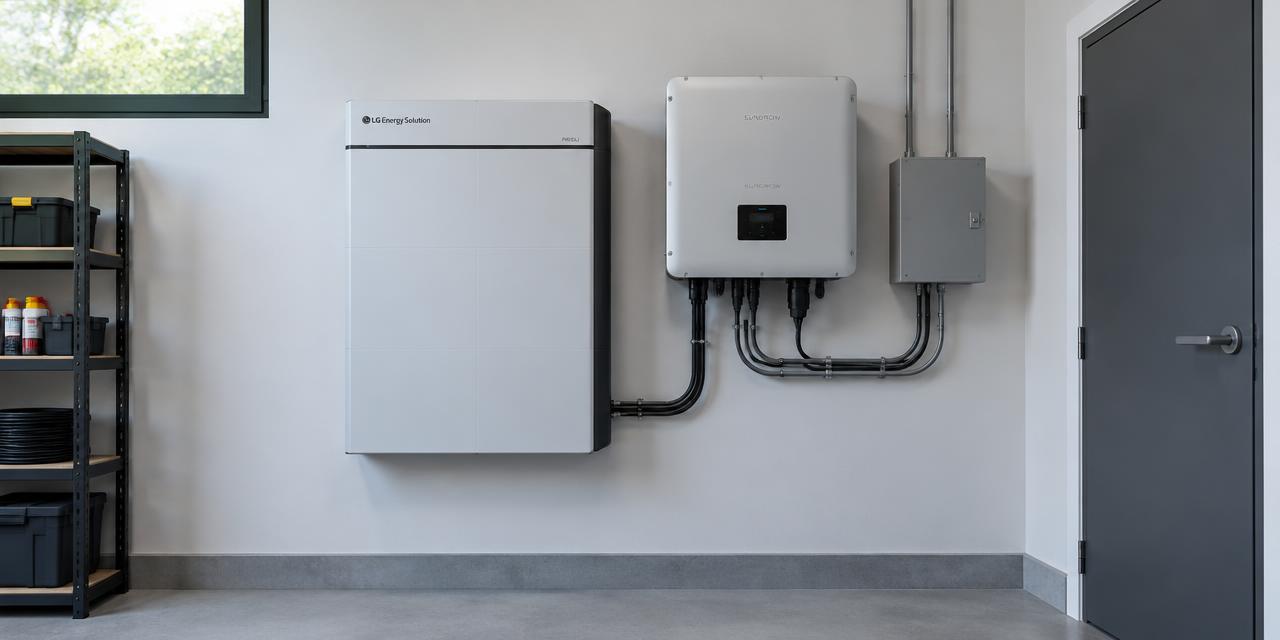
In Vernier, the benefit of a battery lies in optimizing self-consumption. With favorable sunshine, a battery is useful if your solar production significantly exceeds your daytime consumption.
As a municipality with the Energy City Gold label, Vernier actively encourages the energy transition. Your approach is therefore in line with municipal climate goals aimed at a 2000-Watt society.
The timing choice is strategic to reduce your grid dependency.9°C and about 54 frost days per year, photovoltaic production drops while heating needs increase.
Investing in a battery helps better manage the gaps between high summer production and winter consumption peaks. It is therefore recommended to analyze your annual consumption data before initiating any project.
The selection of your equipment depends on compatibility with your photovoltaic installation. It is imperative to check compatibility with your existing inverter before buying, as some systems require specific hybrid inverters.
Lithium-Iron-Phosphate (LiFePO4) technology is currently the standard for its longevity and safety, offering a reliable solution for residential use.
Size the capacity according to evening consumption, not the power of the panels. Unnecessary oversizing increases costs without offering real benefit. Also consider the location: a battery should ideally be installed in a tempered and dry place.
Given local thermal constraints in winter, installation in a non-insulated basement can reduce battery performance if it is not designed for such conditions.
Always ask for a detailed data sheet including the number of guaranteed discharge cycles to compare different market models.
Vernier features a varied building typology, marked by large developments built before 1975, such as Le Lignon or Les Avanchets. For owners of detached houses, older construction requires a prior check of the electrical networks.
An obsolete electrical panel will need to be brought up to standard to support the integration of a storage and energy management system.
Buildings constructed before 1990 require special vigilance regarding the potential presence of asbestos in technical rooms. Before attaching any wall mounts for the battery, a check is recommended.
If your house is located in a heritage protection zone, although battery installation is indoors, verify that any changes to the facade or associated panel installation comply with local conditions.
The City of Vernier assists owners with these analyses, ensuring that your project meets environmental standards while preserving the value of existing buildings.
However, if your storage project is accompanied by the addition or modification of solar panels, precise rules apply. In Vernier, photovoltaic installations on buildings in heritage protection zones are subject to strict implantation conditions.
), you can benefit from a simplified procedure. If these conditions are not met or if the building has high heritage value, a building permit is required from the Office of Urban Planning.
It is strongly advised to contact the municipal services before starting, as the City offers free and personalized assistance to define the compliance of your solar project and its annexes.
In Vernier, the City is strongly committed to the energy transition, having ratified the Charter for Climate and Energy of Swiss Cities.
Although there is no systematic automatic subsidy without prior study, the free support offered by the municipality allows for the identification of potential financial support for your installation.
It is recommended to consult municipal services to validate the eligibility of your project for the programs in force at the time of the application. Any installation carried out without prior checks could exclude you from certain cantonal or federal aid.
Ensure that you compile a complete file with a detailed quote, specifying the technical characteristics of the equipment, to allow for a quick assessment by the competent authorities.
The neutrality of the municipal support guarantees you an objective analysis of the solutions best suited to your specific situation.
The realization of a solar storage project begins with an energy diagnostic phase. In Vernier, this step can be facilitated by the free support offered by the municipality.
Once the technical choice is made and the quote is accepted, the administrative process begins. If the project requires a building permit, deadlines depend on the complexity of landscape integration.
For implementation, the ideal period is outside the months of heavy frost; although frost does not directly impact internal installation, it facilitates logistics and the technicians' work. The site itself is relatively fast if it is a simple battery addition.
Key steps include support preparation, electrical connection, energy management system configuration, and finally commissioning. Adherence to the initial planning depends on equipment availability.
It is recommended to allow a margin for coordination with specialized electricians and final inspections necessary to validate the compliance of the installation.
Never neglect the technical compatibility between your battery and the existing inverter, as an error at this level will prevent the system from working properly.
Ensure that the sizing of the battery corresponds to your real evening needs and not to the maximum production power of your panels. Avoid choosing an installer who does not take into account the specific constraints of old or heritage buildings in Vernier.
Checklist before asking for quotes : Check the age and condition of your current electrical panel to anticipate compliance updates. Ensure the location planned for the battery is tempered, dry, and secure.
Gather your annual electricity consumption data to size the project precisely. Contact the municipal services of Vernier to benefit from the free support. Demand that the installer confirms full compatibility with your inverter.
Ask for a clear explanation on the lifespan and discharge cycle warranties. Confirm in writing that the installer handles the conformity declaration formalities.
1. Estimate
Set a budget range with the estimator.
2. Grants
Apply before work starts.
3. Quotes
Compare at least 3 quotes.
4. Permit
Check with the municipality whether a permit is needed.
5. Works
Follow the site and do a written handover.
No specific grant listed for this work. Maintenance tax deductions may still apply.
1219 Le Lignon · about 1.9 km
swisspro is a specialist in electrical installations, building automation, and energy solutions such as photovoltaics and charging infrastructure.
swisspro.ch1219 Le Lignon · about 1.9 km
Amaudruz SA is a company specializing in electrical installations, home automation, and photovoltaic solutions.
amaudruz.ch1203 Genève · about 3.3 km
CP Cipriano SA specializes in electrical installations, photovoltaics, charging stations, and heat pumps in Geneva and Vaud.
cipriano-electricite-geneve.ch1203 Genève · about 3.3 km
Geneva-based company specializing in electrical installations, appliance repairs, and sustainable energy solutions like solar and heating.
jordan-electricite.chSuggestions from the commercial register by distance and activity. Not an endorsement or partnership.
No, it is not mandatory. However, it is strongly recommended if your production exceeds your daytime consumption.
The capacity should be calculated based on your nighttime consumption. There is no need to unnecessarily oversize the battery.
The municipality offers free personalized support for owners. Contact their services to learn about available support.
Yes, any major modification to the electrical system must be declared. Your installer can usually handle this process for you.
It is not recommended to install a battery outdoors in Vernier. A tempered and dry place is essential for the durability of components.
The battery stores energy produced during the day. Without solar production, it can only recharge depending on your system configuration.
The lifespan depends on the technology. Current LiFePO4 models offer high longevity, often measured in guaranteed discharge cycles.
Estimated solar yield
1'213 kWh/kWc/an
toit ~30° sud, PR 0.8, estimation
Source : Open-Meteo Historical Weather API (réanalyse ERA5, moyenne 2015-2024)