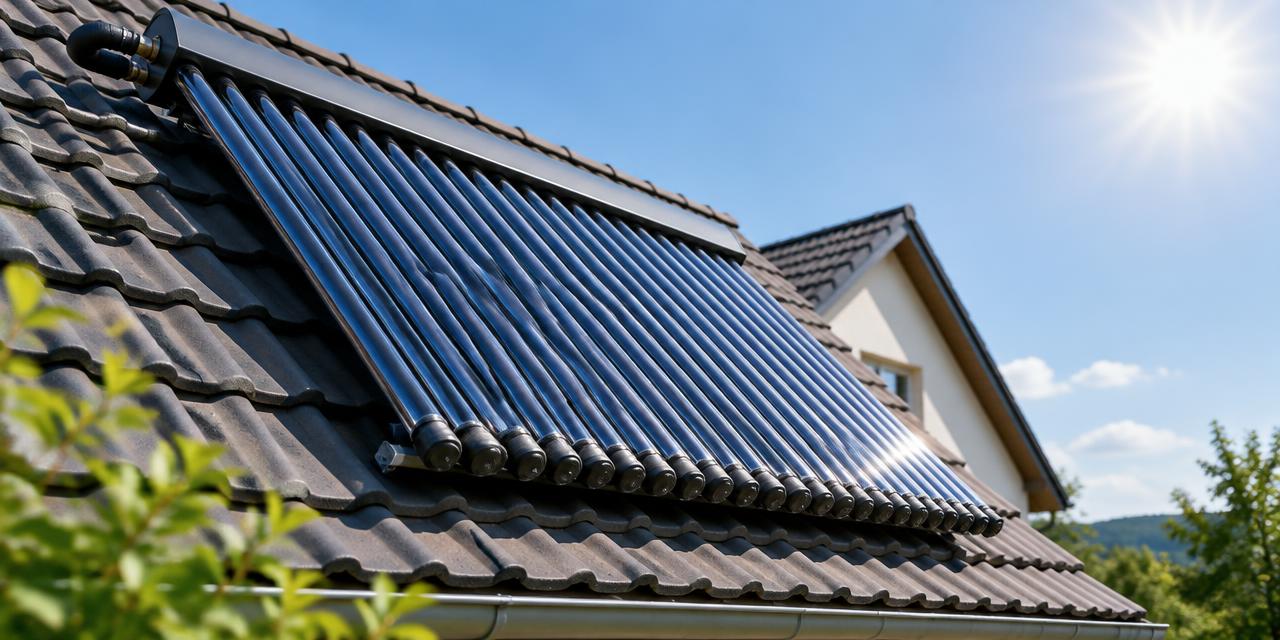
Are you planning to install solar water heating in Saanen? This efficient technology helps reduce your reliance on fossil fuels while providing hot water in an eco-friendly way. Whether you are renovating an older house or optimizing a new build, proper planning is essential. To get an accurate cost estimate for your home, use our free RenoIndex tool. It will help you discover the current price range for such an installation in the canton of Bern and plan your budget effectively.
At a glance
Typical budget
CHF 12'100 – CHF 28'000
Midpoint
CHF 19'400
Grants found
0
Nearby companies
4
Worked examples in Saanen
Small project
CHF 9'400 – CHF 21'900
Typical project
CHF 12'100 – CHF 28'000
Large project
CHF 16'500 – CHF 38'000
Project
Quantity
Low
High
Per unit
Small project
3 m²
CHF 9'400
CHF 21'900
CHF 5'100
Typical project
6 m²
CHF 12'100
CHF 28'000
CHF 3'200
Large project
11 m²
CHF 16'500
CHF 38'000
CHF 2'400
Computed with our estimator for Saanen (regional factor included), standard finish. Only the project size changes.
Cost split (typical project)
Labour :CHF 7'800(40 %)
Materials :CHF 9'700(50 %)
Other costs :CHF 1'900(10 %)
What the price covers
Included
Supply and installation
VAT
Collectors, controls, standard connection and tank according to answers
Not included
Permits and architect fees
Unexpected structural issues
Possible subsidies
Roof refurbishment and replacement of main heating
Saanen's housing stock in figures
In Saanen, the federal building register lists 2'904 residential buildings and 6'905 dwellings. These municipal benchmarks help put your home in context, but do not replace an individual assessment.
71 %built before 1980
48 %heated by oil or gas
19.4 %electric hot water
3.5 %with declared solar thermal
Age of residential buildings
71 % built before 1980
Before 191930 %
1919–19455 %
1946–196011 %
1961–197014 %
1971–198011 %
1981–19908 %
1991–20006 %
2001–20106 %
Since 201110 %
Construction year does not reveal past renovations: check the current insulation condition.
Main heating energy
46 % · Heating oil
Heating oil46 %
Wood29 %
Heat pump11 %
District heating6 %
Electricity5 %
Gas2 %
This distribution describes recorded buildings, not your system's consumption or efficiency.
Heating and hot water: which energies?
Energy
Heating
Hot water
Gas
2 %
1.8 %
Heating oil
46 %
49.6 %
District heating
6 %
5.9 %
Heat pump
11 %
7.3 %
Electricity
5 %
19.4 %
Wood
29 %
14.7 %
Solar thermal
0 %
1.1 %
Each line gives the share of buildings using that energy, separately for heating and for hot water. The two columns do not always reach 100%: some buildings combine two systems, or reported none.
Type of heating system
Boiler (unspecified)48.1 %
Stove14.9 %
Heat pump11.2 %
Standard boiler10.7 %
Heat exchanger (district)6.2 %
Central electric heating4.8 %
Condensing boiler3.3 %
A standard non-condensing boiler is usually older and less efficient.
Houses or apartment buildings?
Single-family houses45 %
Two-dwelling houses24.5 %
Apartment buildings (3+)30.4 %
Other0 %
29.6 % of buildings mix housing with shops or offices.
The typical building
storeys (median)
3
median footprint
139 m²
median dwelling area
80 m²
Renovations, heritage and volumes
For your renovation plans in Saanen, the official building registry data provides essential context. Regarding heritage protection, 42 out of 374 known buildings are protected, meaning you must contact the municipality early to navigate permit requirements. The median building volume is 1496 m3; however, this figure covers only 31 of the 1308 houses measured under the SIA 416 standard, with the remainder using other metrics. Please be aware that data coverage for building volume is partial and information regarding the renovation year is not available in the current registry for this municipality.
42
buildings flagged as protected
status known for 374 of 2'904 buildings; check with the municipality
Solar thermal collectors capture radiation energy to heat your domestic hot water. In Switzerland, particularly in a region like Saanen, this solution is highly effective.
Solar thermal collectors usually cover much of summer hot water, significantly reducing the load on your main heating system. It is a sustainable investment that increases your property value over the long term.
By lowering your annual energy consumption, you gain autonomy and contribute to the Swiss energy transition. RenoIndex helps you by providing a clear price range so you can start your project with confidence.
Technology and integration
Technical integration is a crucial step. You must account for roof pitch, orientation, and shading. If you plan to couple your installation with another system, be aware that combining collectors with a heat pump needs a sizing study.
This step optimizes the overall efficiency of your system and ensures that both technologies work in synergy. It is recommended to hire certified installers who are familiar with the climatic specifics of the canton of Bern.
To estimate the cost of such an installation, consult the RenoIndex simulator and obtain a realistic price range for your home.
Grants and subsidies
These grants can significantly reduce the initial investment. Always ensure you submit your grant application before starting construction, as the conditions are strict.
Our RenoIndex tool helps you get a precise idea of the costs, which facilitates your administrative process for obtaining funding tailored to your solar project in Saanen.
Tips for your project
To ensure the success of your solar project, start with a thermal analysis of your building. Efficient insulation helps maximize the effectiveness of your solar system. Choose quality equipment that is adapted to your roof structure.
Also, consider regular maintenance to guarantee a lifespan spanning several decades. In the canton of Bern, weather conditions can vary, which impacts the choice of materials.
Use RenoIndex to get a reliable budget range and compare the various technical options available on the market. Careful preparation is key to a profitable investment that will provide optimal comfort all year round.
Your project in 5 steps
1. Estimate
Set a budget range with the estimator.
2. Grants
Apply before work starts.
3. Quotes
Compare at least 3 quotes.
4. Permit
Check with the municipality whether a permit is needed.
5. Works
Follow the site and do a written handover.
Grants and subsidies
No specific grant listed for this work. Maintenance tax deductions may still apply.
Companies in the area
Gilles Raymond S.à r.l.
1658 Rossinière · about 14.9 km
Based in Rossinière, Gilles Raymond Sàrl provides sanitary, heating, solar thermal and photovoltaic installations, as well as sheet metal and roofing work, with a 24-hour emergency service.
Andrei SH Sàrl specializes in kitchen and bathroom renovations as well as the installation of heating systems, heat pumps, and solar thermal solutions.
Suggestions from the commercial register by distance and activity. Not an endorsement or partnership.
Frequently asked questions
What savings can be achieved with solar thermal?
Solar thermal can cover a significant portion of your hot water needs, especially during sunny months. On average, this can reduce your annual energy bill for hot water production by 50 to 70 percent, providing an attractive return on investment in the canton of Bern.
Does solar thermal work in winter in Saanen?
Yes, collectors produce energy even in winter thanks to diffuse radiation. However, the yield is lower than in summer. The system is therefore designed to supplement your main heating rather than replace it entirely during the coldest months of the year.
How long does a solar installation last?
A quality installation, when properly maintained, has an average lifespan of 20 to 25 years. Regular maintenance by a professional allows checking heat transfer fluids and the general condition of the panels to maintain a high level of performance throughout the system's lifespan.
Do I need a permit to install panels?
Most rooftop solar installations are subject to a simple notification procedure in the canton of Bern, provided that certain aesthetic and technical conditions are met. It is advisable to contact your municipality to confirm the applicable local rules before starting work.