
Fasel-Piller Gebäudehülle AG
1716 Plaffeien · about 26 km
Swiss company specializing in building services, tinsmithing, roofing, and solar installations for the building envelope.
faselpillerag.chSolar water heating · Thun
At a glance
Small project
CHF 9'400 – CHF 21'900
Typical project
CHF 12'100 – CHF 28'000
Large project
CHF 16'500 – CHF 38'000
| Project | Quantity | Low | High | Per unit |
|---|---|---|---|---|
| Small project | 3 m² | CHF 9'400 | CHF 21'900 | CHF 5'100 |
| Typical project | 6 m² | CHF 12'100 | CHF 28'000 | CHF 3'200 |
| Large project | 11 m² | CHF 16'500 | CHF 38'000 | CHF 2'400 |
Computed with our estimator for Thun (regional factor included), standard finish. Only the project size changes.
Included
Not included
In Thun, the federal building register lists 7'167 residential buildings and 22'890 dwellings. These municipal benchmarks help put your home in context, but do not replace an individual assessment.
69 % built before 1980
Construction year does not reveal past renovations: check the current insulation condition.
41 % · Gas
This distribution describes recorded buildings, not your system's consumption or efficiency.
| Energy | Heating | Hot water |
|---|---|---|
| Gas | 41 % | 33.9 % |
| Heating oil | 28 % | 30 % |
| District heating | 3 % | 1.3 % |
| Heat pump | 22 % | 8.8 % |
| Electricity | 2 % | 22.6 % |
| Wood | 3 % | 1.6 % |
| Solar thermal | 0 % | 1.5 % |
Each line gives the share of buildings using that energy, separately for heating and for hot water. The two columns do not always reach 100%: some buildings combine two systems, or reported none.
A standard non-condensing boiler is usually older and less efficient.
9.6 % of buildings mix housing with shops or offices.
For renovation planning in Thun, official registry data identifies 4 heritage-protected buildings. If your property falls under this category, contact the municipality early to navigate permit requirements. Regarding building volume, the median is 914 m3 according to the SIA 416 standard; however, this figure covers only 5 houses out of 3587, representing a highly partial data set. Because recorded data for the year of renovation is unavailable for the local building stock, homeowners cannot rely on these statistics to determine the age of their property's last significant upgrades or specific energy efficiency needs.
Source : OFS — RegBL (export communal complet). Existing residential buildings; percentages of recorded values.
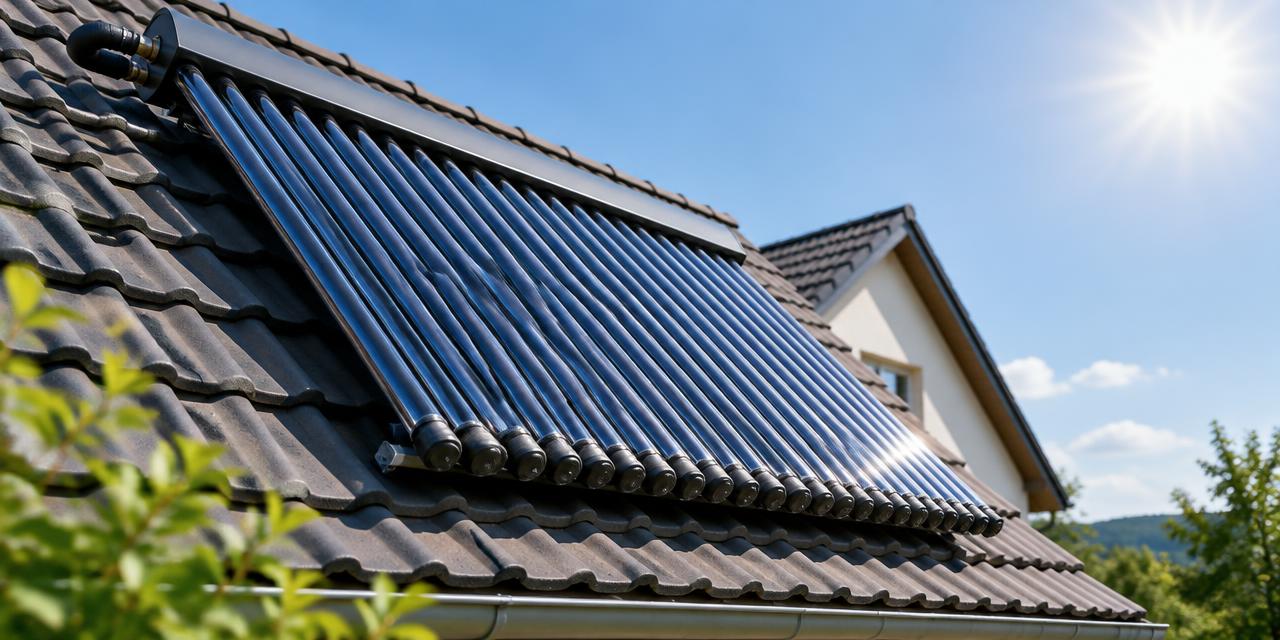
Solar thermal collectors capture solar radiation to heat a heat transfer fluid circulating towards a storage tank. This system is particularly efficient during sunny months. In practice, solar thermal collectors usually cover much of summer hot water.
To optimize the efficiency of your installation, the orientation and tilt of the panels must be carefully studied according to your roof.
Annual maintenance is recommended to check the fluid pressure and the condition of the components, thus ensuring optimal performance over the long term. To assess the budget needed for such an installation, consult the free RenoIndex estimator.
Integrating solar thermal into an existing heating system is often a wise move to improve overall energy ratings. However, combining collectors with a heat pump needs a sizing study.
The goal is to ensure that both energy sources work in complementarity without creating regulation conflicts. Proper sizing allows you to make the most of solar gains while using the heat pump only when necessary.
Remember that a well-designed installation helps extend the lifespan of your main equipment. To obtain a cost estimate for your project while considering these aspects, use the RenoIndex tool.
It is imperative to check with the competent authorities in the canton of Bern before starting work, as grant conditions may vary. A prior application is often required to benefit from available subsidies.
By combining these grants with the energy savings generated by the system, you significantly reduce the payback period. Do not hesitate to use our RenoIndex estimator to obtain a precise estimate of the net cost after potential subsidies.
The success of a solar thermal project relies on an installation performed by qualified professionals. During planning, it is crucial to analyze your actual hot water needs based on the size of your household.
Local installers in Thun will be able to advise you on the best possible location and the collector technology adapted to your roof. An installation compliant with Swiss standards guarantees not only safety but also access to cantonal subsidies.
Take the time to compare the offers received to get the best value for money. Finally, keep in mind that RenoIndex is at your disposal to estimate the costs of your work for free.
1. Estimate
Set a budget range with the estimator.
2. Grants
Apply before work starts.
3. Quotes
Compare at least 3 quotes.
4. Permit
Check with the municipality whether a permit is needed.
5. Works
Follow the site and do a written handover.
No specific grant listed for this work. Maintenance tax deductions may still apply.
1716 Plaffeien · about 26 km
Swiss company specializing in building services, tinsmithing, roofing, and solar installations for the building envelope.
faselpillerag.ch1723 Marly · about 35 km
Founded in 1981 and based in Marly, Hayoz & Brulhart SA provides plumbing, heating and solar installations, as well as sheet metal work and roofing for new builds, renovations and repairs.
hayoz-brulhart.ch1700 Fribourg · about 35.5 km
Fribourg-based company specializing in tinwork, roofing, plumbing, heating systems, and solar panel installations.
jr-sarl.ch1700 Fribourg · about 35.5 km
VB Charpente Sàrl is a Fribourg-based company specializing in carpentry, roofing, tinsmithing, skylights, and solar installations.
vbcharpente.chSuggestions from the commercial register by distance and activity. Not an endorsement or partnership.
No, solar thermal is a complementary solution. It mainly covers hot water needs but requires a boiler or heat pump for space heating and to maintain temperature during the winter.
The necessary area depends on your daily hot water consumption and the number of inhabitants. Generally, allow between 1 and 1.5 m² per person for a standard installation optimized for domestic hot water.
Maintenance is simple and infrequent. A check every 3 to 5 years is usually enough to monitor the heat transfer fluid and the condition of the pump. It is a minor cost compared to the savings achieved.
Yes, thanks to the sunlight and the subsidies available in the canton of Bern, the system becomes profitable quickly, especially with the long-term rise in the price of fossil fuels.