
NAO Energy SA
1020 Renens VD · about 0 km
NAO Energy is a company specializing in the installation of photovoltaic solar systems, heat pumps, and energy storage solutions in French-speaking Switzerland.
naoenergy.chHome solar battery · Renens
At a glance
Small project
CHF 4'400 – CHF 10'000
Typical project
CHF 7'900 – CHF 16'900
Large project
CHF 13'600 – CHF 28'000
| Project | Quantity | Low | High | Per unit |
|---|---|---|---|---|
| Small project | 5 kWh | CHF 4'400 | CHF 10'000 | CHF 1'300 |
| Typical project | 10 kWh | CHF 7'900 | CHF 16'900 | CHF 1'200 |
| Large project | 18 kWh | CHF 13'600 | CHF 28'000 | CHF 1'100 |
Computed with our estimator for Renens (regional factor included), standard finish. Only the project size changes.
Included
Not included
In Renens, the federal building register lists 1'639 residential buildings and 11'420 dwellings. These municipal benchmarks help put your home in context, but do not replace an individual assessment.
58 % built before 1980
Construction year does not reveal past renovations: check the current insulation condition.
53 % · Gas
This distribution describes recorded buildings, not your system's consumption or efficiency.
| Energy | Heating | Hot water |
|---|---|---|
| Gas | 53 % | 42.8 % |
| Heating oil | 30 % | 29 % |
| District heating | 8 % | 7.5 % |
| Heat pump | 4 % | 4.2 % |
| Electricity | 5 % | 7.5 % |
| Wood | 1 % | 0.3 % |
| Solar thermal | 0 % | 4.5 % |
Each line gives the share of buildings using that energy, separately for heating and for hot water. The two columns do not always reach 100%: some buildings combine two systems, or reported none.
A standard non-condensing boiler is usually older and less efficient.
18.1 % of buildings mix housing with shops or offices.
For homeowners in Renens, RegBL figures provide essential benchmarks for planning your renovations. While the status of heritage protection is known for 114 buildings, with one officially protected, contacting the municipality early is vital to navigate permit requirements. The median building volume of 800 m3, derived from 123 houses measured under the SIA 416 standard, helps estimate the scale of necessary heating or insulation upgrades. Please be aware that data coverage is partial, as 599 buildings utilize other or unknown standards, which is a key factor to consider when evaluating the scope and budget of your renovation project.
Source : Registre fédéral des bâtiments et des logements (RegBL), OFS, 2026. Existing residential buildings; percentages of recorded values.
With an estimated annual solar irradiation of 1371 kWh/m²/year, Renens offers significant potential for photovoltaic production. At an altitude of 420 meters, the local climate is well-suited for optimized energy management.
The municipal Climate Plan, which aims for carbon neutrality by 2050, encourages homeowners to increase the share of local renewable energy.
A battery becomes relevant when your solar production clearly exceeds your daytime consumption, allowing you to use your own electricity in the evening.
The heating degree day index of 2758 Kj/year shows real thermal needs, and storage can support high-performance solar-coupled heating systems.
Given the 48 days of frost per year, it is essential to plan for the installation of your battery in a temperate technical room to ensure optimal efficiency.
By planning these works now, you align your home with the goals of the Renens Energy City Gold label while gaining energy independence.
Sizing a storage system is based on a simple rule : it is not about the total power of your panels, but about your typical nighttime consumption.
A battery that is too large will never be fully utilized, while one with too little capacity will not meet your needs.
It is crucial to verify compatibility with your existing inverter, as DC or AC coupling influences the efficiency of your entire photovoltaic installation.
Current battery technologies, mainly based on lithium, offer various levels of quality depending on the allowed depth of discharge and guaranteed cycle count.
Some systems offer intelligent management options that allow you to prioritize certain energy-hungry appliances in the house.
Before placing any order, assess the available space in your basement, as these devices require adequate ventilation and a stable environment, away from areas subject to humidity or extreme temperature variations linked to winter frost.
In Renens, the building stock has varied characteristics depending on the construction era.
For buildings built before 1990, it is imperative to remain vigilant regarding the potential presence of pollutants, such as asbestos, when making the incisions necessary to route cables between the inverter, battery, and electrical panel.
A preliminary diagnosis helps secure these interventions.
Furthermore, energy performance varies enormously between older, often poorly insulated buildings and recent renovations.
If you are undertaking electrical work to integrate a battery, take the opportunity to have the compliance of your main electrical panel checked.
In older buildings, the obsolescence of networks may require an upgrade to standards before adding sensitive electronic components.
A well-thought-out installation is not limited to the battery itself, but integrates the entire electrical distribution chain of your home to ensure total safety and long-lasting operation in accordance with current requirements.
This guide does not establish a permit exemption. If your building or area is protected, check the constraints specific to your project.
These investments, which include the use of renewable energies and the addition of installations in existing buildings, benefit from a 100% deduction rate.
If the costs cannot be fully taken into account for tax purposes in the year they were incurred, the balance can be carried forward to the two following tax periods.
It is, however, essential to note that if you receive public subsidies for these measures, you can only deduct the costs you actually bear yourself.
The order of procedures is mandatory : systematically verify your eligibility and apply for aid before starting the work. Keep all invoices and certificates carefully.
Regarding real estate taxation, note that the choice between deducting actual costs and the flat-rate deduction is possible, but carrying forward investment costs excludes the use of the flat-rate deduction for that specific tax period.
Consult a tax advisor to optimize your declaration according to your rental situation.
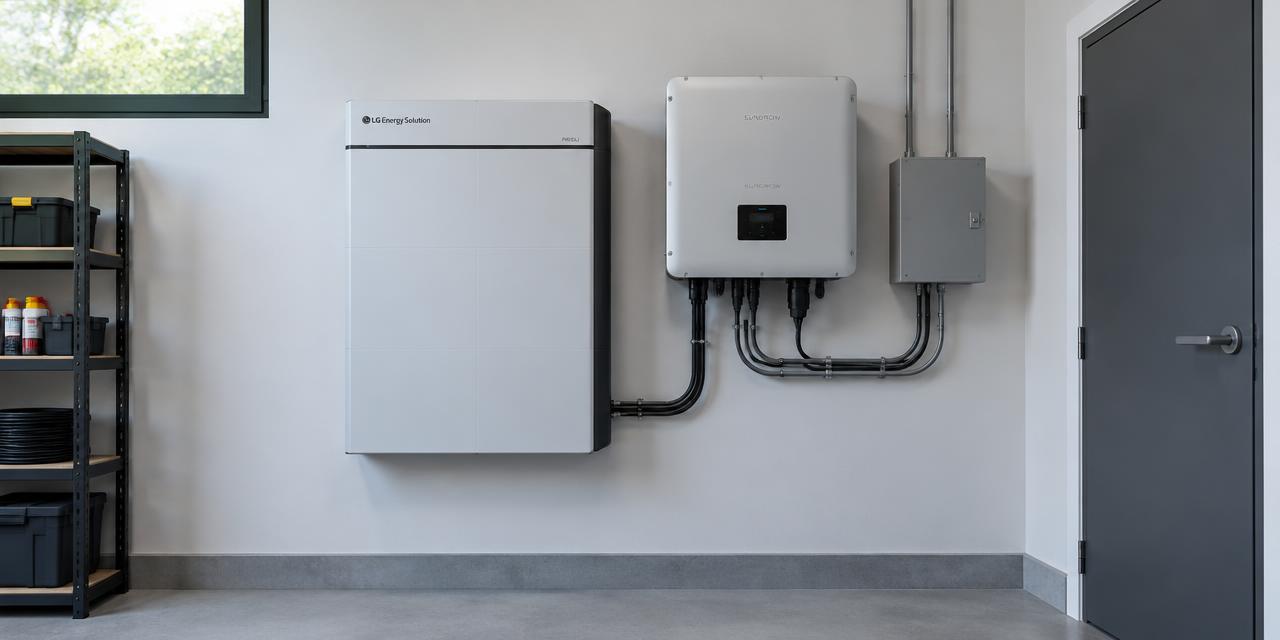
The project workflow for installing a solar battery follows a logic of secure progress. After obtaining quotes and confirming technical feasibility, the first step is preparing the technical room.
It must be clean, dry, and tempered, a crucial point in Renens given the minimum winter temperatures that can drop low. Then, technicians carry out the physical installation of the battery and electrical connections.
This work must be done by certified professionals to ensure compliance with safety standards.
Finally, commissioning includes configuring the management software, which optimizes flows between your panels, your battery, and the public grid.
The ideal season for this work is usually spring or autumn, to avoid periods of intense frost that could complicate logistics or work in unheated rooms.
Ensure smooth coordination between the electrician and the equipment supplier, and keep in mind that final validation by an inspection body may be necessary depending on the scale of the electrical modification.
Never underestimate the importance of verifying the technical compatibility between your existing inverter and the chosen battery before validating any quote.
Ensure that your current electrical installation meets current safety standards to avoid unforeseen additional costs. It is imperative to confirm the installation location, ensuring it respects the manufacturer's temperature and humidity conditions.
Do not choose a storage capacity based solely on the power of your solar panels, but rather on your actual nighttime consumption needs. Always check the possibility of obtaining aid before signing anything, as applications must be made in advance.
Request several comparative quotes detailing the components and installation services. Finally, ensure that the chosen company has the necessary certifications to perform electrical work in the Canton of Vaud.
1. Estimate
Set a budget range with the estimator.
2. Grants
Apply before work starts.
3. Quotes
Compare at least 3 quotes.
4. Permit
Check with the municipality whether a permit is needed.
5. Works
Follow the site and do a written handover.
No specific grant listed for this work. Maintenance tax deductions may still apply.
1020 Renens VD · about 0 km
NAO Energy is a company specializing in the installation of photovoltaic solar systems, heat pumps, and energy storage solutions in French-speaking Switzerland.
naoenergy.ch1022 Chavannes-près-Renens · about 1.3 km
Swiss Solar System Sàrl is a Chavannes-près-Renens based company specializing in photovoltaic installations and energy storage systems.
swisssolarsystem.ch1004 Lausanne · about 2.3 km
Company specializing in the installation of photovoltaic systems, battery storage solutions, and charging stations.
elec.ch1004 Lausanne · about 2.3 km
Fixide Power Systems Sàrl specializes in uninterruptible power supply systems and battery solutions for businesses and individuals throughout Switzerland.
fixide.chSuggestions from the commercial register by distance and activity. Not an endorsement or partnership.
No, it is not mandatory. A battery is useful if your solar production clearly exceeds your daytime consumption.
Size the capacity according to evening and nighttime consumption, not the power of the panels.
It is best to avoid unheated rooms due to risks related to winter frost. Opt for a temperate space.
In general, a simplified procedure is sufficient, but always check with the municipality before starting.
Yes, investments aimed at saving energy are 100% deductible. Make sure you are not otherwise subsidized.
You must verify compatibility with your existing inverter and the compliance of your electrical panel.
Aid must systematically be requested before the start of renovation work.
Estimated solar yield
1'206 kWh/kWc/an
toit ~30° sud, PR 0.8, estimation
Source : Open-Meteo Historical Weather API (réanalyse ERA5, moyenne 2015-2024)
These rules apply across the whole canton, not only in this town.
Tax deductions
Source : Règlement sur la déduction des frais relatifs aux immeubles privés (RDFIP)