
Canton
Solar PV — Geneva support
Variable additional grants; federal one-off payment by capacity.
Geneva strongly supports solar PV, with grants in addition to the federal one-off payment.
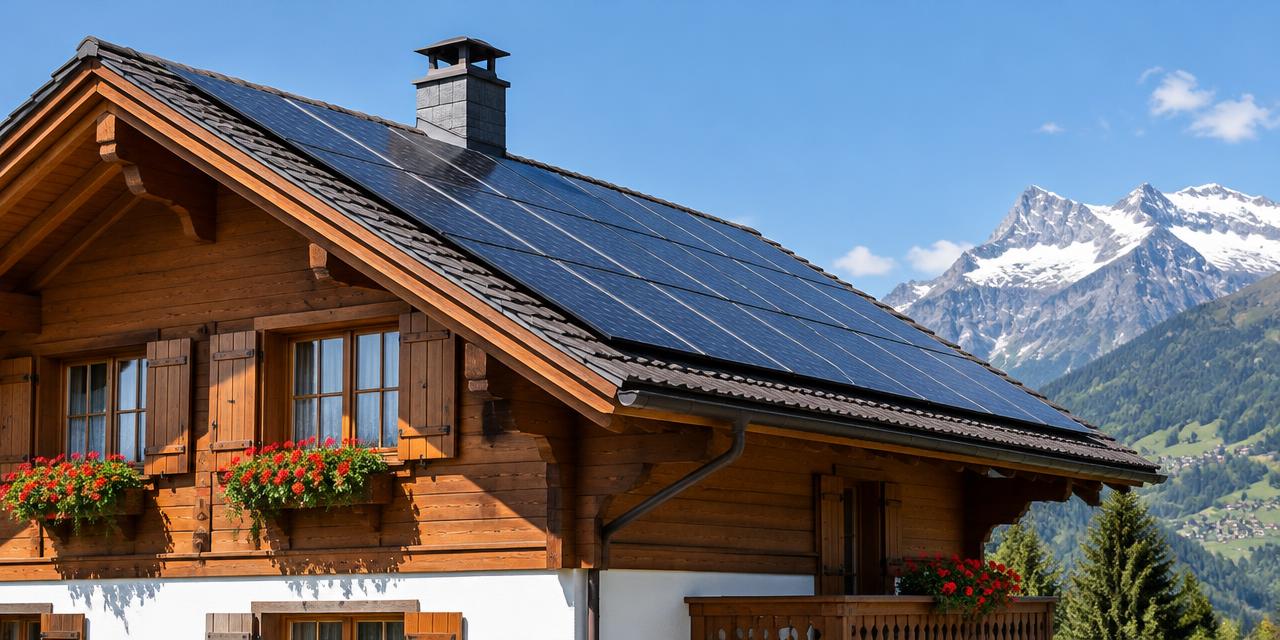
www.pronovo.chSolar panels · Lancy
At a glance
Small project
CHF 9'800 – CHF 18'500
Typical project
CHF 18'100 – CHF 32'900
Large project
CHF 31'400 – CHF 55'800
| Project | Quantity | Low | High | Per unit |
|---|---|---|---|---|
| Small project | 5 kWc | CHF 9'800 | CHF 18'500 | CHF 2'800 |
| Typical project | 10 kWc | CHF 18'100 | CHF 32'900 | CHF 2'500 |
| Large project | 18 kWc | CHF 31'400 | CHF 55'800 | CHF 2'400 |
Computed with our estimator for Lancy (regional factor included), standard finish. Only the project size changes.
Included
Not included
In Lancy, the federal building register lists 1'951 residential buildings and 16'638 dwellings. These municipal benchmarks help put your home in context, but do not replace an individual assessment.
57 % built before 1980
Construction year does not reveal past renovations: check the current insulation condition.
61 % · Gas
This distribution describes recorded buildings, not your system's consumption or efficiency.
| Energy | Heating | Hot water |
|---|---|---|
| Gas | 61 % | 50.1 % |
| Heating oil | 18 % | 14.7 % |
| District heating | 13 % | 10.9 % |
| Heat pump | 4 % | 2.1 % |
| Electricity | 1 % | 7.5 % |
| Wood | 2 % | 0.6 % |
| Solar thermal | 0 % | 9.3 % |
Each line gives the share of buildings using that energy, separately for heating and for hot water. The two columns do not always reach 100%: some buildings combine two systems, or reported none.
A standard non-condensing boiler is usually older and less efficient.
14 % of buildings mix housing with shops or offices.
For your renovation plans in Lancy, please note that official data from the Federal Register of Buildings and Dwellings (RegBL) is currently incomplete. Out of 1900 registered buildings, there is no recorded information regarding renovation years or building volumes measured according to the SIA 416 standard. Given this partial data coverage, homeowners must conduct their own technical assessments before finalizing plans for heating systems or insulation upgrades. It is essential to contact the local municipal authorities early in your planning process to confirm your property details, as these registry figures do not provide a sufficient basis for an automated renovation cost estimate.
Source : Registre fédéral des bâtiments et des logements (RegBL), OFS, 2026. Existing residential buildings; percentages of recorded values.
Lancy shows a strong commitment to energy transition, reconfirming its status as a Gold Energy City in 2025. With ambitious goals, including reaching carbon neutrality by 2050, the municipality encourages citizens to modernize their property.
Given interesting solar irradiation and a temperate climate at an altitude of 421 meters, installing photovoltaic panels is particularly relevant.
Undertaking this work now allows you not only to align with the guidelines of the Plan Climat Lancéen (PCL 2024) but also to anticipate the growing demand for renewable electricity.
The housing stock in Lancy has grown significantly, reaching over 16,000 units by the end of 2023. This housing density requires reflection on overall energy efficiency.
By installing solar panels, you reduce your reliance on the grid while increasing the value of your property on the local market.
Choosing to perform this work during roof refurbishment or comprehensive renovation is the ideal time to share costs and simplify interventions on your building.
The success of a photovoltaic project in Lancy depends primarily on the quality and adaptation of the equipment. There are various ranges of modules, from standard panels to building-integrated solutions.
The choice of inverters, which are the brains of the system, must be adapted to the size of your installation and your consumption habits.
To optimize yield, it is essential to evaluate the tilt and orientation of your roof, knowing that optimal conditions on a south-facing roof can generate substantial annual production per kilowatt-peak.
The profitability of your installation is closely linked to your self-consumption rate. The more energy you consume, the more financially attractive the operation.
Options like battery storage or coupling with smart energy management systems allow you to adjust your consumption.
It is advisable to discuss with certified installers about the various technologies available on the market to select the equipment that offers the best balance between long-term performance and durability, while complying with safety standards in the canton of Geneva.
The housing stock in Lancy is diverse, reflecting the urban development of the municipality since the beginning of the 20th century.
For houses built before 1990, particular attention should be paid to the potential presence of asbestos in building materials or insulation when handling the roof structure.
The condition of the roof frame is a determining factor : it must be able to support the additional load of solar panels.
In many cases, refurbishing the thermal insulation of the roof is recommended before installing panels to ensure the tightness and overall energy performance of the home.
Newer buildings often have better structural predispositions but may present specific constraints related to internal electrical networks.
It is essential to carry out a preliminary diagnosis to check the capacity of your current electrical panel to accept solar energy injection. For buildings located in protected areas, landscape integration constraints are stricter.
In all cases, a technical assessment by a qualified professional is necessary to identify essential preparatory work, whether it is structural reinforcement, electrical compliance upgrades, or thermal bridge treatment, thus ensuring the longevity of your solar investment.
If your project meets certain conditions, particularly for installations on conforming pitched roofs or non-visible flat roofs, a simple prior declaration may suffice. It is crucial to verify if your home is located in a heritage protection zone.
Buildings listed in the inventory or located in an ISOS A zone are subject to stricter rules regarding aesthetic integration and the type of installation allowed.
For protected areas, the installation may be authorized if it is laid flat on roof terraces, flat roofs, or annexes, without modifying the overall appearance of the building with reflections.
If these installation criteria are not met, or if the building has high heritage value, a formal building permit is indispensable. Remember that, depending on the total installed power, requirements may vary.
We advise you to contact municipal services or a professional accustomed to Lancy's specifics to validate the feasibility of your project before any financial commitment.
Following these steps ensures compliant execution and avoids unnecessary administrative complications.
At the cantonal level, Geneva also offers complementary aid aimed at supporting the local energy transition. It is essential to follow the order of steps: you must absolutely submit your aid application before starting the work.
An application submitted after the start of the site is systematically refused. Ensure you consult the official Pronovo website to obtain the most recent information on application procedures.
The profitability of your project will also depend on your ability to optimize your self-consumption, because the electricity you consume directly is the one you do not buy from the grid. Do not forget to integrate these aids into your overall financing plan.
Taxation can also offer deductions for energy-saving work; inquire with your cantonal tax administration to learn about current provisions.
By combining the one-off remuneration and Genevan aid, you maximize the return on your investment while contributing to Lancy's energy goals.
The realization of a solar project in Lancy follows a calendar punctuated by seasons and administrative procedures. The first step is to obtain a feasibility study and a complete quote.
Once the professional is chosen, the building permit application (or prior declaration) is submitted. It is important to anticipate processing times by the competent authorities. Once permits are received, project planning can begin.
It is highly recommended to avoid periods of deep frost, with an average of 66 frost days per year in Lancy, to facilitate roof work and ensure the safety of installers as well as the quality of seals.
The construction site itself, once material is delivered, is generally quick for a single-family home. It includes installing mounting systems, panel assembly, electrical wiring, and connection to the panel.
Finally, commissioning with a compliance check is necessary before operation. Planning during spring or autumn months often allows taking advantage of mild weather conditions.
By anticipating each step, from the grant application to commissioning, you ensure total serenity for your renovation project.
The most common mistake is neglecting the analysis of your self-consumption rate, which reduces the overall profitability of the investment.
Never request quotes without having first verified the structural condition of your roof and the compatibility of your electrical panel.
Another classic mistake is forgetting administrative steps, particularly the submission of subsidy applications before the work even begins.
Ensure you choose certified installers who know the specifics of Geneva to avoid non-compliance during the final inspection. Do not bet on low-end components that risk limiting the lifespan of your installation.
Here is a checklist to prepare yourself : verify the age and condition of your roof, assess your annual electricity needs, check if your house is in a protected zone, request three detailed comparative quotes, confirm that the installer handles the application for the federal one-off remuneration, check the capacity of your current electrical panel, and ensure financial aid is reserved before any start.
A rigorous and structured approach is the key to a successful project in Lancy. By following these simple tips, you minimize financial and technical risks while maximizing the performance of your future solar installation.
A photovoltaic installation is designed to last for several decades, but it requires minimal maintenance to maintain optimal performance.
Although panels are self-cleaning due to precipitation, an annual visual inspection is recommended to detect potential deposits, debris, or damage caused by weather events.
It is advisable to entrust this periodic check to your installer, especially if your roof is difficult to access.
This check also allows verifying the proper functioning of the inverters, whose lifespan is generally shorter than that of the solar panels themselves.
The durability of your investment relies on the quality of materials and the precision of the initial installation. By avoiding thermal overloads and ensuring adequate ventilation under the panels, you extend the useful life of the system.
Remember to integrate a simple maintenance contract when signing your quote to ensure peace of mind over the long term.
A well-maintained installation remains a major asset for your property, not only by reducing your energy bills but also by consolidating its residual value.
Acting responsibly for the maintenance of your installation means preserving your solar production capacity over the long term in the climatic context of Lancy.
1. Estimate
Set a budget range with the estimator.
2. Grants
Apply before work starts.
3. Quotes
Compare at least 3 quotes.
4. Permit
Check with the municipality whether a permit is needed.
5. Works
Follow the site and do a written handover.
Variable additional grants; federal one-off payment by capacity.
Geneva strongly supports solar PV, with grants in addition to the federal one-off payment.
www.pronovo.chCheck amounts and conditions with the provider before signing: apply before work starts in most cases.
1212 Grand-Lancy · about 0 km
Devinaz SA, based in Grand-Lancy, designs, installs and maintains heating systems and photovoltaic installations, and services and replaces water heaters.
devinaz.ch1212 Grand-Lancy · about 0 km
Toitures 2000 Sàrl specializes in roof renovation, insulation, and solar equipment, as well as sheet metal work and roof windows.
toitures2000.ch1212 Grand-Lancy · about 0 km
Geneva-based company specializing in electrical installations, home automation, telecommunications, and energy-saving solutions for homes and businesses.
epre.ch1213 Petit-Lancy · about 0.9 km
Ardizio Toitures SA, active for 100 years in Geneva, specializes in roofing, tinsmithing, waterproofing, insulation, and solar energy.
ardizio-toitures.chSuggestions from the commercial register by distance and activity. Not an endorsement or partnership.
No, a simplified procedure by prior declaration is possible under certain conditions, especially for flat roofs or conforming pitched roofs. It is, however, necessary to check the heritage status of your building with the Urban Planning Office.
You can benefit from the federal one-off remuneration via Pronovo. Geneva also offers complementary aid for photovoltaics.
Absolutely, Lancy benefits from solar irradiation favorable for efficient production. Profitability mainly depends on your electricity self-consumption rate.
Yes, but the strength of the frame and the absence of asbestos must be checked. Insulation renovation is often recommended before installation.
Spring or autumn are ideal to avoid frost periods in Lancy. Always anticipate your subsidy applications before starting the site.
It is possible under certain aesthetic integration conditions, such as flat mounting. A building permit is generally required in these sectors.
Other orientations may work, but a yield study is necessary. Your installer will adjust the system power accordingly.
Estimated solar yield
1'223 kWh/kWc/an
toit ~30° sud, PR 0.8, estimation
Altitude
421 m
Heating degree days
2'905 Kj/an
20/12 °C
Frost days
66 jours/an
Solar irradiation
1'390 kWh/m²/an
horizontal
Winter design temperature
-5.5 °C
1er percentile des minimales
Mean temperature
11.3 °C
Source : Open-Meteo Historical Weather API (réanalyse ERA5, moyenne 2015-2024) · swisstopo – service d'altitude (MNT)
Source : lancy.ch
Source : ge.ch · estimate
These rules apply across the whole canton, not only in this town.
Permits
Source : Guide Installations Solaires et Thermopompes - Canton de Genève