
Hallenbarter & Russi Gebäudetechnik AG
3988 Obergoms · about 98.2 km
Obergoms-based company specializing in sanitary installations, heating systems, roofing, and tinsmith work for new builds and renovations.
hallenbarter-russi.chHeat pump installation · Wald (ZH)
At a glance
Small project
CHF 33'500 – CHF 61'400
Typical project
CHF 42'400 – CHF 78'900
Large project
CHF 55'600 – CHF 105'200
| Project | Quantity | Low | High | Per unit |
|---|---|---|---|---|
| Small project | 80 m² | CHF 33'500 | CHF 61'400 | CHF 600 |
| Typical project | 160 m² | CHF 42'400 | CHF 78'900 | CHF 400 |
| Large project | 280 m² | CHF 55'600 | CHF 105'200 | CHF 300 |
Computed with our estimator for Wald (ZH) (regional factor included), standard finish. Only the project size changes.
Included
Not included
In Wald (ZH), the federal building register lists 1'922 residential buildings and 4'957 dwellings. These municipal benchmarks help put your home in context, but do not replace an individual assessment.
69 % built before 1980
Construction year does not reveal past renovations: check the current insulation condition.
41 % · Heating oil
This distribution describes recorded buildings, not your system's consumption or efficiency.
| Energy | Heating | Hot water |
|---|---|---|
| Gas | 1 % | 0.9 % |
| Heating oil | 41 % | 28 % |
| District heating | 2 % | 1.8 % |
| Heat pump | 33 % | 19.3 % |
| Electricity | 3 % | 38.8 % |
| Wood | 20 % | 8.5 % |
| Solar thermal | 0 % | 2.3 % |
Each line gives the share of buildings using that energy, separately for heating and for hot water. The two columns do not always reach 100%: some buildings combine two systems, or reported none.
A standard non-condensing boiler is usually older and less efficient.
For your renovation plans in Wald, RegBL data provides essential guidance. With 5 buildings out of 1922 officially heritage-protected, you should contact the municipality early to verify if your property is subject to specific preservation requirements. Furthermore, volume data is only partially available, as only 20 out of 1195 houses were measured according to the SIA 416 standard, showing a median volume of 624 m3. This figure is critical for scaling your heating system upgrades and calculating the scope of thermal insulation works required to improve your home's energy efficiency and comfort effectively.
Source : OFS — RegBL (export communal complet). Existing residential buildings; percentages of recorded values.
Before any installation, first check whether your area can connect to a priority district heating network. If this is not an option, a heat pump is a relevant alternative.
It is crucial to note that the local design outdoor temperature sets the heat pump's capacity needed to properly heat your home year-round, even during harsh winters. A professional analysis of your building ensures that the equipment is perfectly sized.
Use the RenoIndex estimator to quickly obtain an accurate price range in Swiss francs based on your specific requirements.
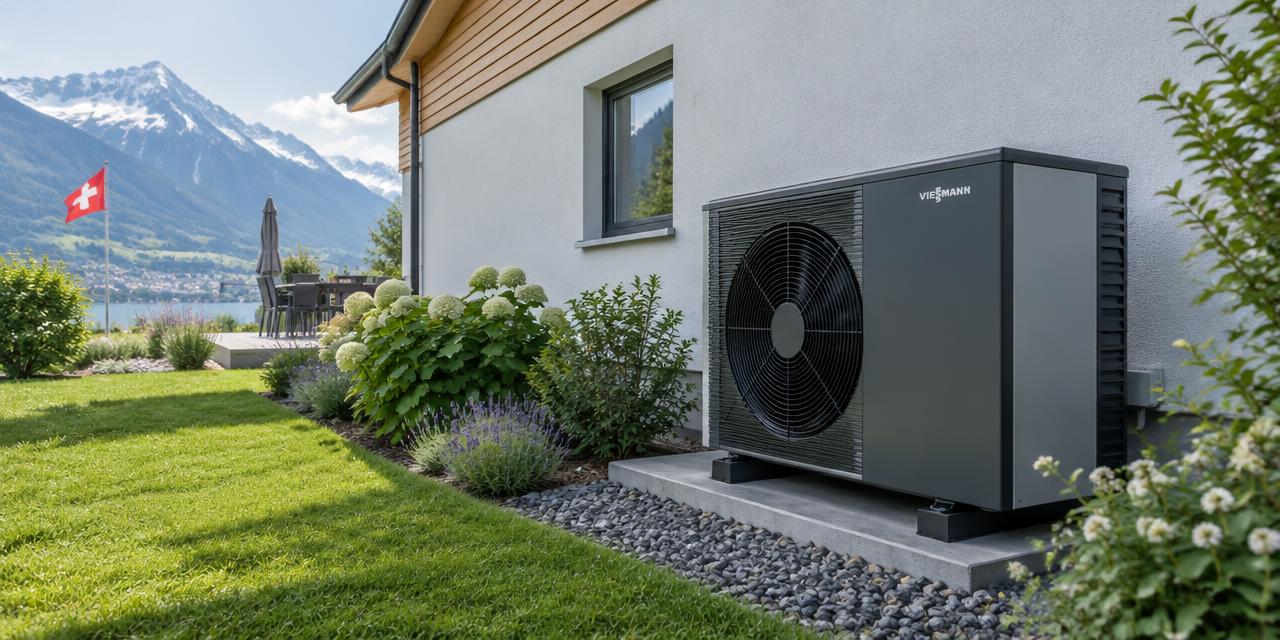
It is advisable to position the outdoor unit away from rest areas and to choose models with low sound emissions. Check the cantonal guidelines regarding the installation of technical equipment.
To budget your project including these acoustic mitigation measures, refer to the RenoIndex estimator, which will provide you with a clear cost estimate in CHF for a compliant installation.
These aids aim to encourage energy renovation and the replacement of fossil-fuel heating systems. Before signing any quote, ensure you check the eligibility requirements.
To plan your overall investment, our RenoIndex tool helps you anticipate the cost of works. Check official Canton of Zurich portals for updates on available financial support.
The success of your installation largely depends on the competence of the chosen installer. It is essential to hire a certified company that knows the climatic specificities of Wald (ZH) and the standards in force in the Canton of Zurich.
A good professional will size the heat pump according to your actual needs and optimize its placement. Do not hesitate to request multiple quotes to compare offers.
Use our free RenoIndex estimator to get a reference price range in CHF and better evaluate the relevance of the quotes received from local companies.
1. Estimate
Set a budget range with the estimator.
2. Grants
Apply before work starts.
3. Quotes
Compare at least 3 quotes.
4. Permit
Check with the municipality whether a permit is needed.
5. Works
Follow the site and do a written handover.
No specific grant listed for this work. Maintenance tax deductions may still apply.
3988 Obergoms · about 98.2 km
Obergoms-based company specializing in sanitary installations, heating systems, roofing, and tinsmith work for new builds and renovations.
hallenbarter-russi.ch2829 Vermes · about 108.5 km
The website presented under the name Imeri Chauffage et Sanitaire Sàrl offers plumbing, heating and solar thermal work, while F. Imeri Sàrl’s registered purpose refers to a scrap metal business.
imeri-sarl.ch2824 Vicques · about 113 km
Specialist since 1968 in sanitary installations, heating (gas, oil, wood, renewable energy), and tinsmithing with 24/7 emergency repair service.
sanit.ch2824 Vicques · about 113 km
Buchwalder Sàrl in Vicques has specialized in the installation, repair, and renovation of heating and sanitary systems since 1966.
buchwalder-sarl.chSuggestions from the commercial register by distance and activity. Not an endorsement or partnership.
Yes, in the Canton of Zurich, the installation of a heat pump generally requires prior notification or a permit from the competent authorities, especially for outdoor air-water models to verify compliance with noise standards. Check with your local municipality for details.
Costs vary depending on the size of your home, the chosen model, and necessary adaptation work. Use our RenoIndex estimator to get a personalized estimate in Swiss francs with just a few clicks, based on Swiss market standards.
On average, a properly maintained heat pump has a lifespan of between 15 and 20 years. Regular maintenance by a certified professional is essential to ensure the longevity of the device and guarantee optimal performance throughout its period of use.
It is not mandatory, but highly recommended. Heat pumps work best at low temperatures, which underfloor heating allows. With classic radiators, you may need to consider high-temperature units or renovate your home's insulation.