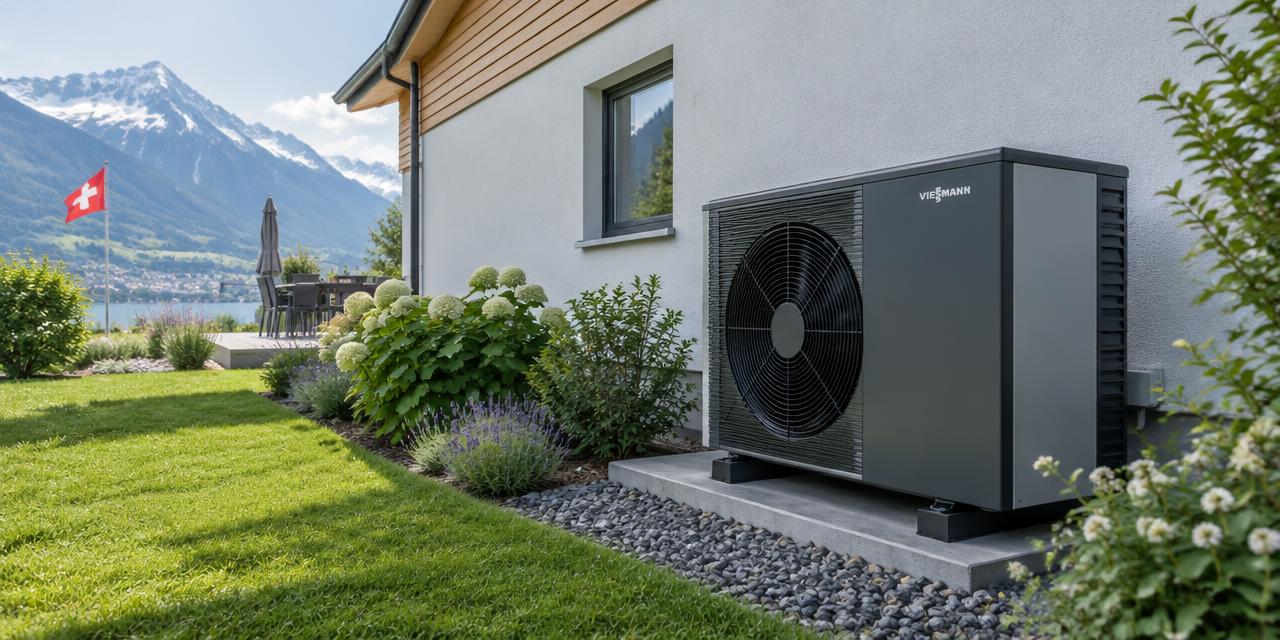
Are you planning to install a heat pump in Uster to improve your energy efficiency? This project is an excellent move to reduce your ecological footprint while increasing your property value. Before starting, it is crucial to plan the technical aspects properly and check local conditions. To get a precise, data-driven estimate for your energy transition project, use our free RenoIndex tool to discover the price range tailored to your specific situation and property needs in the region.
At a glance
Typical budget
CHF 42'400 – CHF 78'900
Midpoint
CHF 59'300
Grants found
0
Nearby companies
4
Worked examples in Uster
Small project
CHF 33'500 – CHF 61'400
Typical project
CHF 42'400 – CHF 78'900
Large project
CHF 55'600 – CHF 105'200
Project
Quantity
Low
High
Per unit
Small project
80 m²
CHF 33'500
CHF 61'400
CHF 600
Typical project
160 m²
CHF 42'400
CHF 78'900
CHF 400
Large project
280 m²
CHF 55'600
CHF 105'200
CHF 300
Computed with our estimator for Uster (regional factor included), standard finish. Only the project size changes.
Cost split (typical project)
Labour :CHF 23'700(40 %)
Materials :CHF 29'600(50 %)
Other costs :CHF 5'900(10 %)
What the price covers
Included
Supply and installation
VAT
Heat pump and standard connections; removal and equipment only according to answers
Not included
Permits and architect fees
Unexpected structural issues
Possible subsidies
Drilling beyond 150 m, buried or contaminated tank, asbestos, insulation and new finishes
With air-to-air: hot water and ducts only if selected; adaptations beyond the options excluded
Uster's housing stock in figures
In Uster, the federal building register lists 4'976 residential buildings and 17'148 dwellings. These municipal benchmarks help put your home in context, but do not replace an individual assessment.
54 %built before 1980
70 %heated by oil or gas
14.3 %electric hot water
2.9 %with declared solar thermal
Age of residential buildings
54 % built before 1980
Before 191915 %
1919–19458 %
1946–196010 %
1961–19707 %
1971–198014 %
1981–199013 %
1991–200014 %
2001–201012 %
Since 20117 %
Construction year does not reveal past renovations: check the current insulation condition.
Main heating energy
58 % · Gas
Gas58 %
Heat pump19 %
Heating oil12 %
Wood7 %
District heating3 %
Electricity1 %
This distribution describes recorded buildings, not your system's consumption or efficiency.
Heating and hot water: which energies?
Energy
Heating
Hot water
Gas
58 %
47.7 %
Heating oil
12 %
11 %
District heating
3 %
2.2 %
Heat pump
19 %
17.1 %
Electricity
1 %
14.3 %
Wood
7 %
5.1 %
Solar thermal
0 %
2.4 %
Each line gives the share of buildings using that energy, separately for heating and for hot water. The two columns do not always reach 100%: some buildings combine two systems, or reported none.
Type of heating system
Boiler (unspecified)70.2 %
Heat pump18.9 %
Condensing boiler3.8 %
Heat exchanger (district)2.6 %
Standard boiler2.2 %
Stove1.4 %
Central electric heating0.5 %
A standard non-condensing boiler is usually older and less efficient.
Renovations, heritage and volumes
For renovation projects in Uster, RegBL data provides useful benchmarks for planning. With a median building volume of 640 m3, homeowners can better estimate the scale of heating or insulation upgrades. Note that data coverage is partial, as only 40 out of 2948 buildings are measured according to SIA 416 standards. Regarding heritage protection, no protected buildings are recorded among the 376 known entries, though the overall coverage remains limited. We advise you to contact the municipality early to confirm your property status and specific regulatory requirements before finalizing your renovation plans or submitting any permit applications.
0
buildings flagged as protected
status known for 376 of 4'976 buildings; check with the municipality
Before investing in a heat pump, the first step is to check whether your area can connect to a priority district heating network. In many urban areas, these networks are preferred due to their overall efficiency.
If a connection is planned or available, this may influence your technical choices. Check with local authorities about energy planning for your area in Uster.
Rigorous planning avoids unnecessary investments and ensures your heating system is sustainable and aligns with the region's long-term energy strategies.
Capacity calculation and design temperature
Correctly sizing your heat pump is crucial to guarantee its efficiency. The local design outdoor temperature plays a decisive role here. It allows for an accurate calculation of the power required to heat your home even on the coldest days of the year.
An undersized unit will underperform, while an oversized one will consume too much energy through short cycling. Consult a specialist to perform a complete thermal analysis.
This ensures optimal thermal comfort and controlled electricity consumption throughout the winter season, regardless of the climate.
Noise regulations for outdoor heat pumps
Choosing a smart location, ideally away from rest areas, and opting for low-noise models is essential. Complying with these standards ensures harmonious cohabitation with your neighbours.
Take the time to study the orientation of the outdoor unit and, if necessary, plan for sound insulation solutions to minimize the noise impact on your immediate surroundings.
Cost estimation with RenoIndex
The cost of a heat pump installation varies significantly depending on the size of your home, the chosen technology, and the complexity of the connection work. Therefore, it is difficult to give a fixed price without prior analysis.
To get a reliable estimate, our RenoIndex platform allows you to quickly obtain a personalized price range. This tool helps you better anticipate your overall budget, including installation work and commissioning.
Start your online simulation now and calmly prepare your energy transition project with clear and transparent data.
Your project in 5 steps
1. Estimate
Set a budget range with the estimator.
2. Grants
Apply before work starts.
3. Quotes
Compare at least 3 quotes.
4. Permit
Check with the municipality whether a permit is needed.
5. Works
Follow the site and do a written handover.
Grants and subsidies
No specific grant listed for this work. Maintenance tax deductions may still apply.
Companies in the area
F. Imeri Sàrl
2829 Vermes · about 93.2 km
The website presented under the name Imeri Chauffage et Sanitaire Sàrl offers plumbing, heating and solar thermal work, while F. Imeri Sàrl’s registered purpose refers to a scrap metal business.
Suggestions from the commercial register by distance and activity. Not an endorsement or partnership.
Frequently asked questions
Is a heat pump suitable for old buildings?
Yes, it is entirely possible, especially if an energy renovation is carried out in parallel. It is recommended to check the insulation and heating emitters such as radiators, which must be compatible with lower flow temperatures.
Do I need a permit to install a heat pump?
Yes, in most cases, a permit application is required from cantonal or municipal authorities. Inquire with your municipality's building department to find out about the specific procedures in Uster.
What is the average lifespan of a heat pump?
A well-maintained heat pump typically has a lifespan of 15 to 20 years. Annual maintenance performed by a qualified professional is essential to ensure its energy efficiency and longevity.
Can the heat pump be used for cooling?
Many reversible models effectively allow for cooling rooms in summer. This feature is highly appreciated for maintaining a pleasant indoor temperature during hot periods without significantly increasing electricity consumption.