
F. Imeri Sàrl
2829 Vermes · about 13 km
The website presented under the name Imeri Chauffage et Sanitaire Sàrl offers plumbing, heating and solar thermal work, while F. Imeri Sàrl’s registered purpose refers to a scrap metal business.
imeri-sarl.chSolar water heating · Solothurn
At a glance
Small project
CHF 9'600 – CHF 22'600
Typical project
CHF 12'400 – CHF 28'800
Large project
CHF 17'000 – CHF 39'100
| Project | Quantity | Low | High | Per unit |
|---|---|---|---|---|
| Small project | 3 m² | CHF 9'600 | CHF 22'600 | CHF 5'200 |
| Typical project | 6 m² | CHF 12'400 | CHF 28'800 | CHF 3'300 |
| Large project | 11 m² | CHF 17'000 | CHF 39'100 | CHF 2'500 |
Computed with our estimator for Solothurn (regional factor included), standard finish. Only the project size changes.
Included
Not included
In Solothurn, the federal building register lists 2'863 residential buildings and 9'414 dwellings. These municipal benchmarks help put your home in context, but do not replace an individual assessment.
79 % built before 1980
Construction year does not reveal past renovations: check the current insulation condition.
56 % · Gas
This distribution describes recorded buildings, not your system's consumption or efficiency.
| Energy | Heating | Hot water |
|---|---|---|
| Gas | 56 % | 42.8 % |
| Heating oil | 22 % | 16.7 % |
| District heating | 6 % | 5.3 % |
| Heat pump | 13 % | 6.6 % |
| Electricity | 3 % | 26.1 % |
| Wood | 2 % | 0.8 % |
| Solar thermal | 0 % | 1.7 % |
Each line gives the share of buildings using that energy, separately for heating and for hot water. The two columns do not always reach 100%: some buildings combine two systems, or reported none.
A standard non-condensing boiler is usually older and less efficient.
15.8 % of buildings mix housing with shops or offices.
For your renovation projects in Solothurn, the federal building register (RegBL) indicates that 3 buildings are listed under heritage protection, requiring early coordination with the municipality for permit applications. The building volume data covers 1517 houses with a median volume of 462 m3 according to the SIA 416 standard, which is essential for scaling your heating and insulation upgrades. Please note that data coverage is partial, as 1514 buildings are recorded under unknown or other standards. Since renovation year data is not available, you should conduct a thorough on-site assessment to accurately plan your specific property improvements.
Source : OFS — RegBL (export communal complet). Existing residential buildings; percentages of recorded values.
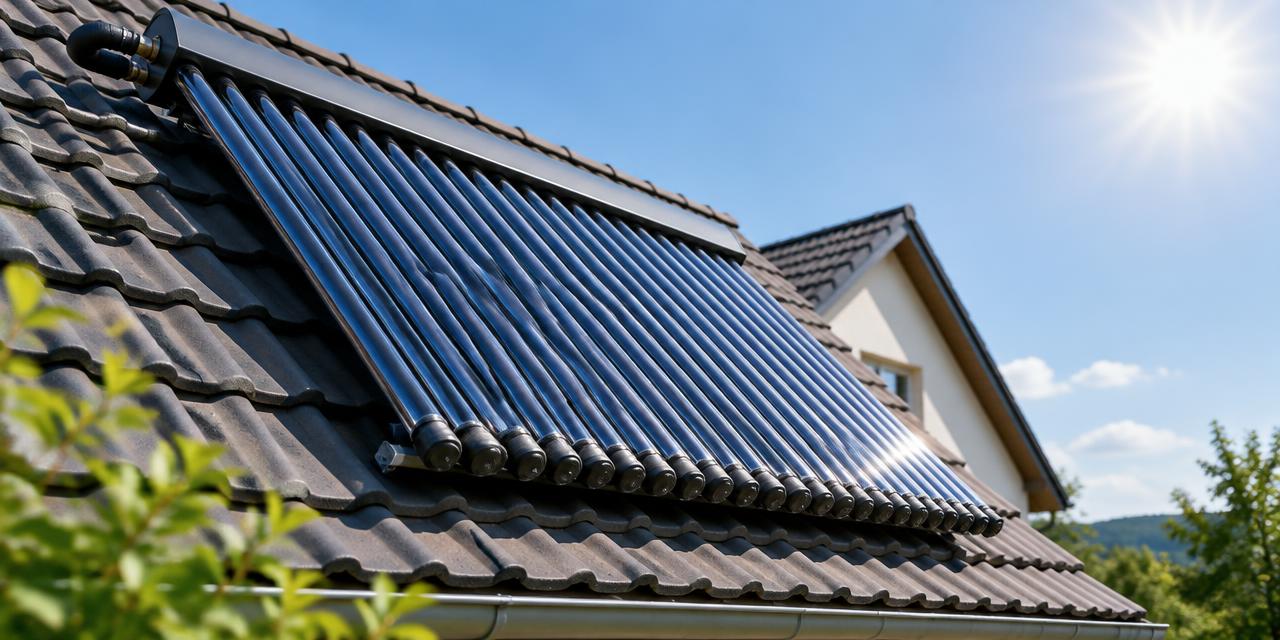
Solar thermal collectors are an efficient solution for converting solar radiation into heat. These systems are primarily used for domestic hot water production.
In Switzerland, solar thermal collectors usually cover much of summer hot water, thus reducing the load on your main boiler. This technology provides increased independence from rising fossil fuel prices.
It is a sustainable investment that improves your home's energy class over the long term while actively participating in the Swiss energy transition.
A high-performance system relies above all on a rigorous sizing study. It is essential to accurately calculate your hot water needs based on the number of occupants and the available roof surface.
If you are considering moving towards a hybrid system, be aware that combining collectors with a heat pump needs a sizing study to ensure optimal compatibility.
Proper planning avoids oversizing, which can reduce the overall efficiency of the system, and ensures consistent heat production throughout the year.
Although rules vary by region, the national Buildings Program regularly encourages energy efficiency measures. It is crucial to submit your grant application before starting the work, as subsidies are generally not retroactive.
Check with the relevant cantonal services to find out the current eligibility criteria and maximize your chances of obtaining financing for your solar project.
Installing solar thermal panels requires high technical expertise to ensure roof tightness and hydraulic safety. Hiring a certified installer is essential to guarantee compliance with current standards.
A professional can not only advise you on the most suitable equipment but also provide the preventive maintenance necessary for the long-term operation of the installation.
Never neglect installation quality, as it directly determines the energy efficiency of your solar system for decades to come.
1. Estimate
Set a budget range with the estimator.
2. Grants
Apply before work starts.
3. Quotes
Compare at least 3 quotes.
4. Permit
Check with the municipality whether a permit is needed.
5. Works
Follow the site and do a written handover.
No specific grant listed for this work. Maintenance tax deductions may still apply.
2829 Vermes · about 13 km
The website presented under the name Imeri Chauffage et Sanitaire Sàrl offers plumbing, heating and solar thermal work, while F. Imeri Sàrl’s registered purpose refers to a scrap metal business.
imeri-sarl.ch2740 Moutier · about 15.1 km
Company in Moutier specializing in plumbing, heating (oil, wood, heat pumps), and solar thermal and photovoltaic solutions.
bmonnerat.ch2832 Rebeuvelier · about 15.2 km
Eco6therm specializes in the installation of heating systems, particularly heat pumps, and solar photovoltaic energy solutions.
eco6therm.ch2824 Vicques · about 17.9 km
Specialist since 1968 in sanitary installations, heating (gas, oil, wood, renewable energy), and tinsmithing with 24/7 emergency repair service.
sanit.chSuggestions from the commercial register by distance and activity. Not an endorsement or partnership.
Requirements vary depending on the building type and location. It is advisable to contact local authorities to check specific urban planning conditions. Some projects may be exempt, but others require prior authorization to ensure compliance with aesthetic rules.
The installation itself usually takes a few days, depending on the roof complexity and the hydraulic system. However, the planning phase and obtaining permits can extend the project. A professional will provide you with an accurate timeline when providing the quote.
Yes, the system works as long as there is solar radiation, even in cold weather. However, the yield is reduced compared to summer due to shorter sunlight duration and the sun's angle. A complementary system is often necessary.
To get a realistic price range for your project, use the free RenoIndex estimator now. It takes into account the specific details of your renovation to provide you with a quick, reliable estimate adapted to your situation.