
Eco6therm Sàrl
2832 Rebeuvelier · about 15.2 km
Eco6therm specializes in the installation of heating systems, particularly heat pumps, and solar photovoltaic energy solutions.
eco6therm.chHome solar battery · Solothurn
At a glance
Small project
CHF 4'200 – CHF 9'500
Typical project
CHF 7'600 – CHF 16'100
Large project
CHF 13'000 – CHF 26'700
| Project | Quantity | Low | High | Per unit |
|---|---|---|---|---|
| Small project | 5 kWh | CHF 4'200 | CHF 9'500 | CHF 1'300 |
| Typical project | 10 kWh | CHF 7'600 | CHF 16'100 | CHF 1'100 |
| Large project | 18 kWh | CHF 13'000 | CHF 26'700 | CHF 1'000 |
Computed with our estimator for Solothurn (regional factor included), standard finish. Only the project size changes.
Included
Not included
In Solothurn, the federal building register lists 2'863 residential buildings and 9'414 dwellings. These municipal benchmarks help put your home in context, but do not replace an individual assessment.
79 % built before 1980
Construction year does not reveal past renovations: check the current insulation condition.
56 % · Gas
This distribution describes recorded buildings, not your system's consumption or efficiency.
| Energy | Heating | Hot water |
|---|---|---|
| Gas | 56 % | 42.8 % |
| Heating oil | 22 % | 16.7 % |
| District heating | 6 % | 5.3 % |
| Heat pump | 13 % | 6.6 % |
| Electricity | 3 % | 26.1 % |
| Wood | 2 % | 0.8 % |
| Solar thermal | 0 % | 1.7 % |
Each line gives the share of buildings using that energy, separately for heating and for hot water. The two columns do not always reach 100%: some buildings combine two systems, or reported none.
A standard non-condensing boiler is usually older and less efficient.
15.8 % of buildings mix housing with shops or offices.
For your renovation projects in Solothurn, the federal building register (RegBL) indicates that 3 buildings are listed under heritage protection, requiring early coordination with the municipality for permit applications. The building volume data covers 1517 houses with a median volume of 462 m3 according to the SIA 416 standard, which is essential for scaling your heating and insulation upgrades. Please note that data coverage is partial, as 1514 buildings are recorded under unknown or other standards. Since renovation year data is not available, you should conduct a thorough on-site assessment to accurately plan your specific property improvements.
Source : OFS — RegBL (export communal complet). Existing residential buildings; percentages of recorded values.
A battery is worthwhile when solar output clearly exceeds your daytime use. By storing the surplus, you avoid feeding all your energy back into the grid and can use it in the evening. This reduces your reliance on standard electricity suppliers.
However, before proceeding, analyze your load profile. If your production is low during the winter months, the battery will not be fully charged. The investment must be based on a thoughtful self-consumption strategy to be truly profitable in the long run.
Sizing is the crucial step of your project. Contrary to common belief, you must size the capacity based on your evening consumption, not the power of your solar panels.
A battery that is too large represents an unnecessary cost, while one that is too small limits your autonomy. Accurately assess your nighttime needs to choose the most suitable storage capacity in kilowatt-hours (kWh).
Use the RenoIndex tool to estimate the costs associated with different storage capacities and make the right choice for your home in Solothurn.
Before any purchase, systematically check compatibility with your existing inverter. AC and DC coupling systems work differently.
AC coupling is often easier for retrofitting an existing solar system, while DC coupling is preferred for new photovoltaic installations combined with storage.
Ensure your current equipment can communicate with the new battery for intelligent energy management. A compatibility error can lead to additional installation costs or a loss of efficiency in the overall system of your home in Solothurn.
Carrying out energy renovation work in Solothurn requires rigorous planning. Beyond the choice of hardware, you must take into account the installation conditions in your home.
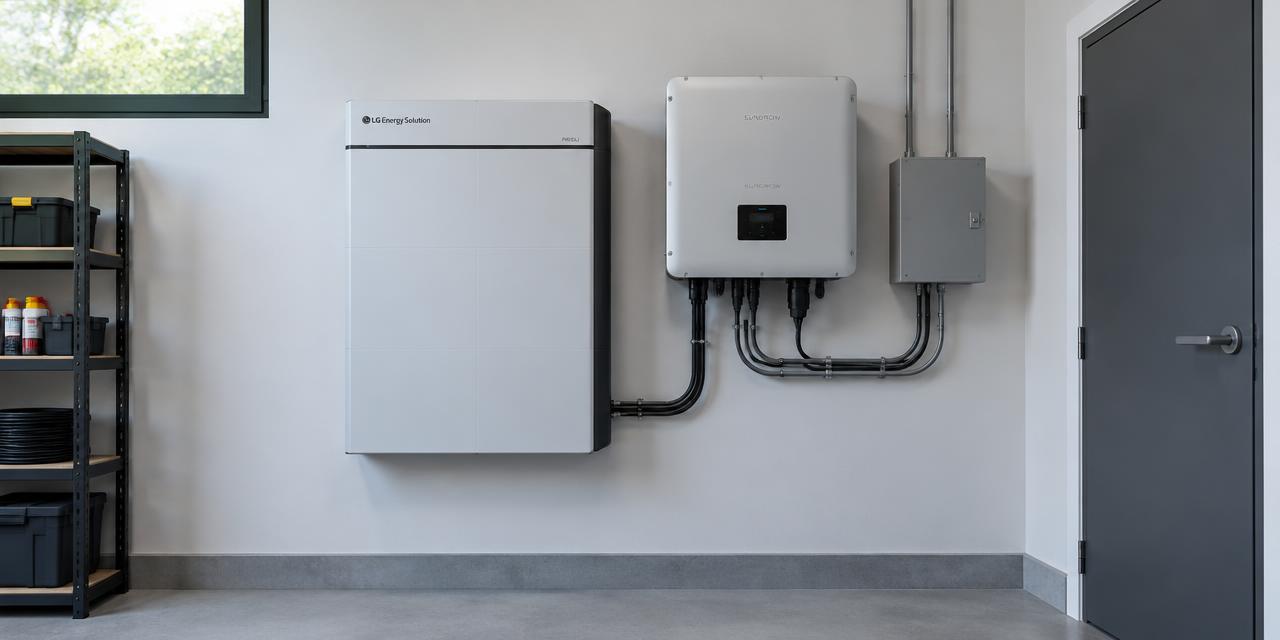
Good ventilation and a stable ambient temperature are necessary to ensure the lifespan of the battery cells. Do not hesitate to request several quotes from qualified installers in the region to compare services.
Use the RenoIndex estimator to define your budget and get an overview of market prices. Thorough preparation is the key to a successful and sustainable energy transition for your property.
1. Estimate
Set a budget range with the estimator.
2. Grants
Apply before work starts.
3. Quotes
Compare at least 3 quotes.
4. Permit
Check with the municipality whether a permit is needed.
5. Works
Follow the site and do a written handover.
No specific grant listed for this work. Maintenance tax deductions may still apply.
2832 Rebeuvelier · about 15.2 km
Eco6therm specializes in the installation of heating systems, particularly heat pumps, and solar photovoltaic energy solutions.
eco6therm.ch2735 Malleray · about 19 km
Company specialized in electrical installations and telecommunications systems, including network infrastructure and related trade.
telecrengglisa.ch2605 Sonceboz-Sombeval · about 26.4 km
Solar conseil Sàrl specializes in the installation of photovoltaic power plants, energy storage solutions, and energy efficiency consulting in the Jura and Bernese Jura regions.
solarconseil.ch2718 Lajoux JU · about 30.3 km
Jura-based specialist in photovoltaic panel installation and energy storage solutions with AI-driven optimization.
hypersolaire.chSuggestions from the commercial register by distance and activity. Not an endorsement or partnership.
Most current lithium batteries have a lifespan of between 10 and 20 years. This longevity strongly depends on the number of charge cycles and the temperature management in your technical room.
No, it mainly helps to reduce your bill by increasing self-consumption. In winter, solar production is often insufficient to cover all your needs, so you remain dependent on the grid during sunless periods.
It is best to install it in a dry, clean room with a stable temperature, such as an insulated basement or a ventilated utility room. Avoid areas exposed to major temperature variations or humidity.
Use the free RenoIndex estimator. You can enter your project parameters to get a realistic price range in CHF, adapted to the prices charged in your region for this type of equipment.