
Eco6therm Sàrl
2832 Rebeuvelier · about 19.3 km
Eco6therm specializes in the installation of heating systems, particularly heat pumps, and solar photovoltaic energy solutions.
eco6therm.chHome solar battery · Derendingen
At a glance
Small project
CHF 4'200 – CHF 9'500
Typical project
CHF 7'600 – CHF 16'100
Large project
CHF 13'000 – CHF 26'700
| Project | Quantity | Low | High | Per unit |
|---|---|---|---|---|
| Small project | 5 kWh | CHF 4'200 | CHF 9'500 | CHF 1'300 |
| Typical project | 10 kWh | CHF 7'600 | CHF 16'100 | CHF 1'100 |
| Large project | 18 kWh | CHF 13'000 | CHF 26'700 | CHF 1'000 |
Computed with our estimator for Derendingen (regional factor included), standard finish. Only the project size changes.
Included
Not included
In Derendingen, the federal building register lists 1'430 residential buildings and 3'516 dwellings. These municipal benchmarks help put your home in context, but do not replace an individual assessment.
56 % built before 1980
Construction year does not reveal past renovations: check the current insulation condition.
53 % · Gas
This distribution describes recorded buildings, not your system's consumption or efficiency.
| Energy | Heating | Hot water |
|---|---|---|
| Gas | 53 % | 36.2 % |
| Heating oil | 24 % | 18.4 % |
| District heating | 3 % | 2 % |
| Heat pump | 16 % | 5.5 % |
| Electricity | 2 % | 33.8 % |
| Wood | 1 % | 0.8 % |
| Solar thermal | 1 % | 3.1 % |
Each line gives the share of buildings using that energy, separately for heating and for hot water. The two columns do not always reach 100%: some buildings combine two systems, or reported none.
A standard non-condensing boiler is usually older and less efficient.
7.1 % of buildings mix housing with shops or offices.
For your renovation plans in Derendingen, the official building register (RegBL) provides key figures, though data coverage remains partial. A median house volume of 185 m3, measured per SIA 416 standards, offers a scale for your insulation or heating projects, though this covers only 5 of the 943 recorded houses. Regarding heritage protection, no protected buildings are registered among the 168 entries with known status. Given these gaps in data, it is essential to contact the municipality early to verify specific local requirements and ensure your renovation project aligns with all necessary regulations for your property.
Source : OFS — RegBL (export communal complet). Existing residential buildings; percentages of recorded values.
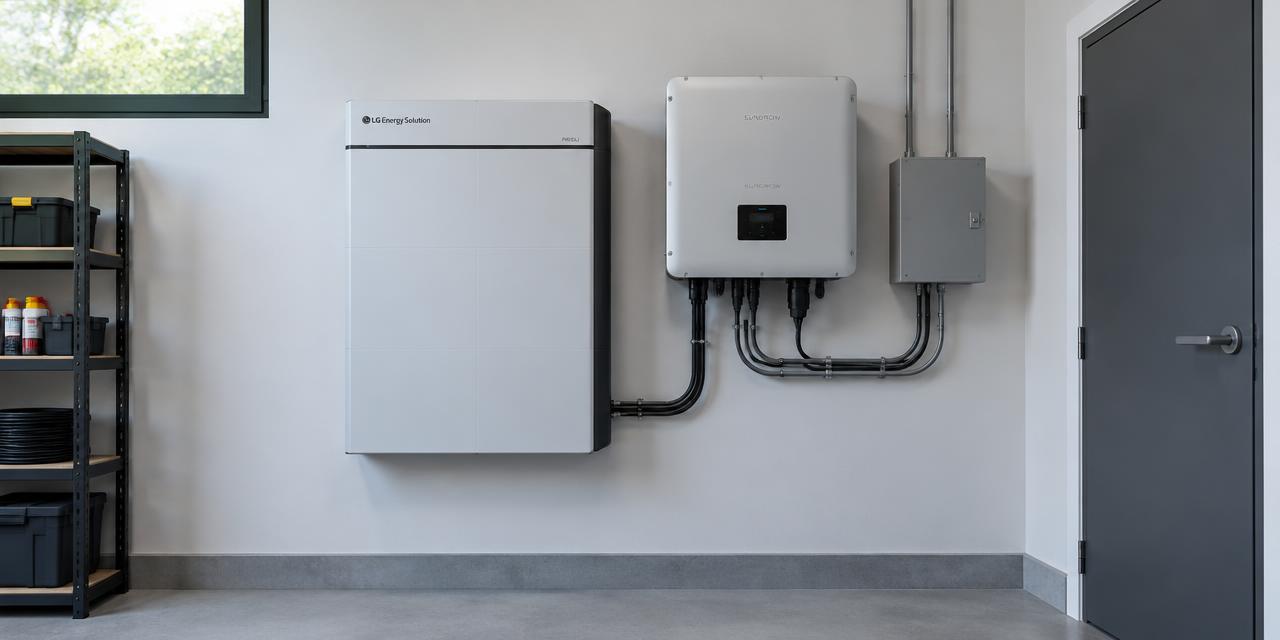
Installing a home battery is particularly wise when your solar production clearly exceeds your daytime consumption. In Derendingen, as elsewhere, storage allows you to save excess energy for use during the evening.
This reduces your reliance on the power grid and maximizes the return on your solar panels.
To get a quantified estimate of your project, use our RenoIndex tool to find out the market average costs for this type of equipment tailored to your specific system configuration.
Correct sizing is the key to a successful investment. It is advisable to base the capacity of your battery on your evening consumption, not the total power of your solar panels.
An oversized battery will never be fully used, while insufficient capacity will force you to purchase electricity from the grid.
RenoIndex supports you in this step by providing a price range in CHF, allowing you to compare the options available on the Swiss market for your home.
Before buying a storage system, it is imperative to check compatibility with your existing inverter. Some models require specific hybrid inverters to function properly. If your current inverter is not compatible, this could lead to unforeseen additional costs.
To anticipate these expenses, RenoIndex provides a simple and effective estimator. By using our service, you get an overview of the costs to expect in Derendingen, potentially including the upgrade of your current technical equipment.
Energy renovation is an important step. In the absence of specific municipal grants in Derendingen, it is all the more crucial to budget your project well to ensure long-term profitability. Remember to request several quotes from certified local installers.
RenoIndex offers you a solid basis for comparison thanks to its price estimates in CHF. Our tool helps you structure your expenses and make informed decisions for your solar installation, while ensuring rigorous financial management of your renovation work.
1. Estimate
Set a budget range with the estimator.
2. Grants
Apply before work starts.
3. Quotes
Compare at least 3 quotes.
4. Permit
Check with the municipality whether a permit is needed.
5. Works
Follow the site and do a written handover.
No specific grant listed for this work. Maintenance tax deductions may still apply.
2832 Rebeuvelier · about 19.3 km
Eco6therm specializes in the installation of heating systems, particularly heat pumps, and solar photovoltaic energy solutions.
eco6therm.ch2735 Malleray · about 23.8 km
Company specialized in electrical installations and telecommunications systems, including network infrastructure and related trade.
telecrengglisa.ch2605 Sonceboz-Sombeval · about 30.9 km
Solar conseil Sàrl specializes in the installation of photovoltaic power plants, energy storage solutions, and energy efficiency consulting in the Jura and Bernese Jura regions.
solarconseil.ch2718 Lajoux JU · about 35.1 km
Jura-based specialist in photovoltaic panel installation and energy storage solutions with AI-driven optimization.
hypersolaire.chSuggestions from the commercial register by distance and activity. Not an endorsement or partnership.
Profitability depends on your self-consumption rate. A battery is most useful if your solar output exceeds your daytime consumption and you use a lot of energy in the evening. Use our RenoIndex estimator to calculate if the investment suits your energy profile.
Generally, installing an indoor battery does not require a building permit. However, check the fire safety standards applicable in the canton of Solothurn. For complex installations, always consult your electrician to ensure compliance with federal rules.
Most modern lithium batteries have a lifespan of 10 to 20 years. Longevity depends on the number of charge cycles and temperature conditions. RenoIndex allows you to evaluate the total cost over the lifespan of the installation.
To obtain a current price range for your installation, simply use our free RenoIndex estimator. We provide estimates based on Swiss market costs to help you plan your project with peace of mind in Derendingen.