
F. Imeri Sàrl
2829 Vermes · about 115 km
The website presented under the name Imeri Chauffage et Sanitaire Sàrl offers plumbing, heating and solar thermal work, while F. Imeri Sàrl’s registered purpose refers to a scrap metal business.
imeri-sarl.chSolar water heating · Sirnach
At a glance
Small project
CHF 10'300 – CHF 24'100
Typical project
CHF 13'200 – CHF 30'700
Large project
CHF 18'200 – CHF 41'800
| Project | Quantity | Low | High | Per unit |
|---|---|---|---|---|
| Small project | 3 m² | CHF 10'300 | CHF 24'100 | CHF 5'600 |
| Typical project | 6 m² | CHF 13'200 | CHF 30'700 | CHF 3'500 |
| Large project | 11 m² | CHF 18'200 | CHF 41'800 | CHF 2'600 |
Computed with our estimator for Sirnach (regional factor included), standard finish. Only the project size changes.
Included
Not included
In Sirnach, the federal building register lists 1'658 residential buildings and 3'928 dwellings. These municipal benchmarks help put your home in context, but do not replace an individual assessment.
51 % built before 1980
Construction year does not reveal past renovations: check the current insulation condition.
38 % · Gas
This distribution describes recorded buildings, not your system's consumption or efficiency.
| Energy | Heating | Hot water |
|---|---|---|
| Gas | 38 % | 34.6 % |
| Heating oil | 28 % | 25 % |
| District heating | 1 % | 0.6 % |
| Heat pump | 26 % | 13.4 % |
| Electricity | 1 % | 18.3 % |
| Wood | 6 % | 2.9 % |
| Solar thermal | 0 % | 4.7 % |
Each line gives the share of buildings using that energy, separately for heating and for hot water. The two columns do not always reach 100%: some buildings combine two systems, or reported none.
A standard non-condensing boiler is usually older and less efficient.
10.9 % of buildings mix housing with shops or offices.
For your renovation plans in Sirnach, the federal building register provides key figures to consider. While data on renovation years is unavailable, the median house volume is 481.5 m3, which is critical for scaling heating and insulation upgrades. Please note that data coverage is partial, with only four buildings measured under the SIA 416 standard. Regarding heritage protection, there are no recorded protected buildings in the register. Even so, we advise contacting the municipality early in your planning process to discuss any local permit requirements or building constraints that may apply to your specific property and project scope.
Source : OFS — RegBL (export communal complet). Existing residential buildings; percentages of recorded values.
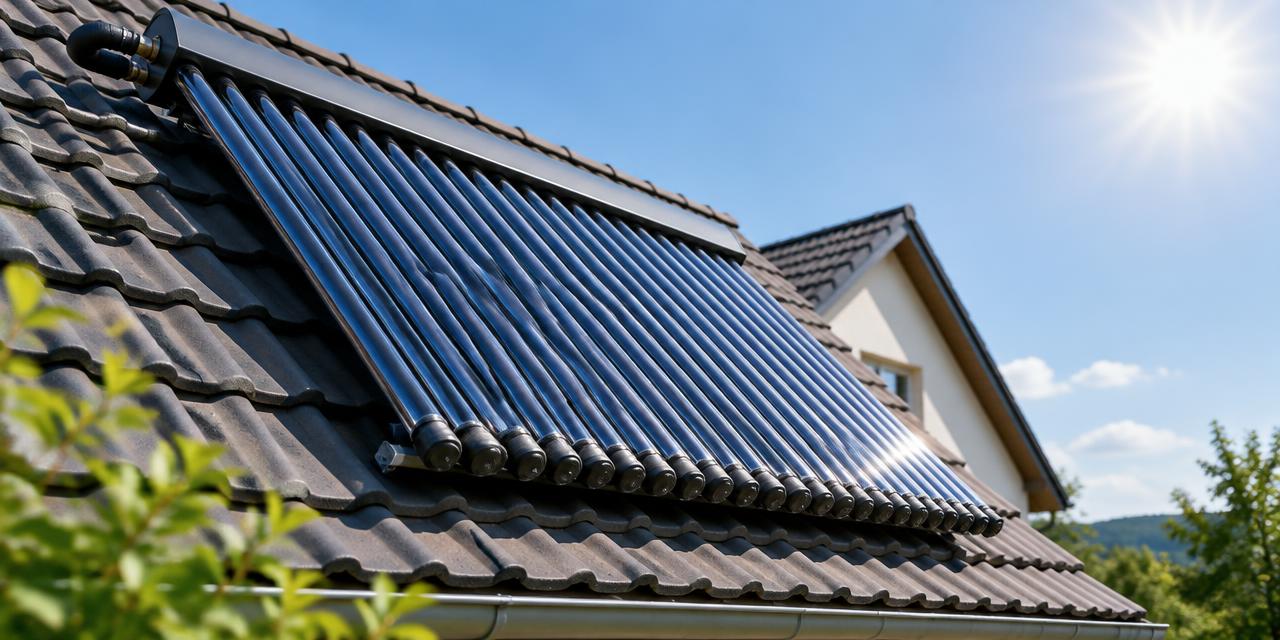
Solar thermal collectors capture energy from solar radiation to heat a heat-transfer fluid. This fluid then transfers heat to a hot water tank via a heat exchanger.
Solar thermal collectors usually cover much of summer hot water, making your system highly efficient during sunny months. Installation requires optimal orientation, ideally facing south, to ensure maximum yield.
Regular maintenance is recommended to ensure equipment longevity and maintain optimal performance over the long term.
To maximize savings, many owners choose to couple solar thermal with other systems like a heat pump. However, combining collectors with a heat pump needs a sizing study, as a poor configuration can lead to summer overheating or winter inefficiency.
It is advisable to hire a qualified installer who can evaluate the compatibility of your existing setup with new technologies. Careful planning ensures constant thermal comfort and optimizes the profitability of your overall energy investment.
Although there is no specific municipal grant in Sirnach, it is crucial to check the current programs in the Canton of Thurgau before confirming your quote.
Also, inquire about possibilities for tax deductions related to energy renovation works on your tax return. These financial aids make the switch to renewable energy much more affordable.
The success of a solar thermal project relies on careful preparation. Start by assessing your roof condition and current insulation to avoid unnecessary energy loss. Request several detailed quotes from local companies to compare services and collector brands.
Verify that the installer has the necessary certifications to guarantee an installation compliant with Swiss safety standards.
By using our free RenoIndex estimator, you will obtain a reliable price basis to compare received offers and make an informed decision regarding your project.
1. Estimate
Set a budget range with the estimator.
2. Grants
Apply before work starts.
3. Quotes
Compare at least 3 quotes.
4. Permit
Check with the municipality whether a permit is needed.
5. Works
Follow the site and do a written handover.
No specific grant listed for this work. Maintenance tax deductions may still apply.
2829 Vermes · about 115 km
The website presented under the name Imeri Chauffage et Sanitaire Sàrl offers plumbing, heating and solar thermal work, while F. Imeri Sàrl’s registered purpose refers to a scrap metal business.
imeri-sarl.ch2824 Vicques · about 118.9 km
Buchwalder Sàrl in Vicques has specialized in the installation, repair, and renovation of heating and sanitary systems since 1966.
buchwalder-sarl.ch2824 Vicques · about 118.9 km
Specialist since 1968 in sanitary installations, heating (gas, oil, wood, renewable energy), and tinsmithing with 24/7 emergency repair service.
sanit.ch2824 Vicques · about 118.9 km
Gyger Haustechnik specializes in sanitary installations, heating systems, bathroom renovations, and tiling work.
gyger-co.chSuggestions from the commercial register by distance and activity. Not an endorsement or partnership.
A well-maintained solar thermal installation can last between 20 and 25 years. Regular maintenance, including checking the heat-transfer fluid and hydraulic components, is essential to ensure this longevity. The collectors themselves are very resistant to weather conditions.
Most roofs can accommodate collectors, but tilt and orientation are key. A south-facing exposure is ideal. You must also ensure the roof structure can support the weight of the panels. A prior technical analysis is always recommended.
Yes, the project remains profitable thanks to savings on hot water costs and property value appreciation. Do not forget the Canton of Thurgau grants as well as tax benefits, which can significantly reduce your initial net investment.
For a standard detached house, roof installation typically takes between two and four days. The work includes mounting the collectors, hydraulic connection to the tank, and system commissioning. This timeframe may vary depending on roof complexity.