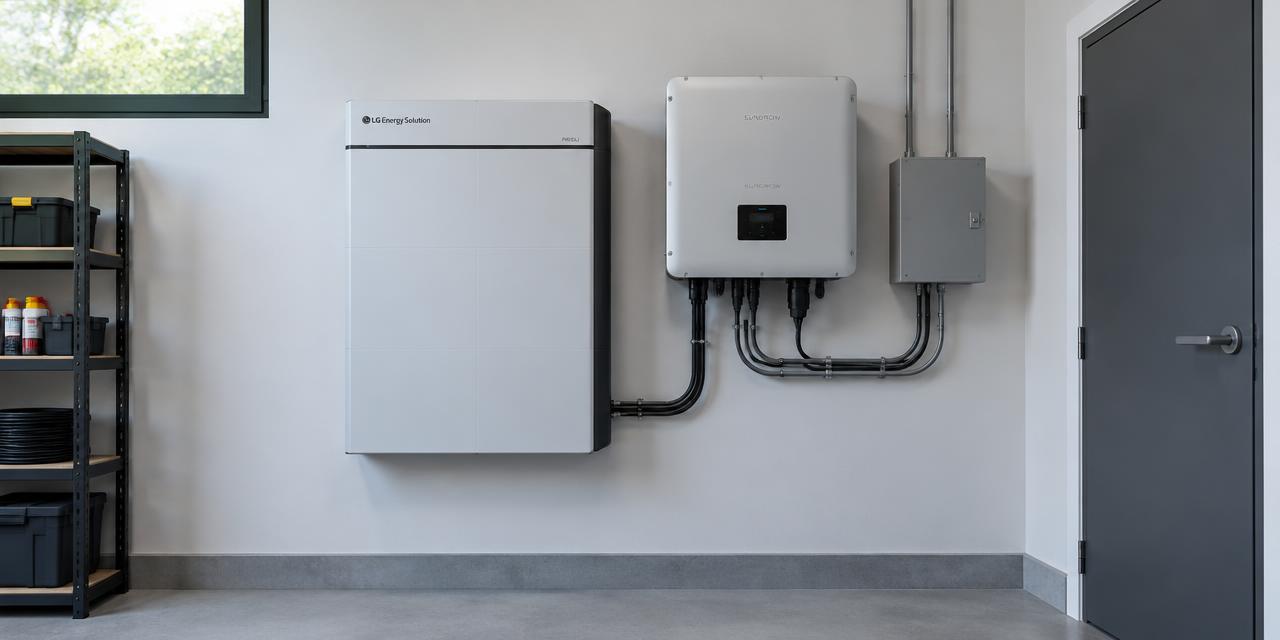
Installing a solar battery in Nidau: Guide and prices
Are you planning to optimize your photovoltaic installation in Nidau with a storage battery? This is an excellent decision to increase your energy independence. The canton of Bern encourages the transition to sustainable solutions, but careful project planning is essential. In this article, we explore technical aspects and best practices for a successful investment. Use our free RenoIndex estimator to get a precise price range tailored to your specific situation in Nidau.
At a glance
Typical budget
CHF 7'200 – CHF 15'400
Midpoint
CHF 10'500
Grants found
0
Nearby companies
4
Worked examples in Nidau
Small project
CHF 4'000 – CHF 9'100
Typical project
CHF 7'200 – CHF 15'400
Large project
CHF 12'400 – CHF 25'400
Project
Quantity
Low
High
Per unit
Small project
5 kWh
CHF 4'000
CHF 9'100
CHF 1'200
Typical project
10 kWh
CHF 7'200
CHF 15'400
CHF 1'100
Large project
18 kWh
CHF 12'400
CHF 25'400
CHF 1'000
Computed with our estimator for Nidau (regional factor included), standard finish. Only the project size changes.
Cost split (typical project)
Labour :CHF 2'100(20 %)
Materials :CHF 7'300(70 %)
Other costs :CHF 1'100(10 %)
What the price covers
Included
Supply and installation
VAT
Battery, charge management and standard connection; options according to answers
Not included
Permits and architect fees
Unexpected structural issues
Possible subsidies
Solar panels and complete electrical refurbishment
Nidau's housing stock in figures
In Nidau, the federal building register lists 855 residential buildings and 3'707 dwellings. These municipal benchmarks help put your home in context, but do not replace an individual assessment.
82 %built before 1980
68 %heated by oil or gas
17.1 %electric hot water
3.5 %with declared solar thermal
Age of residential buildings
82 % built before 1980
Before 191917 %
1919–194517 %
1946–196023 %
1961–197015 %
1971–198010 %
1981–19907 %
1991–20005 %
2001–20103 %
Since 20113 %
Construction year does not reveal past renovations: check the current insulation condition.
Main heating energy
38 % · Gas
Gas38 %
Heating oil30 %
District heating18 %
Heat pump9 %
Wood3 %
Electricity2 %
This distribution describes recorded buildings, not your system's consumption or efficiency.
Heating and hot water: which energies?
Energy
Heating
Hot water
Gas
38 %
28.7 %
Heating oil
30 %
25.7 %
District heating
18 %
17.6 %
Heat pump
9 %
6.6 %
Electricity
2 %
17.1 %
Wood
3 %
1.9 %
Solar thermal
0 %
2 %
Each line gives the share of buildings using that energy, separately for heating and for hot water. The two columns do not always reach 100%: some buildings combine two systems, or reported none.
Type of heating system
Boiler (unspecified)29.7 %
Condensing boiler22.5 %
Standard boiler17.9 %
Heat exchanger (district)17.7 %
Heat pump9.5 %
Central electric heating1.9 %
Stove0.5 %
A standard non-condensing boiler is usually older and less efficient.
Houses or apartment buildings?
Single-family houses47.8 %
Two-dwelling houses11.2 %
Apartment buildings (3+)40.8 %
Other0.1 %
12.5 % of buildings mix housing with shops or offices.
The typical building
storeys (median)
3
median footprint
127 m²
median dwelling area
80 m²
Renovations, heritage and volumes
For your renovation projects in Nidau, RegBL data provides key insights. The median building volume is 1052 m3, which is essential for planning insulation or heating work, though this figure covers only a portion of the 409 houses measured according to the SIA 416 standard. Regarding heritage, one building is officially protected out of the 13 recorded cases. If your property is affected, you must contact municipal authorities early to discuss permit requirements. These structural figures help you anticipate specific constraints and project scales, ensuring that your renovation plans align with the local regulatory framework in Nidau.
1
buildings flagged as protected
status known for 13 of 855 buildings; check with the municipality
Installing a battery is particularly worthwhile when solar output clearly exceeds your daytime use. This allows you to store excess energy generated during sunny hours for use in the evening.
By maximizing your self-consumption, you reduce your dependence on the local power grid. It is an effective strategy to stabilize your energy costs over the long term while actively participating in the Swiss energy transition.
Do not hesitate to check RenoIndex to evaluate the realistic cost of this type of equipment for your home.
The right system sizing
A common mistake is to base it solely on the total power of the solar panels. In reality, you must size your battery capacity based on your evening and night consumption.
Analyze your typical load profile to choose a storage capacity that covers your essential needs without investing in oversized and expensive hardware. Proper sizing guarantees a better return on investment.
Use the RenoIndex estimator to compare different storage capacities and find the most cost-effective solution for your home in Nidau.
Compatibility and technical installation
Before any purchase, it is imperative to check the compatibility with your existing inverter. Some systems require specific hybrid inverters to efficiently manage energy storage and discharge.
Improper installation can lead to significant efficiency losses or safety issues. We recommend hiring certified professionals who can evaluate your current infrastructure before any work begins.
To get a clear idea of labor and material costs, use our free RenoIndex estimator, which will provide you with a price range tailored to your specific project.
Financing and transition support
Financing a solar battery represents a significant initial investment, but the long-term savings on your electricity bill often justify the expense.
Although there is no federal subsidy specifically for batteries alone, it is advisable to regularly check for incentive programs from the canton of Bern or with your local provider regarding initiatives promoting home storage.
Careful planning helps optimize your budget. Use our RenoIndex tool today to get a reliable cost estimate for your project in Nidau and plan your finances with peace of mind.
Your project in 5 steps
1. Estimate
Set a budget range with the estimator.
2. Grants
Apply before work starts.
3. Quotes
Compare at least 3 quotes.
4. Permit
Check with the municipality whether a permit is needed.
5. Works
Follow the site and do a written handover.
Grants and subsidies
No specific grant listed for this work. Maintenance tax deductions may still apply.
Companies in the area
Solar conseil Sàrl
2605 Sonceboz-Sombeval · about 8.5 km
Solar conseil Sàrl specializes in the installation of photovoltaic power plants, energy storage solutions, and energy efficiency consulting in the Jura and Bernese Jura regions.
Suggestions from the commercial register by distance and activity. Not an endorsement or partnership.
Frequently asked questions
Is a solar battery mandatory in Nidau?
No, installing a solar battery is not mandatory. It is an optional piece of equipment that allows you to increase your self-consumption rate. However, it is highly recommended if you want to lower your electricity bill by using your own energy in the evening.
What is the average lifespan of a battery?
Most modern lithium solar batteries have a lifespan of between 10 and 20 years. This longevity depends heavily on the conditions of use, the quality of the equipment, and the thermal management of the system installed in your home.
Can I install the battery myself?
No, it is strongly advised against performing the installation yourself. Connecting a battery electrically involves significant safety risks. It must be done by certified electricians to ensure compliance with current Swiss standards.
Where can I find prices for Nidau?
You can use our RenoIndex tool. Simply enter a few details about your project to get a realistic price range for your solar battery for free, adapted to the context and technical market requirements in the canton of Bern.