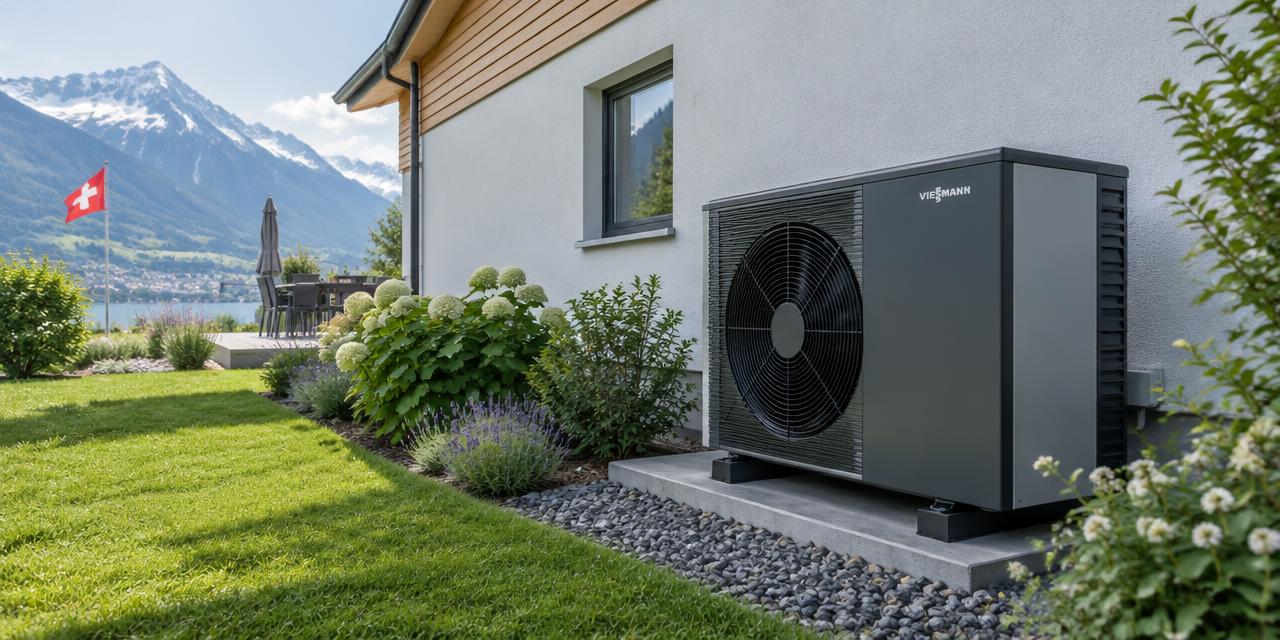
Are you planning to upgrade your heating system in Meilen? Installing a heat pump is a sustainable way to increase your property value while reducing carbon emissions. Before starting this technical project, it is essential to prepare your energy transition by considering local conditions and current technical requirements. Discover our tips for a successful installation and use our free RenoIndex estimator to get a personalized cost range for your specific project. We help you take the right steps for an efficient energy transition in your home.
At a glance
Typical budget
CHF 42'400 – CHF 78'900
Midpoint
CHF 59'300
Grants found
0
Nearby companies
4
Worked examples in Meilen
Small project
CHF 33'500 – CHF 61'400
Typical project
CHF 42'400 – CHF 78'900
Large project
CHF 55'600 – CHF 105'200
Project
Quantity
Low
High
Per unit
Small project
80 m²
CHF 33'500
CHF 61'400
CHF 600
Typical project
160 m²
CHF 42'400
CHF 78'900
CHF 400
Large project
280 m²
CHF 55'600
CHF 105'200
CHF 300
Computed with our estimator for Meilen (regional factor included), standard finish. Only the project size changes.
Cost split (typical project)
Labour :CHF 23'700(40 %)
Materials :CHF 29'600(50 %)
Other costs :CHF 5'900(10 %)
What the price covers
Included
Supply and installation
VAT
Heat pump and standard connections; removal and equipment only according to answers
Not included
Permits and architect fees
Unexpected structural issues
Possible subsidies
Drilling beyond 150 m, buried or contaminated tank, asbestos, insulation and new finishes
With air-to-air: hot water and ducts only if selected; adaptations beyond the options excluded
Meilen's housing stock in figures
In Meilen, the federal building register lists 2'372 residential buildings and 7'178 dwellings. These municipal benchmarks help put your home in context, but do not replace an individual assessment.
59 %built before 1980
60 %heated by oil or gas
22 %electric hot water
2.2 %with declared solar thermal
Age of residential buildings
59 % built before 1980
Before 191916 %
1919–194511 %
1946–196014 %
1961–19707 %
1971–198011 %
1981–19909 %
1991–200011 %
2001–201010 %
Since 201112 %
Construction year does not reveal past renovations: check the current insulation condition.
Main heating energy
34 % · Heating oil
Heating oil34 %
Heat pump29 %
Gas26 %
Electricity5 %
Wood4 %
District heating3 %
This distribution describes recorded buildings, not your system's consumption or efficiency.
Heating and hot water: which energies?
Energy
Heating
Hot water
Gas
26 %
28.4 %
Heating oil
34 %
32.7 %
District heating
3 %
3.5 %
Heat pump
29 %
8.2 %
Electricity
5 %
22 %
Wood
4 %
1.4 %
Solar thermal
0 %
2.5 %
Each line gives the share of buildings using that energy, separately for heating and for hot water. The two columns do not always reach 100%: some buildings combine two systems, or reported none.
Type of heating system
Boiler (unspecified)59 %
Heat pump28.6 %
Central electric heating3.9 %
Heat exchanger (district)3.1 %
Stove3 %
Condensing boiler1.2 %
Direct electric heaters1 %
A standard non-condensing boiler is usually older and less efficient.
Renovations, heritage and volumes
For renovation planning in Meilen, official building register figures indicate a median house volume of 410 cubic meters based on the SIA 416 standard. Note that this measurement covers only 9 out of 1263 buildings, meaning data coverage is highly partial for your assessment. Since information regarding the year of last renovation and heritage protection status is not available in the provided registry records, we strongly advise contacting the local municipality directly. This ensures you are fully aware of any hidden permit requirements or heritage restrictions that could significantly impact the scope and budget of your renovation.
0
buildings flagged as protected
status known for 38 of 2'372 buildings; check with the municipality
Before planning a heat pump, first check whether your area can connect to a priority district heating network. The expansion of thermal grids is a priority at the cantonal level to optimize overall energy efficiency.
Connecting to such a network might sometimes be more advantageous or recommended compared to an individual solution.
Inquire with local authorities to see if any network projects are planned in the immediate vicinity of your home, as this could influence your heating strategy and long-term investment.
A thorough check at the start will prevent redundant costs for a private system if a network expansion is expected soon.
Sizing based on outdoor temperature
The capacity of your heat pump must be precisely adapted to your building's requirements. The local design outdoor temperature sets the heat pump's capacity needed to guarantee optimal thermal comfort, even during the coldest days of the year.
An oversized unit leads to premature wear, while an undersized unit will not cover heat needs. For an accurate assessment, consult an expert to calculate heat demand according to current standards.
Then, use our RenoIndex estimator to get a reliable estimate of installation costs based on these technical parameters. Correct sizing is key to low operating costs and a long service life.
Compliance with noise limits
When installing outdoor air-water heat pumps, noise management is a crucial aspect for maintaining good relations with neighbours. Such systems must meet the noise limits set by law.
It is advisable to position the outdoor unit away from neighbours' bedrooms and choose quiet models. Adhering to minimum distances and installing acoustic screens can also help reduce noise pollution.
Careful planning from the start helps avoid costly disputes and ensures a harmonious integration of your new installation into your residential environment. Focus on certified quiet equipment to maximize comfort for everyone involved.
Planning and budget estimation
Replacing a fossil-fuel heating system with a heat pump is a significant investment for the longevity of your property.
Planning must include not only the device itself but also connection work, potential adjustments to your existing installation, and meeting regulatory standards.
To better understand your budget, our RenoIndex estimator offers a price range adapted to the Swiss context.
By grouping your energy renovation works, you can also optimize labor costs and benefit from better overall efficiency when working with your specialized providers.
Solid planning and transparent budgeting are the best prerequisites for a smooth project implementation.
Your project in 5 steps
1. Estimate
Set a budget range with the estimator.
2. Grants
Apply before work starts.
3. Quotes
Compare at least 3 quotes.
4. Permit
Check with the municipality whether a permit is needed.
5. Works
Follow the site and do a written handover.
Grants and subsidies
No specific grant listed for this work. Maintenance tax deductions may still apply.
Companies in the area
F. Imeri Sàrl
2829 Vermes · about 87.7 km
The website presented under the name Imeri Chauffage et Sanitaire Sàrl offers plumbing, heating and solar thermal work, while F. Imeri Sàrl’s registered purpose refers to a scrap metal business.
Suggestions from the commercial register by distance and activity. Not an endorsement or partnership.
Frequently asked questions
Is a permit required to install a heat pump?
Yes, replacing a heating system with a heat pump generally requires a notification or a building permit application from the municipal authorities. It is advisable to check local building regulations for outdoor installations, especially regarding noise and landscaping.
What financial grants are available?
Subsidies for heat pumps are managed primarily at the cantonal and national levels. We recommend checking the official website of the Canton of ZH to find out about current support programs before you start your work.
What maintenance does a heat pump require?
A heat pump requires annual or biennial maintenance by a qualified professional. This includes cleaning filters, checking refrigerant levels, and monitoring electronic settings to ensure constant energy efficiency.
How do I get a cost estimate?
Use our free estimator on RenoIndex. It allows you to quickly get a cost range for your heat pump project while taking into account the specifics of the Swiss market and your housing type.