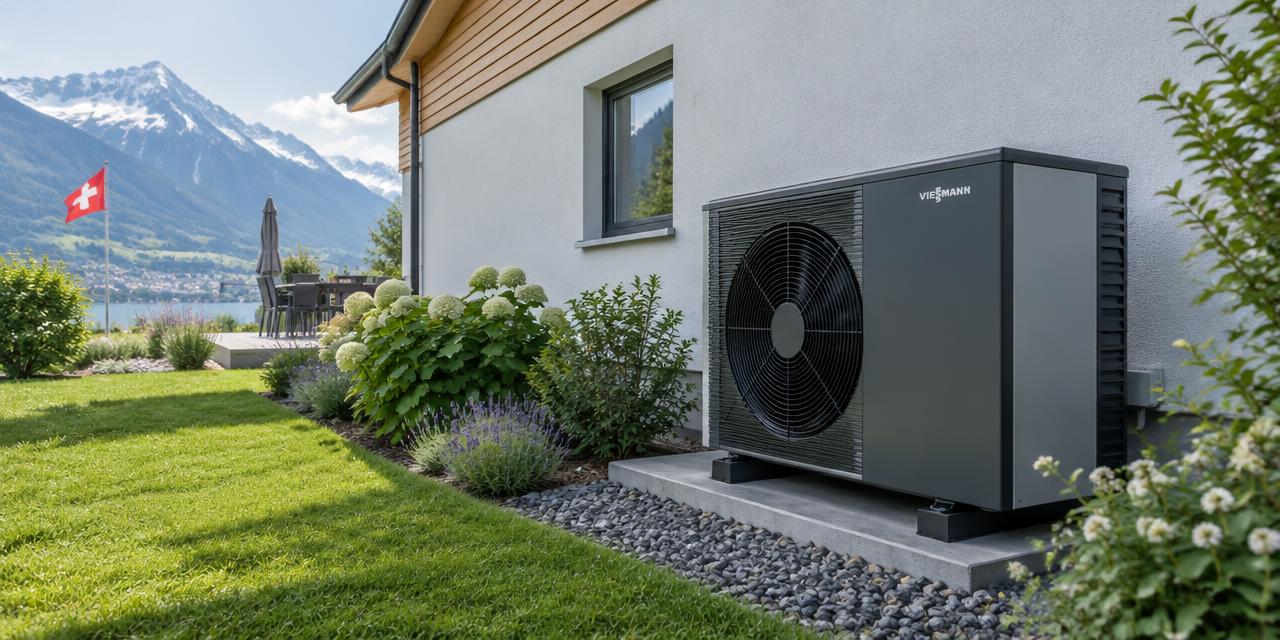
Heat pump installation in Hünenberg: A practical guide
Are you planning to install a heat pump in Hünenberg to improve your home's energy efficiency? This sustainable solution is ideal for reducing long-term heating costs. Before starting your project, proper planning considering local requirements is essential. To get a reliable estimate of the costs tailored to your specific situation, we recommend using the free RenoIndex estimator. Discover our expert advice to ensure a successful transition to a more ecological heating system and improve the overall efficiency of your property.
At a glance
Typical budget
CHF 36'700 – CHF 68'300
Midpoint
CHF 51'300
Grants found
0
Nearby companies
4
Worked examples in Hünenberg
Small project
CHF 29'100 – CHF 53'200
Typical project
CHF 36'700 – CHF 68'300
Large project
CHF 48'100 – CHF 91'100
Project
Quantity
Low
High
Per unit
Small project
80 m²
CHF 29'100
CHF 53'200
CHF 500
Typical project
160 m²
CHF 36'700
CHF 68'300
CHF 300
Large project
280 m²
CHF 48'100
CHF 91'100
CHF 200
Computed with our estimator for Hünenberg (regional factor included), standard finish. Only the project size changes.
Cost split (typical project)
Labour :CHF 20'500(40 %)
Materials :CHF 25'700(50 %)
Other costs :CHF 5'100(10 %)
What the price covers
Included
Supply and installation
VAT
Heat pump and standard connections; removal and equipment only according to answers
Not included
Permits and architect fees
Unexpected structural issues
Possible subsidies
Drilling beyond 150 m, buried or contaminated tank, asbestos, insulation and new finishes
With air-to-air: hot water and ducts only if selected; adaptations beyond the options excluded
Hünenberg's housing stock in figures
In Hünenberg, the federal building register lists 1'405 residential buildings and 3'656 dwellings. These municipal benchmarks help put your home in context, but do not replace an individual assessment.
40 %built before 1980
38 %heated by oil or gas
13.7 %electric hot water
4.3 %with declared solar thermal
Age of residential buildings
40 % built before 1980
Before 19197 %
1919–19452 %
1946–19602 %
1961–19705 %
1971–198024 %
1981–199020 %
1991–200015 %
2001–201018 %
Since 20118 %
Construction year does not reveal past renovations: check the current insulation condition.
Main heating energy
41 % · Heat pump
Heat pump41 %
Heating oil23 %
Gas15 %
District heating15 %
Wood5 %
Electricity1 %
This distribution describes recorded buildings, not your system's consumption or efficiency.
Heating and hot water: which energies?
Energy
Heating
Hot water
Gas
15 %
13 %
Heating oil
23 %
18 %
District heating
15 %
15.3 %
Heat pump
41 %
35 %
Electricity
1 %
13.7 %
Wood
5 %
3.1 %
Solar thermal
0 %
1.8 %
Each line gives the share of buildings using that energy, separately for heating and for hot water. The two columns do not always reach 100%: some buildings combine two systems, or reported none.
Type of heating system
Heat pump40.6 %
Boiler (unspecified)40.4 %
Heat exchanger (district)15.5 %
Condensing boiler1.6 %
Stove1 %
Central electric heating0.9 %
A standard non-condensing boiler is usually older and less efficient.
Renovations, heritage and volumes
For renovation planning in Hünenberg, official data shows that out of 1405 buildings, 375 are under heritage protection, necessitating early municipal consultation and specific permits. The median house volume is 690 m3, which is critical for scaling heating and insulation works based on the SIA 416 standard. Please be aware that data coverage is partial regarding volume, as only 32 buildings are measured according to this standard. Information regarding the year of renovation is not available in the current registry. These figures serve as a foundational guide for estimating the scope of your upcoming property renovation projects.
375
buildings flagged as protected
status known for 442 of 1'405 buildings; check with the municipality
The first step is to verify whether your neighborhood allows connection to a priority district heating network. If not, a heat pump is an excellent alternative. Ensure you consult a professional to assess your building's power requirements.
The local design outdoor temperature determines the capacity of your heat pump. A preliminary study ensures optimal sizing, avoiding excessive electricity consumption or an undersized unit that would fail to cover your heating needs during harsh winters.
Thorough planning is the foundation for a successful and long-lasting installation in your home.
Compliance with noise regulations
It is recommended to position the outdoor unit away from bedroom windows and keep the distance to adjacent plots as large as possible. Using anti-vibration mounts and installing acoustic barriers can help minimize noise disturbance.
By carefully planning the placement of your outdoor unit at the very start of the project, you will avoid future conflicts and ensure that your installation meets all current environmental and noise standards.
Energy efficiency and performance
A modern heat pump offers high efficiency, especially if your building is well insulated. To optimize your system's overall performance, consider the state of your current thermal insulation.
Improving your building envelope can significantly reduce the size of the pump required. Performance is measured by the coefficient of performance, which strongly depends on local climatic conditions.
By combining adequate insulation with appropriate heat pump technology, you maximize energy savings while reducing your carbon footprint over the long term.
Cost estimation and budget
The cost of an installation depends on several factors, such as the chosen technology, the required capacity, and the necessary adaptation work on your current heating system.
Since every project is unique, it is difficult to provide a fixed figure without a personalized assessment. RenoIndex supports you in this process by offering a free simulator. It will provide you with a price range in CHF adapted to local market realities.
Use this tool to establish a realistic budget before contacting local installers for detailed quotes.
Your project in 5 steps
1. Estimate
Set a budget range with the estimator.
2. Grants
Apply before work starts.
3. Quotes
Compare at least 3 quotes.
4. Permit
Check with the municipality whether a permit is needed.
5. Works
Follow the site and do a written handover.
Grants and subsidies
No specific grant listed for this work. Maintenance tax deductions may still apply.
Companies in the area
F. Imeri Sàrl
2829 Vermes · about 74.5 km
The website presented under the name Imeri Chauffage et Sanitaire Sàrl offers plumbing, heating and solar thermal work, while F. Imeri Sàrl’s registered purpose refers to a scrap metal business.
Suggestions from the commercial register by distance and activity. Not an endorsement or partnership.
Frequently asked questions
How do I estimate the price of my installation?
Use the free RenoIndex simulator to get a price range in CHF based on your specific requirements. This will help you better plan your budget before requesting quotes from professionals.
Should I insulate my house before installing a heat pump?
Yes, good insulation reduces the required power of the pump and increases system efficiency. It is a recommended step to maximize long-term savings on your heating bills.
Are heat pumps noisy?
Modern heat pumps are relatively quiet. However, it is essential to comply with noise limits towards neighbors when installing the outdoor unit by choosing an appropriate location and anti-vibration mounts.
What factors influence the heat pump's capacity?
Capacity is mainly determined by the size of your building, the level of insulation, and the local design outdoor temperature. A qualified professional must perform this calculation precisely to ensure optimal performance.