
Hallenbarter & Russi Gebäudetechnik AG
3988 Obergoms · about 73.7 km
Obergoms-based company specializing in sanitary installations, heating systems, roofing, and tinsmith work for new builds and renovations.
hallenbarter-russi.chHeat pump installation · Zug
At a glance
Small project
CHF 29'100 – CHF 53'200
Typical project
CHF 36'700 – CHF 68'300
Large project
CHF 48'100 – CHF 91'100
| Project | Quantity | Low | High | Per unit |
|---|---|---|---|---|
| Small project | 80 m² | CHF 29'100 | CHF 53'200 | CHF 500 |
| Typical project | 160 m² | CHF 36'700 | CHF 68'300 | CHF 300 |
| Large project | 280 m² | CHF 48'100 | CHF 91'100 | CHF 200 |
Computed with our estimator for Zug (regional factor included), standard finish. Only the project size changes.
Included
Not included
In Zug, the federal building register lists 2'886 residential buildings and 15'324 dwellings. These municipal benchmarks help put your home in context, but do not replace an individual assessment.
61 % built before 1980
Construction year does not reveal past renovations: check the current insulation condition.
30 % · Gas
This distribution describes recorded buildings, not your system's consumption or efficiency.
| Energy | Heating | Hot water |
|---|---|---|
| Gas | 30 % | 25 % |
| Heating oil | 30 % | 22.3 % |
| District heating | 12 % | 8.6 % |
| Heat pump | 22 % | 8.6 % |
| Electricity | 2 % | 20.8 % |
| Wood | 4 % | 3.4 % |
| Solar thermal | 0 % | 9.3 % |
Each line gives the share of buildings using that energy, separately for heating and for hot water. The two columns do not always reach 100%: some buildings combine two systems, or reported none.
A standard non-condensing boiler is usually older and less efficient.
For your renovation planning in Zug, RegBL data provides vital benchmarks. With 477 out of 577 identified buildings under heritage protection, it is essential to contact the municipality early to navigate permit requirements. Regarding building scale, the median volume is 1495 m3 based on the SIA 416 standard for a portion of the housing stock, helping you estimate the scope of heating or insulation upgrades. Please note that data coverage is partial for building volumes and the renovation year is not recorded. Consulting local authorities early remains a key step for your project in this specific municipality.
Source : OFS — RegBL (export communal complet). Existing residential buildings; percentages of recorded values.
Before starting your project, it is essential to check whether your area can connect to a priority district heating network. This collective solution can sometimes be more advantageous than an individual installation.
If connection is not possible, a heat pump is an excellent alternative. It is highly recommended to consult a local heating engineer to assess the technical feasibility of your building.
To help you budget for this heating system upgrade, do not hesitate to use our free RenoIndex estimator to get a realistic price range for your property.
Sizing is a crucial step to ensure the efficiency of your installation. The local design outdoor temperature sets the heat pump's capacity needed to heat your home effectively, even during harsh winters in Zug.
An undersized pump will fail to ensure your comfort, while an oversized system will unnecessarily increase your investment costs. Our experts recommend carrying out a complete thermal study to determine the ideal power.
Use the free RenoIndex estimator to get a reliable assessment adapted to your region's climatic conditions before requesting detailed quotes.
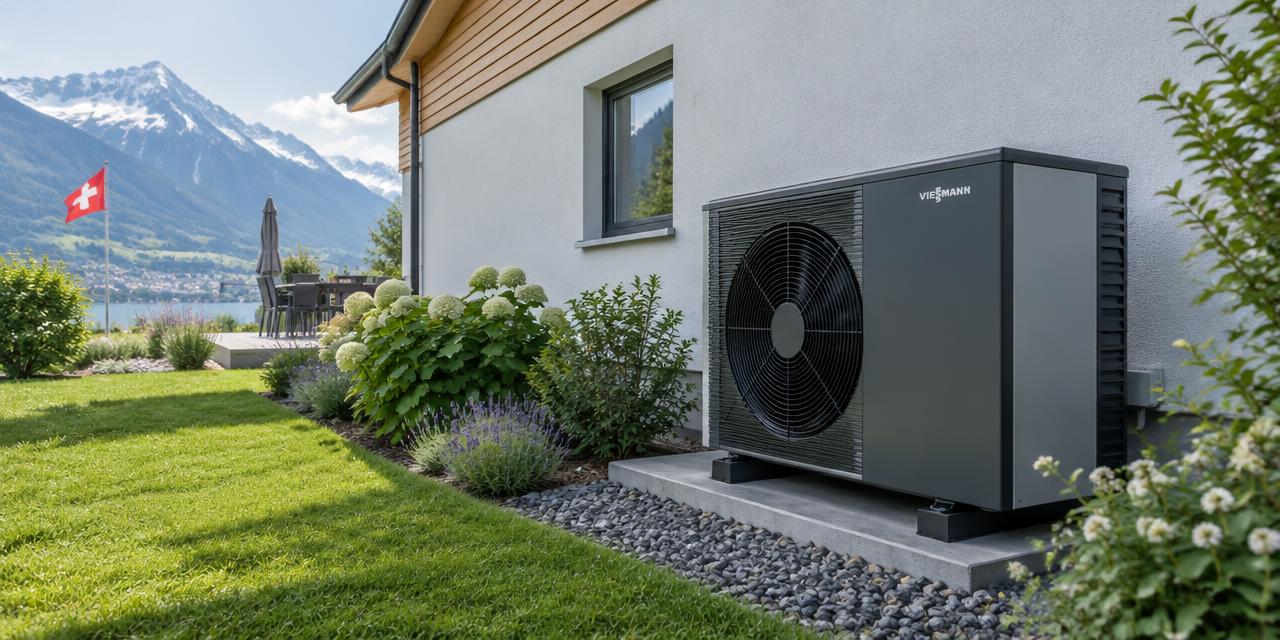
If you opt for an outdoor air-water heat pump, the issue of noise is paramount. Such equipment must meet noise limits towards neighbours to avoid any acoustic disturbance.
The positioning of the outdoor unit must be carefully studied to minimize resonance and comply with current neighbourhood rules. It is recommended to choose certified quiet models.
To anticipate the costs related to a compliant installation and necessary soundproofing measures, use our free RenoIndex estimator. This tool will provide you with a suitable price range to calmly plan your renovation project.
Investing in a heat pump is a cost-effective long-term decision, despite initial costs. To maximize your investment, it is essential to compare different technical solutions and get multiple quotes.
Combining a heat pump with improved insulation or solar panels can further increase your overall energy savings. Remember to check available grants at the cantonal level to reduce the financial burden.
Before you start, take advantage of the free RenoIndex estimator to get an accurate price range. This tool helps you evaluate costs transparently and make an informed decision for your home.
1. Estimate
Set a budget range with the estimator.
2. Grants
Apply before work starts.
3. Quotes
Compare at least 3 quotes.
4. Permit
Check with the municipality whether a permit is needed.
5. Works
Follow the site and do a written handover.
No specific grant listed for this work. Maintenance tax deductions may still apply.
3988 Obergoms · about 73.7 km
Obergoms-based company specializing in sanitary installations, heating systems, roofing, and tinsmith work for new builds and renovations.
hallenbarter-russi.ch2829 Vermes · about 80.1 km
The website presented under the name Imeri Chauffage et Sanitaire Sàrl offers plumbing, heating and solar thermal work, while F. Imeri Sàrl’s registered purpose refers to a scrap metal business.
imeri-sarl.ch2832 Rebeuvelier · about 85 km
Eco6therm specializes in the installation of heating systems, particularly heat pumps, and solar photovoltaic energy solutions.
eco6therm.ch2824 Vicques · about 85.2 km
Specialist since 1968 in sanitary installations, heating (gas, oil, wood, renewable energy), and tinsmithing with 24/7 emergency repair service.
sanit.chSuggestions from the commercial register by distance and activity. Not an endorsement or partnership.
The price depends on the chosen technology and the necessary adaptations to your building. To obtain a reliable and personalized price range, use our free RenoIndex estimator, which will give you a clear vision of costs based on your specific requirements.
Yes, replacing a heating system generally requires notification or a permit application to the relevant authorities. Inquire with your municipality to learn about the steps specific to your situation and the noise regulations for outdoor units.
Financial aid for heat pumps is managed at the cantonal level. It is recommended to consult the grant programs of the canton of Zug to understand the eligibility criteria and conditions for awarding before starting your energy renovation work.
Absolutely. Modern heat pumps are designed to be efficient even in cold weather. Correct sizing, based on the local design outdoor temperature, ensures that your system will provide the necessary heat throughout the winter season in the canton.