
Fasel-Piller Gebäudehülle AG
1716 Plaffeien · about 30 km
Swiss company specializing in building services, tinsmithing, roofing, and solar installations for the building envelope.
faselpillerag.chSolar water heating · Frutigen
At a glance
Small project
CHF 9'400 – CHF 21'900
Typical project
CHF 12'100 – CHF 28'000
Large project
CHF 16'500 – CHF 38'000
| Project | Quantity | Low | High | Per unit |
|---|---|---|---|---|
| Small project | 3 m² | CHF 9'400 | CHF 21'900 | CHF 5'100 |
| Typical project | 6 m² | CHF 12'100 | CHF 28'000 | CHF 3'200 |
| Large project | 11 m² | CHF 16'500 | CHF 38'000 | CHF 2'400 |
Computed with our estimator for Frutigen (regional factor included), standard finish. Only the project size changes.
Included
Not included
In Frutigen, the federal building register lists 1'929 residential buildings and 3'786 dwellings. These municipal benchmarks help put your home in context, but do not replace an individual assessment.
68 % built before 1980
Construction year does not reveal past renovations: check the current insulation condition.
38 % · Heating oil
This distribution describes recorded buildings, not your system's consumption or efficiency.
| Energy | Heating | Hot water |
|---|---|---|
| Heating oil | 38 % | 18.3 % |
| District heating | 4 % | 2.5 % |
| Heat pump | 17 % | 5.7 % |
| Electricity | 9 % | 58.1 % |
| Wood | 32 % | 13.7 % |
| Solar thermal | 0 % | 1.2 % |
Each line gives the share of buildings using that energy, separately for heating and for hot water. The two columns do not always reach 100%: some buildings combine two systems, or reported none.
A standard non-condensing boiler is usually older and less efficient.
28 % of buildings mix housing with shops or offices.
For your renovation plans in Frutigen, RegBL data provides essential insights. With a median building volume of 1215 m3, the scale of your property directly dictates the scope of heating and insulation work, though this measurement is recorded for only one out of 919 houses. As heritage protection is not listed for these buildings, you have greater planning flexibility, yet contacting the municipality early remains recommended. Please note that data coverage is partial for these indicators, making it necessary to verify specific details directly with local authorities to ensure all regulatory requirements are met for your renovation project.
Source : OFS — RegBL (export communal complet). Existing residential buildings; percentages of recorded values.
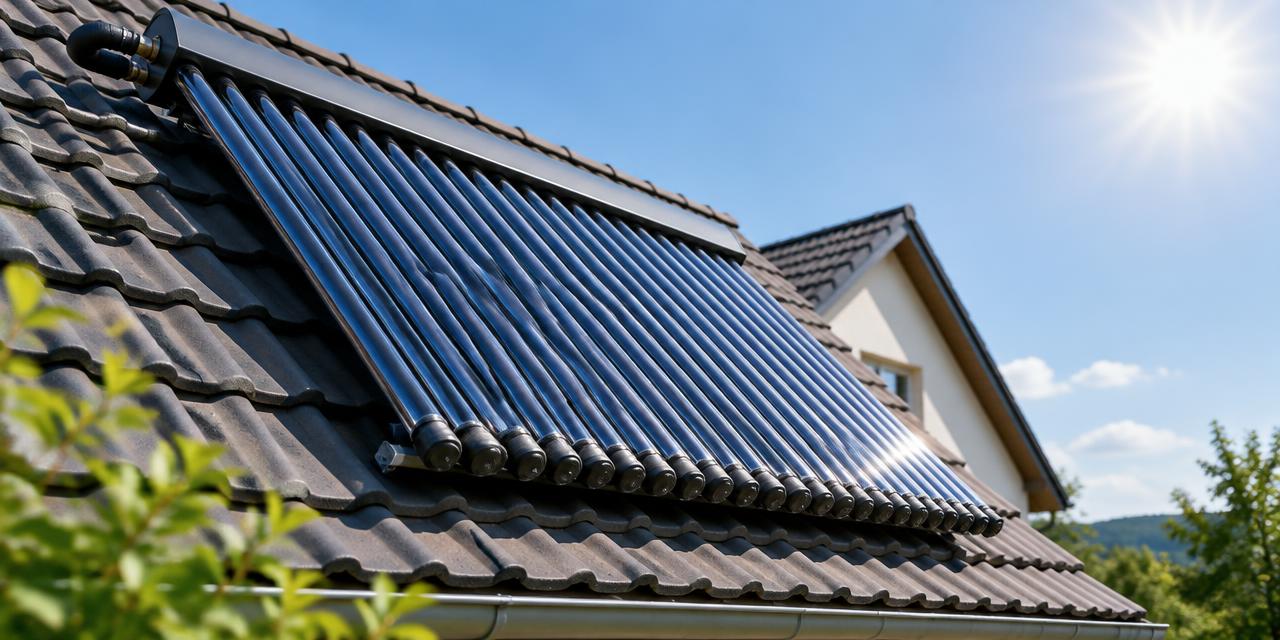
Solar thermal systems capture energy from the sun to heat a transfer fluid circulating through rooftop collectors. This heat is then transferred to a storage tank.
Solar thermal collectors usually cover much of the hot water demand during summer, significantly reducing fossil fuel consumption. This is a sustainable solution that adds value to your property.
To understand the average costs associated with this installation, we invite you to use the free RenoIndex estimator, which will provide you with a reliable budget range for your project.
Installation requires a rigorous study of the roof and energy requirements. If you are considering pairing your new collectors with a heat pump, note that combining collectors with a heat pump needs a specific sizing study to ensure optimal efficiency.
A proper configuration ensures the system works in harmony with your other equipment. Don't forget to check your roof orientation and slope to maximize annual yield.
To get a clear idea of labour and material costs in Frutigen, use our online RenoIndex calculator for free.
It is advisable to regularly consult the cantonal portals of the Canton of BE to learn about current incentives before signing quotes. These financial supports can significantly reduce your initial investment.
To estimate your total costs before grants, rely on the RenoIndex tool, which will help you define your planned budget quickly and easily.
For a successful solar project, take a holistic approach. First, ensure your roof is in good condition before mounting collectors. Maintenance is minimal, but an annual professional inspection is recommended.
The quality of materials and the expertise of your local installer are critical for the longevity of your system. By planning carefully, you increase your home's long-term value while achieving significant energy savings.
Use RenoIndex to get a price estimate consistent with the current market and move forward with your work with peace of mind.
1. Estimate
Set a budget range with the estimator.
2. Grants
Apply before work starts.
3. Quotes
Compare at least 3 quotes.
4. Permit
Check with the municipality whether a permit is needed.
5. Works
Follow the site and do a written handover.
No specific grant listed for this work. Maintenance tax deductions may still apply.
1716 Plaffeien · about 30 km
Swiss company specializing in building services, tinsmithing, roofing, and solar installations for the building envelope.
faselpillerag.ch3972 Miège · about 31.1 km
Clavien Fabrice Sanitaires Sàrl in Miège provides plumbing and heating installations, including heat pumps, as well as roofing work and the installation of solar thermal and photovoltaic panels.
fabriceclavien.ch3965 Chippis · about 37.2 km
Based in Chippis, Entreprise Vogel SA specializes in sanitary installations, heating (heat pumps), and roofing services since 1985.
vogelsa.ch1733 Treyvaux · about 40.3 km
Treyvaux-based company specializing in sanitary installations, heating, and solar thermal solutions since 1972.
cuony-dafflon.chSuggestions from the commercial register by distance and activity. Not an endorsement or partnership.
A well-maintained solar thermal system can operate efficiently for 20 to 25 years. The quality of components, such as the collectors and control system, plays a key role in this lifespan. An annual check-up ensures that the heat transfer fluid remains in perfect working order.
Yes, solar water heating works even in winter, but its performance is lower than in summer due to reduced sunlight and colder temperatures. The system then acts as support for water heating, complemented by your main central heating system.
To get a quick and reliable cost estimate for your solar installation in Frutigen, use the free RenoIndex service. It allows you to generate a realistic price range tailored to the specifics of your renovation before contacting local professionals.
No, grants are not automatic. You must generally submit a formal application to the competent authorities of the Canton of BE before starting work. It is imperative to follow the current procedures to ensure your project's eligibility for subsidies.