
Solartech Group Sàrl
3963 Crans-Montana · about 33.2 km
Solartech Group provides sustainable energy solutions, including the installation of photovoltaic systems, battery storage, and heat pumps.
solartech-group.chHome solar battery · Frutigen
At a glance
Small project
CHF 4'000 – CHF 9'300
Typical project
CHF 7'400 – CHF 15'700
Large project
CHF 12'700 – CHF 25'900
| Project | Quantity | Low | High | Per unit |
|---|---|---|---|---|
| Small project | 5 kWh | CHF 4'000 | CHF 9'300 | CHF 1'200 |
| Typical project | 10 kWh | CHF 7'400 | CHF 15'700 | CHF 1'100 |
| Large project | 18 kWh | CHF 12'700 | CHF 25'900 | CHF 1'000 |
Computed with our estimator for Frutigen (regional factor included), standard finish. Only the project size changes.
Included
Not included
In Frutigen, the federal building register lists 1'929 residential buildings and 3'786 dwellings. These municipal benchmarks help put your home in context, but do not replace an individual assessment.
68 % built before 1980
Construction year does not reveal past renovations: check the current insulation condition.
38 % · Heating oil
This distribution describes recorded buildings, not your system's consumption or efficiency.
| Energy | Heating | Hot water |
|---|---|---|
| Heating oil | 38 % | 18.3 % |
| District heating | 4 % | 2.5 % |
| Heat pump | 17 % | 5.7 % |
| Electricity | 9 % | 58.1 % |
| Wood | 32 % | 13.7 % |
| Solar thermal | 0 % | 1.2 % |
Each line gives the share of buildings using that energy, separately for heating and for hot water. The two columns do not always reach 100%: some buildings combine two systems, or reported none.
A standard non-condensing boiler is usually older and less efficient.
28 % of buildings mix housing with shops or offices.
For your renovation plans in Frutigen, RegBL data provides essential insights. With a median building volume of 1215 m3, the scale of your property directly dictates the scope of heating and insulation work, though this measurement is recorded for only one out of 919 houses. As heritage protection is not listed for these buildings, you have greater planning flexibility, yet contacting the municipality early remains recommended. Please note that data coverage is partial for these indicators, making it necessary to verify specific details directly with local authorities to ensure all regulatory requirements are met for your renovation project.
Source : OFS — RegBL (export communal complet). Existing residential buildings; percentages of recorded values.
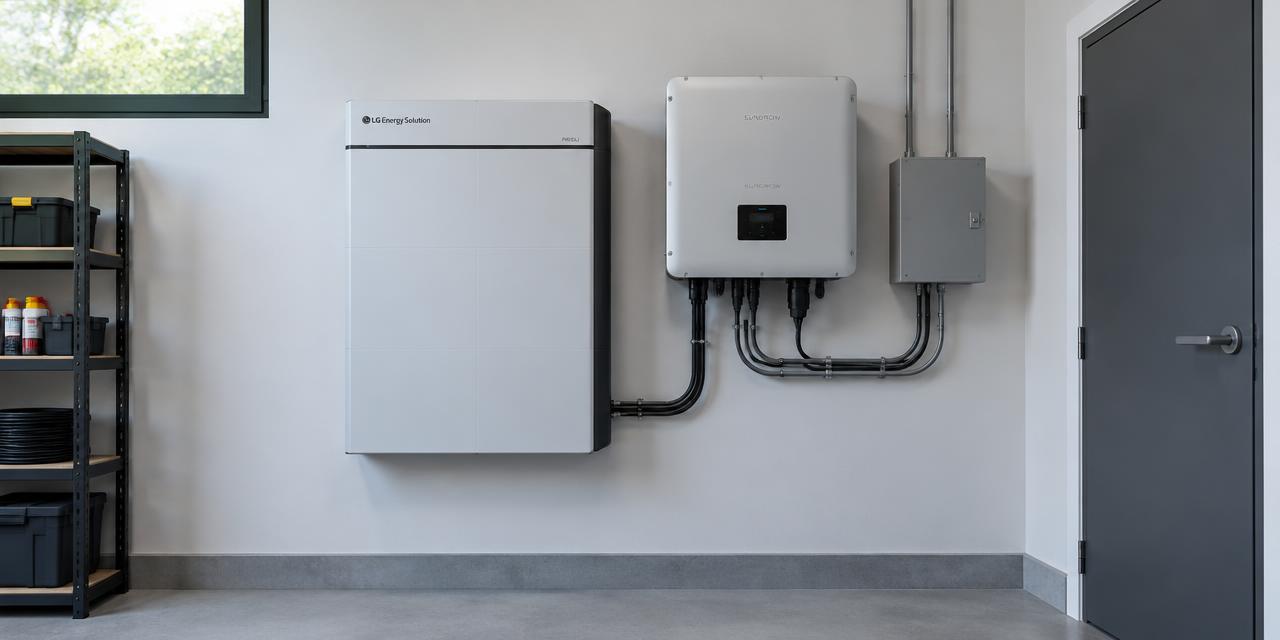
A battery is worthwhile when solar output clearly exceeds your daytime use. In Frutigen, just as anywhere else, the goal is to reduce your dependence on the conventional power grid.
By storing surplus energy, you can power your appliances and lighting long after the sun has set. This significantly increases your self-consumption rate.
To evaluate the budget required for this energy transition, use the free RenoIndex calculator, which provides a price range tailored to your specific situation and the capacity of your existing solar installation.
Size capacity by evening consumption, not panel power. Unnecessary over-sizing can increase investment costs without providing a real gain in autonomy. Analyze your evening consumption habits to select a battery size that is perfectly adapted to your needs.
A balance between daytime production and actual demand ensures maximum profitability for your system in the canton of Bern.
RenoIndex helps you understand the costs associated with different storage capacities, allowing you to make an informed and economical choice for your home.
Check compatibility with your existing inverter before buying. Some batteries require a specific hybrid inverter, while others can be added via AC coupling. This technical step is crucial to avoid unforeseen costs or system inefficiencies.
Consulting a local professional in Frutigen is highly recommended to validate this technical compatibility before any purchase.
Feel free to use RenoIndex to get an estimate of the installation costs, including the hardware and labor required to correctly integrate your new battery into your existing setup.
Although the canton of Bern encourages the energy transition, ensure that you comply with current safety standards for storing lithium batteries in residential buildings.
A compliant installation guarantees not only your safety but also the longevity of your equipment. Planning your project in advance helps coordinate the electricians' work. Use RenoIndex to prepare your overall budget and anticipate expenses.
Good planning will allow you to transform your solar installation into a reliable and sustainable energy source for your home in Frutigen.
1. Estimate
Set a budget range with the estimator.
2. Grants
Apply before work starts.
3. Quotes
Compare at least 3 quotes.
4. Permit
Check with the municipality whether a permit is needed.
5. Works
Follow the site and do a written handover.
No specific grant listed for this work. Maintenance tax deductions may still apply.
3963 Crans-Montana · about 33.2 km
Solartech Group provides sustainable energy solutions, including the installation of photovoltaic systems, battery storage, and heat pumps.
solartech-group.ch3942 Raron · about 34.1 km
TZ Stromag is a full-service provider of electrical engineering for buildings, covering installations, automation, security, and in-house switchgear construction.
stromag.ch3960 Corin-de-la-Crête · about 36.3 km
Domelec Sàrl is a Valais-based company specializing in photovoltaic installations, battery storage, and optimized energy home automation.
domelec.ch3930 Visp · about 39.8 km
TZ Stromag offers comprehensive electrical engineering services for residential buildings, including installations, telematics services, and security.
stromag.chSuggestions from the commercial register by distance and activity. Not an endorsement or partnership.
Profitability depends on your current self-consumption rate. If you consume little solar energy in the evening, the payback period may be long. RenoIndex allows you to estimate the costs to compare your investment against potential savings on your electricity bills.
Most modern lithium batteries have a lifespan of 10 to 15 years. Their performance gradually declines with the number of charge cycles. Budget planning via RenoIndex helps you prepare financially for future replacement.
Although the installation is often simplified in the canton of Bern, it is imperative to check local Frutigen regulations and grid operator requirements for connection. A professional will be able to guide you through this administrative process.
The cost varies depending on capacity and chosen technology. Use the free RenoIndex simulator to get a current price estimate for your home. This will give you a solid basis for requesting detailed quotes from local companies.