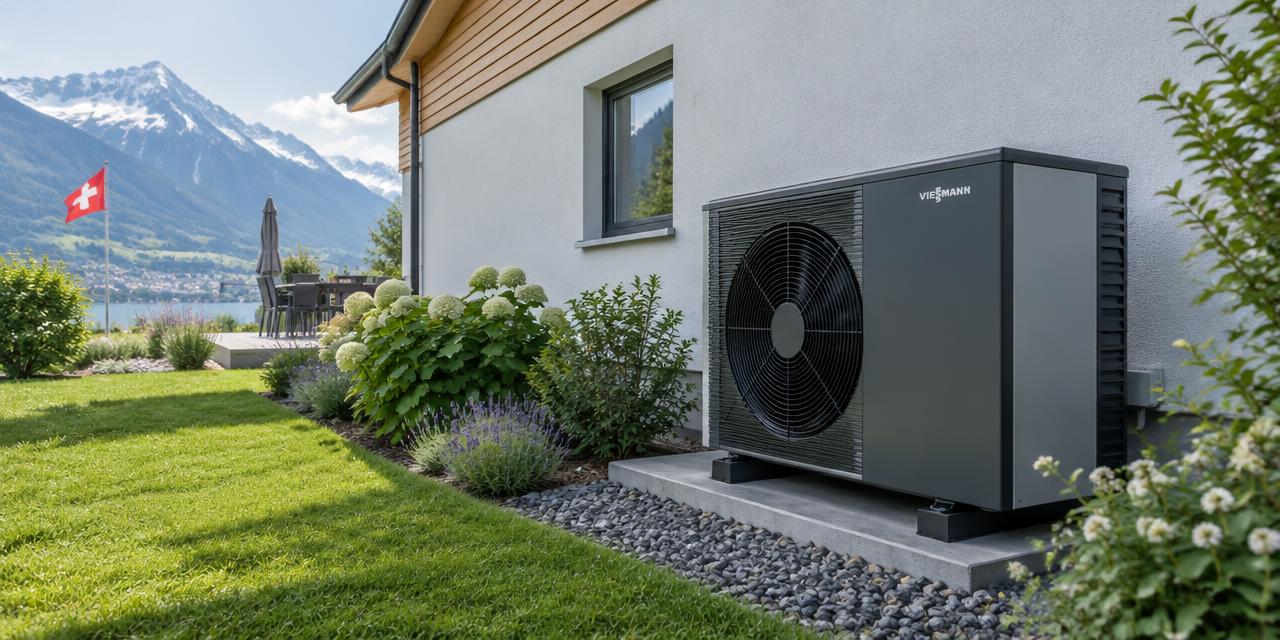
Planning to upgrade your heating system in Frauenfeld? Installing a heat pump is a sustainable way to increase your property value. Before starting work, it is essential to consider technical and environmental factors. Whether choosing air-to-water or geothermal models, careful planning ensures optimal thermal comfort while reducing energy bills. Use our RenoIndex estimator to get a precise price range and tailor your project to your budget. Make an informed decision to ensure an efficient and future-proof heating system for your home in Frauenfeld.
At a glance
Typical budget
CHF 42'400 – CHF 78'900
Midpoint
CHF 59'300
Grants found
0
Nearby companies
4
Worked examples in Frauenfeld
Small project
CHF 33'500 – CHF 61'400
Typical project
CHF 42'400 – CHF 78'900
Large project
CHF 55'600 – CHF 105'200
Project
Quantity
Low
High
Per unit
Small project
80 m²
CHF 33'500
CHF 61'400
CHF 600
Typical project
160 m²
CHF 42'400
CHF 78'900
CHF 400
Large project
280 m²
CHF 55'600
CHF 105'200
CHF 300
Computed with our estimator for Frauenfeld (regional factor included), standard finish. Only the project size changes.
Cost split (typical project)
Labour :CHF 23'700(40 %)
Materials :CHF 29'600(50 %)
Other costs :CHF 5'900(10 %)
What the price covers
Included
Supply and installation
VAT
Heat pump and standard connections; removal and equipment only according to answers
Not included
Permits and architect fees
Unexpected structural issues
Possible subsidies
Drilling beyond 150 m, buried or contaminated tank, asbestos, insulation and new finishes
With air-to-air: hot water and ducts only if selected; adaptations beyond the options excluded
Frauenfeld's housing stock in figures
In Frauenfeld, the federal building register lists 4'522 residential buildings and 13'267 dwellings. These municipal benchmarks help put your home in context, but do not replace an individual assessment.
58 %built before 1980
70 %heated by oil or gas
15.3 %electric hot water
4.5 %with declared solar thermal
Age of residential buildings
58 % built before 1980
Before 191913 %
1919–194512 %
1946–196013 %
1961–19709 %
1971–198011 %
1981–199011 %
1991–200012 %
2001–201010 %
Since 201111 %
Construction year does not reveal past renovations: check the current insulation condition.
Main heating energy
44 % · Gas
Gas44 %
Heating oil26 %
Heat pump23 %
Wood5 %
District heating2 %
Electricity1 %
This distribution describes recorded buildings, not your system's consumption or efficiency.
Heating and hot water: which energies?
Energy
Heating
Hot water
Gas
44 %
40 %
Heating oil
26 %
23.9 %
District heating
2 %
1.2 %
Heat pump
23 %
11.2 %
Electricity
1 %
15.3 %
Wood
5 %
3.3 %
Solar thermal
0 %
3.6 %
Each line gives the share of buildings using that energy, separately for heating and for hot water. The two columns do not always reach 100%: some buildings combine two systems, or reported none.
Type of heating system
Boiler (unspecified)71.5 %
Heat pump22.7 %
Condensing boiler2.1 %
Heat exchanger (district)1.7 %
Stove0.9 %
Central electric heating0.8 %
A standard non-condensing boiler is usually older and less efficient.
Renovations, heritage and volumes
When planning your renovation in Frauenfeld, refer to the federal building registry data to guide your budget. With a median volume of 954 m3 for the 21 houses measured by the SIA 416 standard, you can gauge the scope for heating and insulation work. Please note that data coverage is partial, as most buildings rely on other standards. Since information regarding renovation years and heritage protection is not currently recorded, you should consult the municipality directly early in your process to confirm local regulations and requirements before finalizing any construction plans for your home.
0
buildings flagged as protected
status known for 518 of 4'522 buildings; check with the municipality
First check whether your area can connect to a priority district heating network. If this is possible, it is often the preferred choice by local authorities. Next, the local design outdoor temperature sets the heat pump's capacity required for your home.
A thermal analysis of your building is recommended to avoid oversizing the system.
Consulting with a qualified professional allows you to validate these criteria and select the equipment that is best suited to the specific configuration of your plot and heating demand.
Respecting noise regulations
It is crucial to choose a strategic location, away from the neighbours' bedrooms, and plan for noise insulation if necessary.
Careful positioning not only avoids noise pollution but also prevents neighbourly conflicts, ensuring the long-term viability of your heating installation and keeping your home environment peaceful and compliant.
Planning and budgeting
Transitioning to a heat pump is a significant investment, but one that is profitable in the medium term.
In addition to the cost of the unit itself, budget for installation work, possible modifications to the heat distribution system (such as switching to underfloor heating), and the electrical connection. Do not forget to include fees for any necessary permits.
To get a realistic cost estimate, use our RenoIndex tool. This will help you visualize the different price ranges based on the technical complexity of your specific project.
Expert support
A successful installation relies on choosing competent partners. It is highly advisable to engage certified companies familiar with technical specifications and the requirements of the canton of Thurgau.
These experts can advise you on optimal sizing, integrating your heat pump into existing systems, and handling administrative procedures. By collaborating with professionals, you ensure the durability, performance, and energy efficiency of your system.
Do not hesitate to request several quotes to compare proposed solutions and find the one that best matches your expectations and budget.
Your project in 5 steps
1. Estimate
Set a budget range with the estimator.
2. Grants
Apply before work starts.
3. Quotes
Compare at least 3 quotes.
4. Permit
Check with the municipality whether a permit is needed.
5. Works
Follow the site and do a written handover.
Grants and subsidies
No specific grant listed for this work. Maintenance tax deductions may still apply.
Companies in the area
F. Imeri Sàrl
2829 Vermes · about 108.6 km
The website presented under the name Imeri Chauffage et Sanitaire Sàrl offers plumbing, heating and solar thermal work, while F. Imeri Sàrl’s registered purpose refers to a scrap metal business.
Suggestions from the commercial register by distance and activity. Not an endorsement or partnership.
Frequently asked questions
What is the lifespan of a heat pump?
On average, a well-maintained heat pump has a lifespan of 15 to 20 years. Regular maintenance by a professional is essential to ensure efficiency and prolong longevity while avoiding costly repairs.
Must I insulate my house before installing a heat pump?
It is highly recommended to improve thermal insulation to maximize the efficiency of the heat pump. A well-insulated house requires less energy to heat, which reduces the size of the unit needed and significantly lowers your monthly electricity bills.
Is underfloor heating mandatory for a heat pump?
No, it is not mandatory. Although underfloor heating is ideal because it operates at low temperatures, modern heat pumps can also work with high-performance radiators that are well-sized for the pump's temperature regime.
How can I estimate the total cost of my project?
To get a reliable estimate, you can use our RenoIndex estimator for free. It takes into account various parameters to provide you with a price range tailored to your specific situation and local requirements in Switzerland.