
Hallenbarter & Russi Gebäudetechnik AG
3988 Obergoms · about 141.4 km
Obergoms-based company specializing in sanitary installations, heating systems, roofing, and tinsmith work for new builds and renovations.
hallenbarter-russi.chHeat pump installation · Arbon
At a glance
Small project
CHF 29'400 – CHF 53'700
Typical project
CHF 37'100 – CHF 69'100
Large project
CHF 48'600 – CHF 92'100
| Project | Quantity | Low | High | Per unit |
|---|---|---|---|---|
| Small project | 80 m² | CHF 29'400 | CHF 53'700 | CHF 500 |
| Typical project | 160 m² | CHF 37'100 | CHF 69'100 | CHF 300 |
| Large project | 280 m² | CHF 48'600 | CHF 92'100 | CHF 200 |
Computed with our estimator for Arbon (regional factor included), standard finish. Only the project size changes.
Included
Not included
In Arbon, the federal building register lists 2'296 residential buildings and 8'502 dwellings. These municipal benchmarks help put your home in context, but do not replace an individual assessment.
62 % built before 1980
Construction year does not reveal past renovations: check the current insulation condition.
34 % · Heating oil
This distribution describes recorded buildings, not your system's consumption or efficiency.
| Energy | Heating | Hot water |
|---|---|---|
| Gas | 25 % | 21.1 % |
| Heating oil | 34 % | 29.1 % |
| District heating | 8 % | 6.1 % |
| Heat pump | 27 % | 15.4 % |
| Electricity | 3 % | 22.9 % |
| Wood | 3 % | 1.9 % |
| Solar thermal | 0 % | 2.9 % |
Each line gives the share of buildings using that energy, separately for heating and for hot water. The two columns do not always reach 100%: some buildings combine two systems, or reported none.
A standard non-condensing boiler is usually older and less efficient.
For your renovation projects in Arbon, RegBL figures provide essential benchmarks, although data coverage remains partial. Regarding heritage protection, one building is officially listed as protected out of 384 known cases, highlighting the need to contact the municipality early to clarify permit requirements. Additionally, for the 1229 houses recorded, the volume data shows a median of 845 m3 for the 11 units measured according to the SIA 416 standard. These volume figures are critical for you to scale your heating and insulation works accurately, ensuring your renovation planning in Arbon is both realistic and well-prepared for official requirements.
Source : OFS — RegBL (export communal complet). Existing residential buildings; percentages of recorded values.
The first step is to analyze your home's heating needs. First check whether your area can connect to a priority district heating network, which could be an advantageous alternative.
The local design outdoor temperature sets the heat pump's capacity required to heat your home effectively during cold spells. It is recommended to hire a professional to conduct a complete energy audit.
This diagnosis ensures that the chosen system perfectly matches your house's size and insulation, thus ensuring optimal thermal comfort throughout the year.
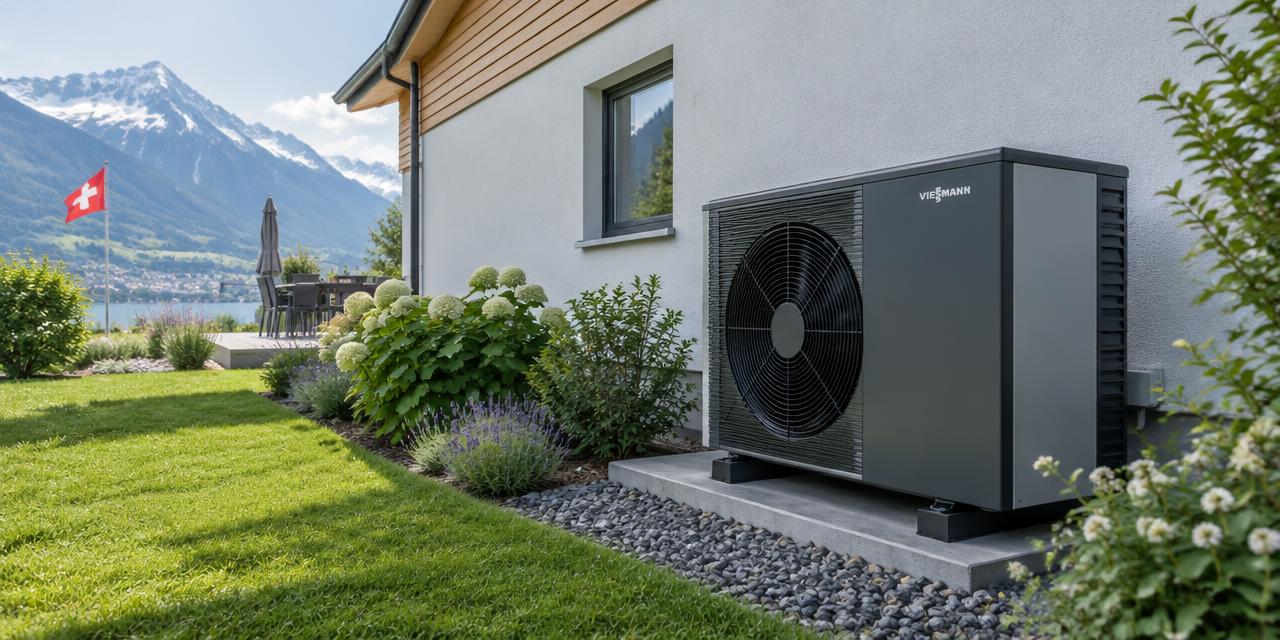
It is crucial to anticipate these aspects during project design. Choose a protected location or install soundproofing devices if necessary.
Careful planning helps avoid neighbourhood disputes while ensuring compliance with current noise emission legislation in your residential area.
In Arbon, as everywhere in Switzerland, the choice of technology is decisive for long-term profitability. Whether it is an air-water or geothermal heat pump, each solution requires a specific site analysis.
The geothermal heat pump offers high efficiency but requires drilling permits. The air-water heat pump is more flexible but depends on local outdoor temperatures for its performance.
Do not forget to consult RenoIndex to get a reliable price range before finalizing your quotes. A well-sized installation is key to reducing your long-term energy costs.
Once the installation is complete, commissioning must be carried out by a certified specialist. This phase allows for checking system settings and optimizing the heating curve according to your home's actual needs.
Ensure you obtain all warranty documents and maintenance instructions. Regular maintenance is essential to maintain the performance of your heat pump year after year.
By following these tips and using our simulator, you turn your renovation project into a sustainable investment, enhancing your property value while improving your thermal comfort.
1. Estimate
Set a budget range with the estimator.
2. Grants
Apply before work starts.
3. Quotes
Compare at least 3 quotes.
4. Permit
Check with the municipality whether a permit is needed.
5. Works
Follow the site and do a written handover.
No specific grant listed for this work. Maintenance tax deductions may still apply.
3988 Obergoms · about 141.4 km
Obergoms-based company specializing in sanitary installations, heating systems, roofing, and tinsmith work for new builds and renovations.
hallenbarter-russi.ch2829 Vermes · about 148.3 km
The website presented under the name Imeri Chauffage et Sanitaire Sàrl offers plumbing, heating and solar thermal work, while F. Imeri Sàrl’s registered purpose refers to a scrap metal business.
imeri-sarl.ch2824 Vicques · about 152.1 km
Specialist since 1968 in sanitary installations, heating (gas, oil, wood, renewable energy), and tinsmithing with 24/7 emergency repair service.
sanit.ch2824 Vicques · about 152.1 km
Buchwalder Sàrl in Vicques has specialized in the installation, repair, and renovation of heating and sanitary systems since 1966.
buchwalder-sarl.chSuggestions from the commercial register by distance and activity. Not an endorsement or partnership.
Costs vary depending on the model and complexity of the installation. For an accurate price range tailored to your project in Switzerland, we recommend using the free RenoIndex estimator. This will allow you to plan your budget with confidence.
Yes, replacing a heating system with a heat pump is generally subject to authorization. Contact your municipality to find out about local administrative procedures and the specific documents required to submit your building permit application.
Modern air-water heat pumps are becoming increasingly quiet, but noise standards must be met. It is imperative to position the outdoor unit correctly to minimize noise pollution and avoid any issues with neighbours.
Financial aid often depends on cantonal or national programs. Check with your canton's official websites to discover current subsidies available for energy renovations related to heat pumps.