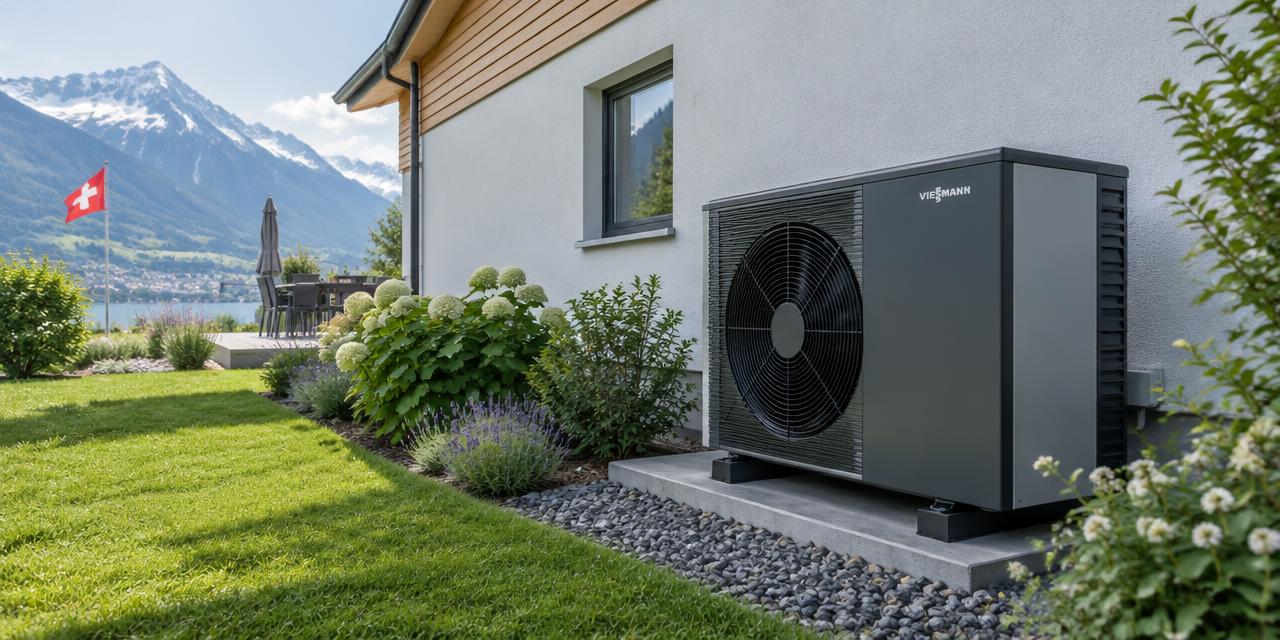
Indicative price, tips, grants and companies for your project in Chavannes-près-Renens (Vaud).
At a glance
Typical budget
CHF 41'600 – CHF 77'500
Midpoint
CHF 58'200
Grants found
1
Nearby companies
4
Worked examples in Chavannes-près-Renens
Small project
CHF 32'900 – CHF 60'300
Typical project
CHF 41'600 – CHF 77'500
Large project
CHF 54'600 – CHF 103'300
Project
Quantity
Low
High
Per unit
Small project
80 m²
CHF 32'900
CHF 60'300
CHF 600
Typical project
160 m²
CHF 41'600
CHF 77'500
CHF 400
Large project
280 m²
CHF 54'600
CHF 103'300
CHF 300
Computed with our estimator for Chavannes-près-Renens (regional factor included), standard finish. Only the project size changes.
Cost split (typical project)
Labour :CHF 23'300(40 %)
Materials :CHF 29'100(50 %)
Other costs :CHF 5'800(10 %)
What the price covers
Included
Supply and installation
VAT
Heat pump and standard connections; removal and equipment only according to answers
Not included
Permits and architect fees
Unexpected structural issues
Possible subsidies
Drilling beyond 150 m, buried or contaminated tank, asbestos, insulation and new finishes
With air-to-air: hot water and ducts only if selected; adaptations beyond the options excluded
Chavannes-près-Renens's housing stock in figures
In Chavannes-près-Renens, the federal building register lists 293 residential buildings and 5'424 dwellings. These municipal benchmarks help put your home in context, but do not replace an individual assessment.
63 %built before 1980
81 %heated by oil or gas
4 %electric hot water
10.2 %with declared solar thermal
Age of residential buildings
63 % built before 1980
Before 191915 %
1919–194517 %
1946–19608 %
1961–197010 %
1971–198013 %
1981–19908 %
1991–20004 %
2001–201011 %
Since 201115 %
Construction year does not reveal past renovations: check the current insulation condition.
Main heating energy
52 % · Gas
Gas52 %
Heating oil29 %
Heat pump11 %
District heating5 %
Wood2 %
This distribution describes recorded buildings, not your system's consumption or efficiency.
Heating and hot water: which energies?
Energy
Heating
Hot water
Gas
52 %
50.5 %
Heating oil
29 %
30 %
District heating
5 %
5.1 %
Heat pump
11 %
3.3 %
Electricity
0 %
4 %
Wood
2 %
0.7 %
Solar thermal
0 %
6.2 %
Each line gives the share of buildings using that energy, separately for heating and for hot water. The two columns do not always reach 100%: some buildings combine two systems, or reported none.
Type of heating system
Boiler (unspecified)55.5 %
Condensing boiler16.9 %
Heat pump11 %
Standard boiler10 %
Heat exchanger (district)5.5 %
Stove0.7 %
A standard non-condensing boiler is usually older and less efficient.
Renovations, heritage and volumes
When planning renovations in Chavannes-près-Renens, these RegBL figures are vital. Regarding heritage, 105 of 132 identified buildings are protected, meaning you must contact the municipality early for permits; however, data coverage is partial with 161 buildings unknown. For building volume, the median is 747 m3 according to SIA 416, a key metric for scaling heating and insulation projects. This figure is based on 13 of 62 houses, indicating limited data coverage. No renovation year data is available in the registry for this municipality, so evaluate the structural age through other professional assessments.
105
buildings flagged as protected
status known for 132 of 293 buildings; check with the municipality
Fürst S.A., based in Renens, sells, installs and maintains heating systems for all energy sources, with breakdown assistance seven days a week and burner and tank servicing.
Suggestions from the commercial register by distance and activity. Not an endorsement or partnership.
Useful local data
Rules of the canton of Vaud
These rules apply across the whole canton, not only in this town.
Tax deductions
Note : Le contribuable peut choisir, lors de chaque période fiscale et pour chaque immeuble, entre la déduction des frais effectifs et la déduction forfaitaire. La déduction forfaitaire couvre les frais d'entretien, de remise en état d'immeubles acquis récemment, d'administration par des tiers, d'investissements énergétiques, de démolition et de primes d'assurances.
Carry-forward : Si les coûts d'investissement destinés à économiser l'énergie et à ménager l'environnement ou les frais de démolition en vue d'une construction de remplacement ne peuvent pas être entièrement pris en considération fiscalement durant l'année où ils ont été engagés, le solde peut être reporté sur les deux périodes fiscales suivantes. Les dépenses peuvent être reportées si le revenu net est négatif. Si des frais sont reportés, il n'est pas possible de faire valoir une déduction forfaitaire pendant cette période fiscale. En cas de déménagement en Suisse ou de transfert de la propriété de l'immeuble, le contribuable conserve le droit de déduire le solde des frais pouvant être reportés.
Maintenance costs : Le contribuable qui possède des immeubles privés peut déduire les frais nécessaires à leur entretien, les primes d'assurances relatives à ces immeubles et les frais d'administration par des tiers.
Energy investments : Sont réputés investissements destinés à économiser l'énergie et à ménager l'environnement les frais encourus en vue de rationaliser la consommation d'énergie ou de recourir aux énergies renouvelables. Ces investissements concernent le remplacement d'éléments de construction ou d'installations vétustes et l'adjonction d'éléments de construction ou d'installations dans des bâtiments existants. Si les mesures sont subventionnées par la collectivité publique, le contribuable ne peut déduire que les frais qu'il assume lui-même. Le taux de déduction est de 100%.
Legal basis : LATC et RLATC (BLV 700.11 et 700.11.1)
Competent authority : Commune concernée, avec consultation des services cantonaux selon le projet
Heat pump : Pour certaines pompes à chaleur desservant un bâtiment existant, une procédure d’annonce est prévue par l’article 68c RLATC, sous conditions. Si les conditions ne sont pas remplies, une procédure de permis de construire est nécessaire. Vérifiez votre cas auprès de la commune.
Procedure : La procédure dépend de la nature des travaux et de la situation du bâtiment ; la commune confirme la procédure applicable.