
Eco6therm Sàrl
2832 Rebeuvelier · about 72.5 km
Eco6therm specializes in the installation of heating systems, particularly heat pumps, and solar photovoltaic energy solutions.
eco6therm.chHome solar battery · Würenlos
At a glance
Small project
CHF 4'000 – CHF 9'100
Typical project
CHF 7'200 – CHF 15'400
Large project
CHF 12'400 – CHF 25'400
| Project | Quantity | Low | High | Per unit |
|---|---|---|---|---|
| Small project | 5 kWh | CHF 4'000 | CHF 9'100 | CHF 1'200 |
| Typical project | 10 kWh | CHF 7'200 | CHF 15'400 | CHF 1'100 |
| Large project | 18 kWh | CHF 12'400 | CHF 25'400 | CHF 1'000 |
Computed with our estimator for Würenlos (regional factor included), standard finish. Only the project size changes.
Included
Not included
In Würenlos, the federal building register lists 1'479 residential buildings and 2'948 dwellings. These municipal benchmarks help put your home in context, but do not replace an individual assessment.
42 % built before 1980
Construction year does not reveal past renovations: check the current insulation condition.
57 % · Heating oil
This distribution describes recorded buildings, not your system's consumption or efficiency.
| Energy | Heating | Hot water |
|---|---|---|
| Heating oil | 57 % | 40 % |
| Heat pump | 34 % | 6.1 % |
| Electricity | 4 % | 48.6 % |
| Wood | 5 % | 3.3 % |
Each line gives the share of buildings using that energy, separately for heating and for hot water. The two columns do not always reach 100%: some buildings combine two systems, or reported none.
A standard non-condensing boiler is usually older and less efficient.
7.1 % of buildings mix housing with shops or offices.
For homeowners planning renovations in Würenlos, the RegBL data provides critical context. Regarding heritage protection, 264 out of 1367 known buildings are officially protected, necessitating early contact with the municipality to clarify permit requirements. Data coverage remains partial in other areas: information on the renovation year is unavailable for all 1479 buildings. Furthermore, the volume of 1094 houses is documented without reference to the SIA 416 standard. Consequently, assessing the scale of insulation or heating works is less straightforward, and homeowners should consult technical experts to determine accurate requirements given the absence of median volume figures.
Source : OFS — RegBL (export communal complet). Existing residential buildings; percentages of recorded values.
A storage battery becomes a wise investment if your solar production clearly exceeds your daytime consumption. The main goal is to maximize the energy you produce yourself instead of re-injecting it into the grid at a low price.
Before starting, analyze your annual and daily consumption profile. If you consume most of your electricity while the sun is shining, the utility of a battery will be limited.
Conversely, for a family present mainly in the evening, storage provides a financial advantage and immediate energy security.
It is a common mistake to size your battery based solely on the peak power of the solar panels. In reality, sizing should be based on your evening consumption.
A battery that is too large represents an unnecessary cost that will extend the payback period of your installation. A battery that is too small will not cover your night-time needs.
Ideally, aim for a capacity that covers your typical energy needs between sunset and the following morning, while leaving a safety margin for less sunny days.
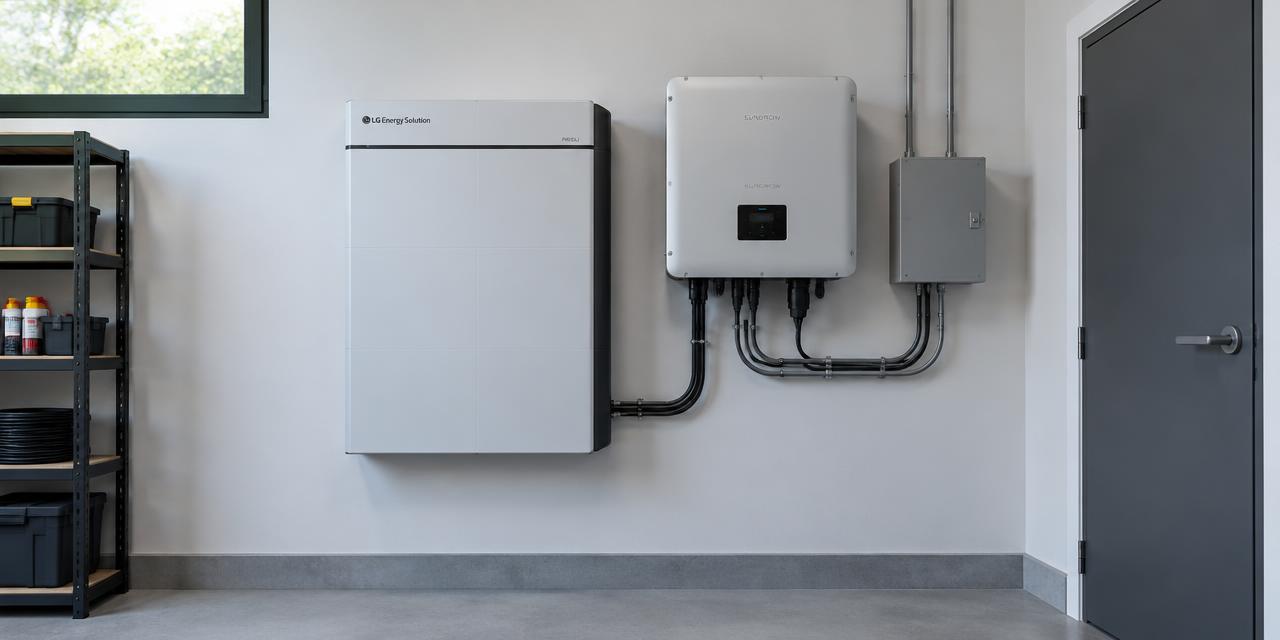
Before any purchase, it is imperative to check technical compatibility with your existing inverter. Depending on whether your system is DC or AC coupled, the requirements for battery integration differ.
Some installations allow direct coupling, while others require an additional hybrid inverter. Hiring a certified professional is highly recommended to ensure a secure installation that complies with standards in the canton of Aargau.
A professional can also advise you on the optimal location for the battery, ideally in a dry, temperate place to preserve cell lifespan.
The cost of a storage system varies depending on the technology used, such as lithium-ion, and the chosen capacity.
Although there is no specific municipal grant in Würenlos, it is important to consider the savings made on your electricity bills over 15 to 20 years. To better understand your investment, use our RenoIndex estimator.
It will provide you with a realistic price range for your project in Würenlos while taking current market practices into account. Anticipating these costs allows you to plan your energy transition with peace of mind.
1. Estimate
Set a budget range with the estimator.
2. Grants
Apply before work starts.
3. Quotes
Compare at least 3 quotes.
4. Permit
Check with the municipality whether a permit is needed.
5. Works
Follow the site and do a written handover.
No specific grant listed for this work. Maintenance tax deductions may still apply.
2832 Rebeuvelier · about 72.5 km
Eco6therm specializes in the installation of heating systems, particularly heat pumps, and solar photovoltaic energy solutions.
eco6therm.ch2735 Malleray · about 84.5 km
Company specialized in electrical installations and telecommunications systems, including network infrastructure and related trade.
telecrengglisa.ch2605 Sonceboz-Sombeval · about 93.7 km
Solar conseil Sàrl specializes in the installation of photovoltaic power plants, energy storage solutions, and energy efficiency consulting in the Jura and Bernese Jura regions.
solarconseil.ch2718 Lajoux JU · about 93.8 km
Jura-based specialist in photovoltaic panel installation and energy storage solutions with AI-driven optimization.
hypersolaire.chSuggestions from the commercial register by distance and activity. Not an endorsement or partnership.
Generally, a home battery located indoors does not require a building permit. However, ensure that the electrical installation complies with Swiss safety standards. We advise you to consult your installer or local energy office to confirm if any specific requirements apply to your particular building in Würenlos.
Most modern solar batteries, especially those using lithium-iron-phosphate technology, have a lifespan of 10 to 15 years or more. Longevity depends heavily on the number of charge and discharge cycles, as well as the environmental conditions where the battery is stored.
No, installing a solar battery involves complex electrical work and must be carried out by a qualified professional. A correct installation is essential not only for the hardware warranty, but especially for your fire safety and compliance with current Swiss standards.
Currently, there are no specific municipal grants in Würenlos for the purchase of storage batteries. However, it is always wise to check incentive programs from the canton of Aargau or occasional offers from your local electricity provider that might encourage energy self-consumption.