
Eco6therm Sàrl
2832 Rebeuvelier · about 62.4 km
Eco6therm specializes in the installation of heating systems, particularly heat pumps, and solar photovoltaic energy solutions.
eco6therm.chHome solar battery · Brugg
At a glance
Small project
CHF 4'000 – CHF 9'100
Typical project
CHF 7'200 – CHF 15'400
Large project
CHF 12'400 – CHF 25'400
| Project | Quantity | Low | High | Per unit |
|---|---|---|---|---|
| Small project | 5 kWh | CHF 4'000 | CHF 9'100 | CHF 1'200 |
| Typical project | 10 kWh | CHF 7'200 | CHF 15'400 | CHF 1'100 |
| Large project | 18 kWh | CHF 12'400 | CHF 25'400 | CHF 1'000 |
Computed with our estimator for Brugg (regional factor included), standard finish. Only the project size changes.
Included
Not included
In Brugg, the federal building register lists 2'856 residential buildings and 7'270 dwellings. These municipal benchmarks help put your home in context, but do not replace an individual assessment.
66 % built before 1980
Construction year does not reveal past renovations: check the current insulation condition.
37 % · Heating oil
This distribution describes recorded buildings, not your system's consumption or efficiency.
| Energy | Heating | Hot water |
|---|---|---|
| Gas | 32 % | 27.3 % |
| Heating oil | 37 % | 27.2 % |
| District heating | 2 % | 1.3 % |
| Heat pump | 19 % | 5 % |
| Electricity | 5 % | 35.5 % |
| Wood | 3 % | 1.6 % |
| Solar thermal | 0 % | 1.3 % |
Each line gives the share of buildings using that energy, separately for heating and for hot water. The two columns do not always reach 100%: some buildings combine two systems, or reported none.
A standard non-condensing boiler is usually older and less efficient.
7.3 % of buildings mix housing with shops or offices.
For your renovation plans in Brugg, RegBL data provides crucial insights. With 503 buildings under heritage protection, it is essential to contact the municipality early to clarify permit requirements. Regarding the scale of your insulation or heating work, the median building volume is 1438 m3 according to the SIA 416 standard. Please note that data coverage is partial here, as this volume measurement applies to only two buildings, while the standard remains unknown or is measured differently for the vast majority of the housing stock in the municipality. Always consult local authorities before finalizing your project.
Source : OFS — RegBL (export communal complet). Existing residential buildings; percentages of recorded values.
A battery is worthwhile when solar output clearly exceeds your daytime use. By storing energy produced during sunny hours, you can use it in the evening or early morning when production is low but demand is high.
This maximizes your independence from the grid and avoids feeding your surplus back at often unattractive rates. Before buying, carefully analyze your daily load profiles to assess the true benefit of such an installation for your household.
The golden rule is to size capacity by evening consumption, not by the power of your panels. A battery that is too large is an unnecessary investment, while too little capacity will not cover your nocturnal needs.
Calculate your average usage between sunset and sunrise to determine the optimal size. Remember that overall efficiency also depends on smart management of your home energy.
Consult the RenoIndex estimator to get a price range consistent with your specific energy requirements.
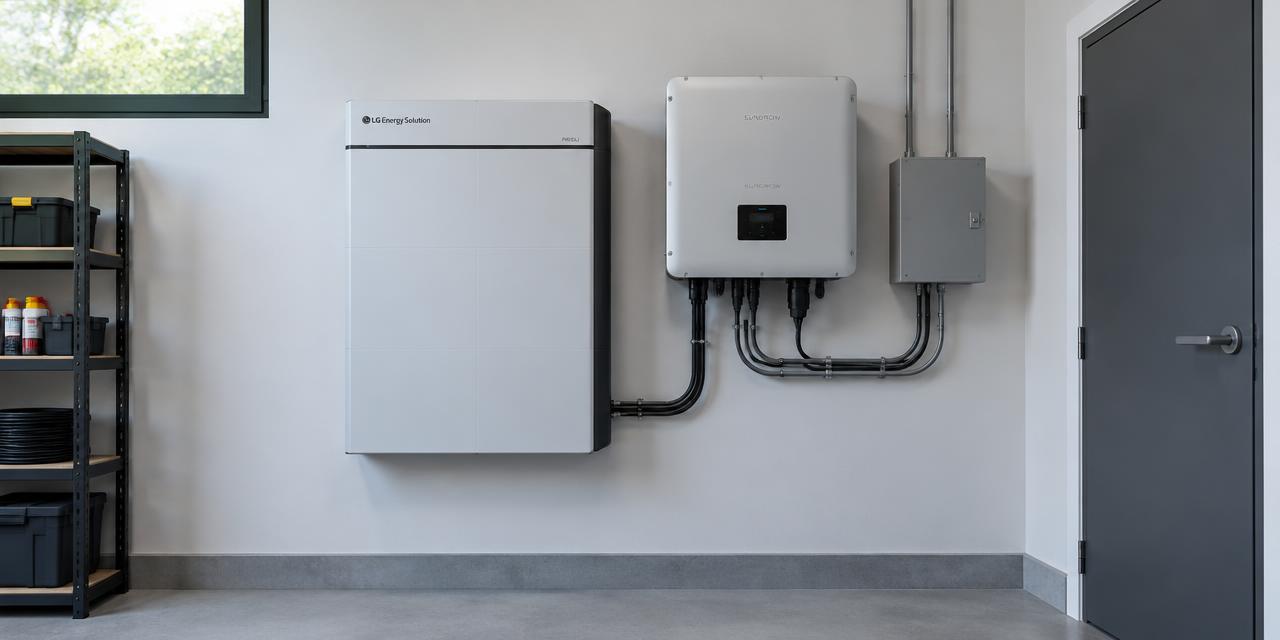
Before buying your equipment, you must check compatibility with your existing inverter. Some systems require a hybrid inverter, while other storage systems work with a separate dedicated inverter.
It is essential to ensure that communication protocols between the battery and the rest of your PV installation are compatible. A wrong choice can lead to significant energy conversion losses or operating issues.
Hire a qualified installer in the canton of Aargau to validate the technical feasibility of your project before finalizing your order.
Installing a home storage system in Brugg requires rigorous planning. Beyond choosing the hardware, consider the ideal location: a dry, temperature-controlled, and well-ventilated area is required to ensure the longevity of battery cells.
Also, ensure you have sufficient space for access to wiring and maintenance. Although there are no specific municipal rules, adhere to the current Swiss electrical safety standards.
To compare different financial scenarios, the RenoIndex estimator offers you a clear and transparent price range for your energy renovation projects.
1. Estimate
Set a budget range with the estimator.
2. Grants
Apply before work starts.
3. Quotes
Compare at least 3 quotes.
4. Permit
Check with the municipality whether a permit is needed.
5. Works
Follow the site and do a written handover.
No specific grant listed for this work. Maintenance tax deductions may still apply.
2832 Rebeuvelier · about 62.4 km
Eco6therm specializes in the installation of heating systems, particularly heat pumps, and solar photovoltaic energy solutions.
eco6therm.ch2735 Malleray · about 75 km
Company specialized in electrical installations and telecommunications systems, including network infrastructure and related trade.
telecrengglisa.ch2718 Lajoux JU · about 83.6 km
Jura-based specialist in photovoltaic panel installation and energy storage solutions with AI-driven optimization.
hypersolaire.ch2605 Sonceboz-Sombeval · about 84.4 km
Solar conseil Sàrl specializes in the installation of photovoltaic power plants, energy storage solutions, and energy efficiency consulting in the Jura and Bernese Jura regions.
solarconseil.chSuggestions from the commercial register by distance and activity. Not an endorsement or partnership.
Most modern lithium solar batteries have a lifespan between 10 and 20 years. This longevity depends heavily on the number of charge cycles and the temperature conditions of your utility room. Regular maintenance helps to maintain its performance.
Modern solar batteries are generally very quiet. Unlike generators, they do not contain moving parts. Most of the time, only a slight humming sound may be emitted by the inverter during energy conversion, which is usually imperceptible in a normal domestic environment.
It depends on your installation. Only systems equipped with a backup function or island mode can power your home during a grid failure. Check this option carefully with your installer if you wish to ensure a continuous power supply during outages.
Yes, it is entirely possible to add a battery to an existing solar installation. However, you may need to install a dedicated battery inverter if your original solar inverter is not compatible with a hybrid configuration. Consult an expert to validate the optimal setup.