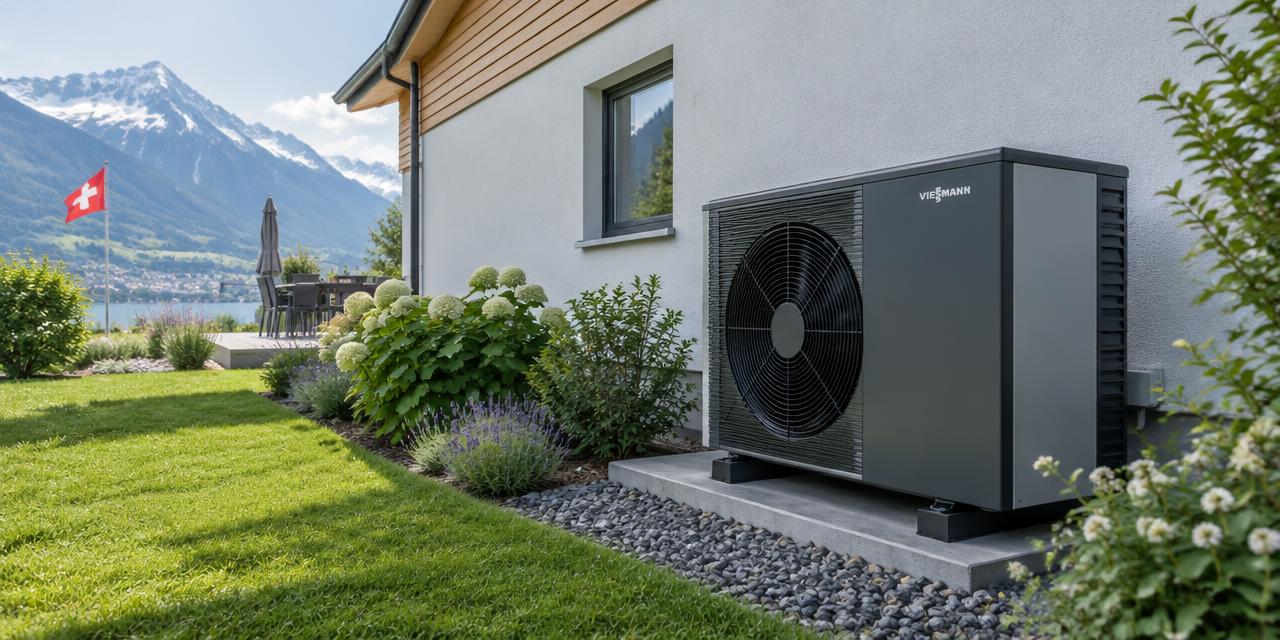
Heat pump installation in Windisch: A practical guide
Installing a heat pump in Windisch is a major project for improving the energy efficiency of your home. This sustainable system reduces heating costs long-term while increasing property value. Before starting work, it is essential to plan technical aspects and comply with local standards. To get an accurate estimate tailored to your budget, use our free RenoIndex estimator to find out the expected price range for your project and plan your investment with peace of mind.
At a glance
Typical budget
CHF 37'800 – CHF 70'500
Midpoint
CHF 52'900
Grants found
0
Nearby companies
4
Worked examples in Windisch
Small project
CHF 30'000 – CHF 54'800
Typical project
CHF 37'800 – CHF 70'500
Large project
CHF 49'600 – CHF 93'900
Project
Quantity
Low
High
Per unit
Small project
80 m²
CHF 30'000
CHF 54'800
CHF 500
Typical project
160 m²
CHF 37'800
CHF 70'500
CHF 300
Large project
280 m²
CHF 49'600
CHF 93'900
CHF 300
Computed with our estimator for Windisch (regional factor included), standard finish. Only the project size changes.
Cost split (typical project)
Labour :CHF 21'200(40 %)
Materials :CHF 26'500(50 %)
Other costs :CHF 5'300(10 %)
What the price covers
Included
Supply and installation
VAT
Heat pump and standard connections; removal and equipment only according to answers
Not included
Permits and architect fees
Unexpected structural issues
Possible subsidies
Drilling beyond 150 m, buried or contaminated tank, asbestos, insulation and new finishes
With air-to-air: hot water and ducts only if selected; adaptations beyond the options excluded
Windisch's housing stock in figures
In Windisch, the federal building register lists 1'270 residential buildings and 3'800 dwellings. These municipal benchmarks help put your home in context, but do not replace an individual assessment.
75 %built before 1980
74 %heated by oil or gas
27.7 %electric hot water
4.2 %with declared solar thermal
Age of residential buildings
75 % built before 1980
Before 191915 %
1919–194518 %
1946–196020 %
1961–197012 %
1971–198010 %
1981–19905 %
1991–20009 %
2001–20106 %
Since 20116 %
Construction year does not reveal past renovations: check the current insulation condition.
Main heating energy
40 % · Heating oil
Heating oil40 %
Gas34 %
Heat pump18 %
Electricity4 %
Wood3 %
District heating1 %
This distribution describes recorded buildings, not your system's consumption or efficiency.
Heating and hot water: which energies?
Energy
Heating
Hot water
Gas
34 %
29.7 %
Heating oil
40 %
29 %
District heating
1 %
0.3 %
Heat pump
18 %
9.7 %
Electricity
4 %
27.7 %
Wood
3 %
1.7 %
Each line gives the share of buildings using that energy, separately for heating and for hot water. The two columns do not always reach 100%: some buildings combine two systems, or reported none.
Type of heating system
Boiler (unspecified)74.7 %
Heat pump17.6 %
Central electric heating3.6 %
Condensing boiler1.3 %
Heat exchanger (district)1.3 %
Direct electric heaters0.7 %
Stove0.6 %
A standard non-condensing boiler is usually older and less efficient.
Renovations, heritage and volumes
For renovation projects in Windisch, the federal building register (RegBL) identifies 260 out of 1270 buildings as protected heritage sites. If your property is classified, you must consult the municipality early regarding permits. Regarding building volume, data is partial as no values following the SIA 416 standard are available for the 837 residential buildings recorded. Furthermore, no data exists regarding the year of renovation for the 1270 buildings in this municipality. Due to these gaps in the register, homeowners should obtain specific building assessments independently to ensure accurate planning for their energy or structural upgrades.
260
buildings flagged as protected
status known for 1'270 of 1'270 buildings; check with the municipality
First check whether your area can connect to a priority district heating network. This alternative may be a requirement or a preferred solution in certain areas.
A preliminary assessment avoids unnecessary investments and ensures your choice fits into the overall energy planning of the municipality. If a connection is possible, it might prove more advantageous than an individual installation.
Do not hesitate to consult the competent municipal services to confirm the status of your property before ordering your equipment.
Sizing the capacity
The capacity of your heat pump must be rigorously calculated to ensure optimal thermal comfort throughout every season. The local design outdoor temperature sets the heat pump's capacity required for your building.
An oversized or undersized unit will impact not only your energy consumption but also the lifespan of the installation. Hire a qualified heating engineer to perform a complete thermal study.
This expert will adapt the unit's power to the actual heat loss of your home, thus ensuring maximum performance and controlled energy bills in Windisch.
Compliance with neighbourhood standards
Outdoor air-water heat pumps must meet noise limits towards neighbours. These devices produce a constant noise level that can become annoying if not properly oriented or insulated.
It is advisable to position the outdoor unit away from rest areas, such as bedrooms, and use acoustic screens if necessary. Compliance with these guidelines is crucial for maintaining good relationships with your neighbours.
A preliminary noise study can help you choose the ideal location to minimize noise pollution right from the project design stage.
Planning and budget
Budget planning is a key step before starting energy renovation work. The total cost will depend on the heat pump type, connection work, and any necessary adaptations to the existing heating system.
It is recommended to compare several quotes and fully understand the included services. To help you structure your finances, do not hesitate to use our RenoIndex estimator, which will provide a realistic price range for your project in Windisch.
By anticipating costs, you can carry out your energy transition with peace of mind.
Your project in 5 steps
1. Estimate
Set a budget range with the estimator.
2. Grants
Apply before work starts.
3. Quotes
Compare at least 3 quotes.
4. Permit
Check with the municipality whether a permit is needed.
5. Works
Follow the site and do a written handover.
Grants and subsidies
No specific grant listed for this work. Maintenance tax deductions may still apply.
Companies in the area
F. Imeri Sàrl
2829 Vermes · about 58.2 km
The website presented under the name Imeri Chauffage et Sanitaire Sàrl offers plumbing, heating and solar thermal work, while F. Imeri Sàrl’s registered purpose refers to a scrap metal business.
Suggestions from the commercial register by distance and activity. Not an endorsement or partnership.
Frequently asked questions
What is the lifespan of a heat pump?
On average, a well-maintained heat pump has a lifespan of 15 to 20 years. An annual service performed by a professional helps to extend this duration and optimize the energy efficiency of your installation over time.
Should I insulate before installing a heat pump?
It is highly recommended to insulate your home before installing a heat pump. Better insulation reduces heat demand, allowing you to choose a less powerful unit, which lowers both purchase costs and your future electricity consumption.
Which type of heat pump should I choose?
The choice depends mainly on your land, current heating system, and budget. Air-water heat pumps are the most common for renovations, while geothermal systems offer better efficiency but require more extensive installation work.
Do I need a permit for a heat pump?
Yes, in most cases, installing a heat pump requires prior authorization from your municipality. It is essential to submit a complete file including plans and proof of acoustic compliance before the construction work begins.