
Eco6therm Sàrl
2832 Rebeuvelier · about 66.5 km
Eco6therm specializes in the installation of heating systems, particularly heat pumps, and solar photovoltaic energy solutions.
eco6therm.chHome solar battery · Untersiggenthal
At a glance
Small project
CHF 4'000 – CHF 9'100
Typical project
CHF 7'200 – CHF 15'400
Large project
CHF 12'400 – CHF 25'400
| Project | Quantity | Low | High | Per unit |
|---|---|---|---|---|
| Small project | 5 kWh | CHF 4'000 | CHF 9'100 | CHF 1'200 |
| Typical project | 10 kWh | CHF 7'200 | CHF 15'400 | CHF 1'100 |
| Large project | 18 kWh | CHF 12'400 | CHF 25'400 | CHF 1'000 |
Computed with our estimator for Untersiggenthal (regional factor included), standard finish. Only the project size changes.
Included
Not included
In Untersiggenthal, the federal building register lists 1'492 residential buildings and 3'473 dwellings. These municipal benchmarks help put your home in context, but do not replace an individual assessment.
51 % built before 1980
Construction year does not reveal past renovations: check the current insulation condition.
36 % · Heating oil
This distribution describes recorded buildings, not your system's consumption or efficiency.
| Energy | Heating | Hot water |
|---|---|---|
| Gas | 8 % | 6.3 % |
| Heating oil | 36 % | 23.4 % |
| District heating | 27 % | 15.6 % |
| Heat pump | 22 % | 4.2 % |
| Electricity | 4 % | 47.5 % |
| Wood | 4 % | 1.3 % |
| Solar thermal | 0 % | 1.1 % |
Each line gives the share of buildings using that energy, separately for heating and for hot water. The two columns do not always reach 100%: some buildings combine two systems, or reported none.
A standard non-condensing boiler is usually older and less efficient.
4.4 % of buildings mix housing with shops or offices.
For your renovation planning in Untersiggenthal, official building registry data reveals that 347 buildings are subject to heritage protection. If your property falls into this category, you must contact the municipality early to navigate the permit process. Furthermore, the median house volume is 835 m3 according to the SIA 416 standard. Please note that this figure is based on limited data, as exact measurements are available for only 18 out of 1110 recorded houses. Understanding this volume is critical for accurately assessing the scale of your upcoming heating and insulation improvement works.
Source : OFS — RegBL (export communal complet). Existing residential buildings; percentages of recorded values.
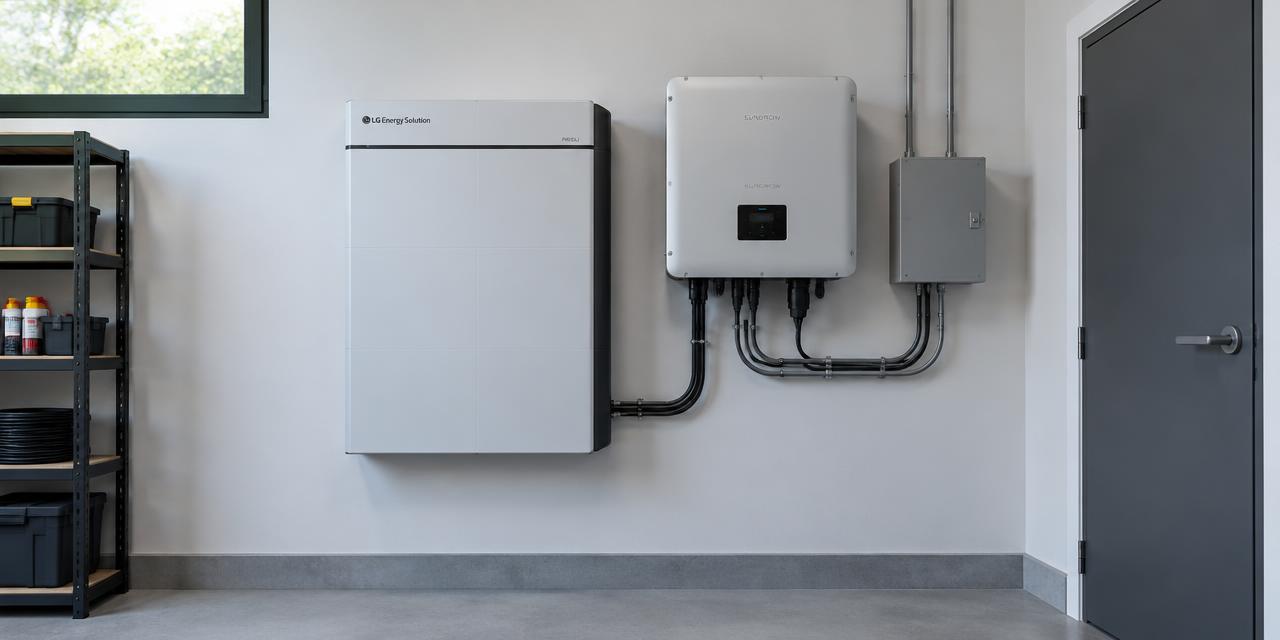
A battery is worthwhile when solar output clearly exceeds your daytime use. In Switzerland, especially in the canton of Aargau, maximizing self-consumption helps make your investment profitable faster. Without storage, unused energy is fed into the grid.
With a battery, you use your own clean electricity after the sun goes down, which is particularly advantageous for covering your evening energy needs. It is an essential step toward a more autonomous and sustainable home.
Size capacity by evening consumption, not panel power. It is useless to aim for excessive capacity if your household uses little energy at night. Analyze your electricity bills to assess your average consumption after sunset.
Correct sizing ensures the battery is almost empty by morning, optimizing its lifecycle and financial return. Use the RenoIndex calculator to evaluate the capacity options tailored to your specific energy profile.
Check compatibility with your existing inverter before buying. Depending on the model you already own, it may be necessary to add a hybrid inverter or an AC-coupling system.
Modern storage systems are designed for easy integration, but a professional assessment is still recommended. Ensure the chosen installation space is dry and temperate to preserve the battery cell chemistry.
Consulting local experts can help you avoid costly mistakes during the technical installation phase.
The cost of a battery system varies based on the chosen capacity and the complexity of integrating it with your existing solar setup. It is wise to compare several quotes from certified companies.
Do not forget to include labor costs for the electrical installation and the configuration of energy management software. To get a reliable and transparent price range, the RenoIndex simulator is your best ally.
It allows you to estimate your project costs in a few clicks, facilitating your budget decisions.
1. Estimate
Set a budget range with the estimator.
2. Grants
Apply before work starts.
3. Quotes
Compare at least 3 quotes.
4. Permit
Check with the municipality whether a permit is needed.
5. Works
Follow the site and do a written handover.
No specific grant listed for this work. Maintenance tax deductions may still apply.
2832 Rebeuvelier · about 66.5 km
Eco6therm specializes in the installation of heating systems, particularly heat pumps, and solar photovoltaic energy solutions.
eco6therm.ch2735 Malleray · about 79.1 km
Company specialized in electrical installations and telecommunications systems, including network infrastructure and related trade.
telecrengglisa.ch2718 Lajoux JU · about 87.6 km
Jura-based specialist in photovoltaic panel installation and energy storage solutions with AI-driven optimization.
hypersolaire.ch2605 Sonceboz-Sombeval · about 88.6 km
Solar conseil Sàrl specializes in the installation of photovoltaic power plants, energy storage solutions, and energy efficiency consulting in the Jura and Bernese Jura regions.
solarconseil.chSuggestions from the commercial register by distance and activity. Not an endorsement or partnership.
Generally, installing a home battery indoors does not require a building permit. However, it is essential to comply with electrical safety standards applicable in the canton of Aargau. Your certified installer will be able to confirm specific requirements according to your building.
Most current lithium-iron-phosphate solar batteries are designed to last between 10 and 15 years while retaining a large portion of their initial capacity. Lifespan depends primarily on charge cycles and maintaining optimal temperature conditions.
Yes, it is entirely possible thanks to AC-coupling. You can add a battery to almost any existing solar system, even if it was installed years ago. Ask a professional for a technical check to confirm system compatibility.
It depends on whether your battery has a backup or emergency power function. Not all models offer this option. If you wish to maintain power during an outage, please specify this when requesting a quote from your installer.