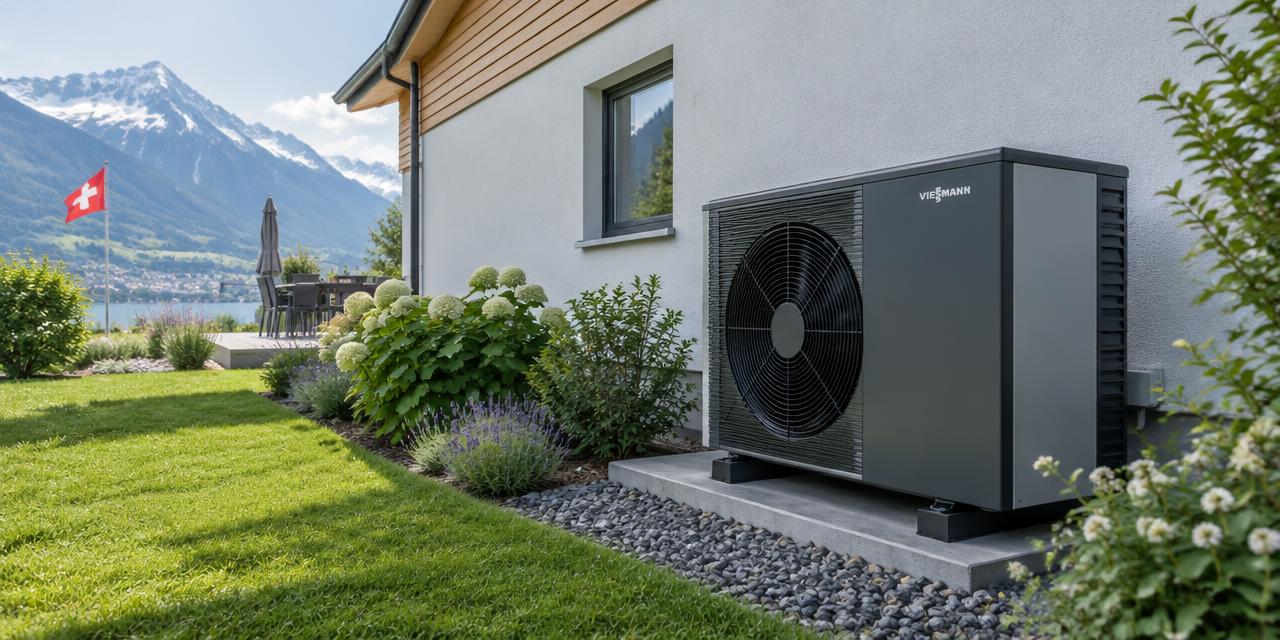
Heat pump installation in Thalwil: A practical guide
Are you planning a heat pump installation in Thalwil to improve your home's energy efficiency? This transition to renewable energy is an excellent choice for reducing your carbon footprint and heating costs. Before starting, careful planning is essential. Use our RenoIndex tool to get an accurate estimate of costs in Swiss francs and prepare your budget effectively. Discover our local tips to successfully carry out your energy renovation project in the region and benefit from your new heating solution in the long term.
At a glance
Typical budget
CHF 42'400 – CHF 78'900
Midpoint
CHF 59'300
Grants found
0
Nearby companies
4
Worked examples in Thalwil
Small project
CHF 33'500 – CHF 61'400
Typical project
CHF 42'400 – CHF 78'900
Large project
CHF 55'600 – CHF 105'200
Project
Quantity
Low
High
Per unit
Small project
80 m²
CHF 33'500
CHF 61'400
CHF 600
Typical project
160 m²
CHF 42'400
CHF 78'900
CHF 400
Large project
280 m²
CHF 55'600
CHF 105'200
CHF 300
Computed with our estimator for Thalwil (regional factor included), standard finish. Only the project size changes.
Cost split (typical project)
Labour :CHF 23'700(40 %)
Materials :CHF 29'600(50 %)
Other costs :CHF 5'900(10 %)
What the price covers
Included
Supply and installation
VAT
Heat pump and standard connections; removal and equipment only according to answers
Not included
Permits and architect fees
Unexpected structural issues
Possible subsidies
Drilling beyond 150 m, buried or contaminated tank, asbestos, insulation and new finishes
With air-to-air: hot water and ducts only if selected; adaptations beyond the options excluded
Thalwil's housing stock in figures
In Thalwil, the federal building register lists 2'342 residential buildings and 9'309 dwellings. These municipal benchmarks help put your home in context, but do not replace an individual assessment.
63 %built before 1980
67 %heated by oil or gas
16 %electric hot water
1.4 %with declared solar thermal
Age of residential buildings
63 % built before 1980
Before 191918 %
1919–194511 %
1946–196012 %
1961–19708 %
1971–198014 %
1981–199011 %
1991–20009 %
2001–20108 %
Since 20119 %
Construction year does not reveal past renovations: check the current insulation condition.
Main heating energy
37 % · Gas
Gas37 %
Heating oil30 %
Heat pump24 %
District heating4 %
Electricity3 %
Wood1 %
This distribution describes recorded buildings, not your system's consumption or efficiency.
Heating and hot water: which energies?
Energy
Heating
Hot water
Gas
37 %
40.8 %
Heating oil
30 %
26 %
District heating
4 %
5 %
Heat pump
24 %
8.9 %
Electricity
3 %
16 %
Wood
1 %
0.4 %
Solar thermal
0 %
1.6 %
Each line gives the share of buildings using that energy, separately for heating and for hot water. The two columns do not always reach 100%: some buildings combine two systems, or reported none.
Type of heating system
Boiler (unspecified)64.8 %
Heat pump24.3 %
Heat exchanger (district)4.5 %
Central electric heating2.4 %
Stove1.9 %
Condensing boiler1.3 %
Direct electric heaters0.9 %
A standard non-condensing boiler is usually older and less efficient.
Renovations, heritage and volumes
For homeowners planning renovations in Thalwil, official building register data provides crucial insights. With a median building volume of 800 m3 measured according to SIA 416 standards, owners can better estimate the scope of heating or insulation upgrades. Note that this volume data is only partially covered, representing 13 out of 1050 houses. We strongly recommend contacting the municipality early in your planning process to discuss your specific property requirements. By addressing these structural details before you begin, you ensure that your renovation budget is accurate and that your project aligns perfectly with local building standards.
0
buildings flagged as protected
status known for 32 of 2'342 buildings; check with the municipality
Before investing in a heat pump, the first logical step is to check if your home is located in an area that can be connected to a priority district heating network.
In certain zones, authorities prioritise the development of centralised thermal networks for overall neighbourhood efficiency. Contacting local services helps clarify whether such an option is available or planned for your address.
This can significantly influence your technological choice before you start your energy renovation work.
Sizing based on local design temperature
The optimal sizing of a heat pump depends directly on the local design outdoor temperature. This technical parameter is crucial as it determines the power required to guarantee constant thermal comfort during the coldest days of the year.
An undersized unit will not heat enough, while an oversized one will unnecessarily increase investment costs and reduce overall efficiency.
Consult a certified installer to calculate the power required for your building precisely to achieve maximum thermal efficiency throughout the winter.
Managing noise emissions
For outdoor air-water heat pump installations, noise management is a key factor for the neighbourhood. It is imperative to comply with applicable noise limits to preserve the quality of life in your area.
A well-considered location, the use of acoustic covers, or choosing low-noise equipment can significantly reduce the sound impact.
Take the time to study the ideal layout with your installer to avoid future conflicts and ensure a harmonious integration of your new heating system into your residential environment.
Cost estimation with RenoIndex
Installing a heat pump is a significant investment that requires rigorous financial planning. Using RenoIndex allows you to quickly obtain a price range in Swiss francs tailored to the specifics of your renovation project.
By comparing the costs of different models and the necessary installation work, you have a solid foundation for requesting quotes from local professionals.
Good budget preparation is the best way to secure your energy project while enjoying the long-term energy savings offered by this sustainable technology.
Your project in 5 steps
1. Estimate
Set a budget range with the estimator.
2. Grants
Apply before work starts.
3. Quotes
Compare at least 3 quotes.
4. Permit
Check with the municipality whether a permit is needed.
5. Works
Follow the site and do a written handover.
Grants and subsidies
No specific grant listed for this work. Maintenance tax deductions may still apply.
Companies in the area
F. Imeri Sàrl
2829 Vermes · about 81.7 km
The website presented under the name Imeri Chauffage et Sanitaire Sàrl offers plumbing, heating and solar thermal work, while F. Imeri Sàrl’s registered purpose refers to a scrap metal business.
Suggestions from the commercial register by distance and activity. Not an endorsement or partnership.
Frequently asked questions
Why is the outdoor temperature important?
The local design outdoor temperature is essential for choosing a powerful enough heat pump. It ensures that your appliance can maintain a comfortable indoor temperature even on the coldest days of the year.
How can I avoid noise from my heat pump?
To limit noise, choose a location away from living areas, use acoustic protection, and select certified quiet models. Consult a professional for an installation that complies with neighbourhood noise standards.
Why check for district heating?
Checking if your area has priority district heating is crucial, as some zones favour these centralised networks. This can influence your technical choice before investing in an individual heat pump installation.
How to get a cost estimate?
Use our free RenoIndex online tool to get a price range in Swiss francs. This will help you plan your budget before requesting detailed quotes from professional installers.