
F. Imeri Sàrl
2829 Vermes · about 94 km
The website presented under the name Imeri Chauffage et Sanitaire Sàrl offers plumbing, heating and solar thermal work, while F. Imeri Sàrl’s registered purpose refers to a scrap metal business.
imeri-sarl.chSolar water heating · Stäfa
At a glance
Small project
CHF 10'300 – CHF 24'100
Typical project
CHF 13'200 – CHF 30'700
Large project
CHF 18'200 – CHF 41'800
| Project | Quantity | Low | High | Per unit |
|---|---|---|---|---|
| Small project | 3 m² | CHF 10'300 | CHF 24'100 | CHF 5'600 |
| Typical project | 6 m² | CHF 13'200 | CHF 30'700 | CHF 3'500 |
| Large project | 11 m² | CHF 18'200 | CHF 41'800 | CHF 2'600 |
Computed with our estimator for Stäfa (regional factor included), standard finish. Only the project size changes.
Included
Not included
In Stäfa, the federal building register lists 2'703 residential buildings and 7'386 dwellings. These municipal benchmarks help put your home in context, but do not replace an individual assessment.
59 % built before 1980
Construction year does not reveal past renovations: check the current insulation condition.
36 % · Gas
This distribution describes recorded buildings, not your system's consumption or efficiency.
| Energy | Heating | Hot water |
|---|---|---|
| Gas | 36 % | 36.3 % |
| Heating oil | 30 % | 24.2 % |
| District heating | 1 % | 0.4 % |
| Heat pump | 27 % | 13 % |
| Electricity | 3 % | 23 % |
| Wood | 4 % | 1.5 % |
| Solar thermal | 0 % | 1.3 % |
Each line gives the share of buildings using that energy, separately for heating and for hot water. The two columns do not always reach 100%: some buildings combine two systems, or reported none.
A standard non-condensing boiler is usually older and less efficient.
10.5 % of buildings mix housing with shops or offices.
For your renovation projects in Stäfa, consulting the federal building register is a vital starting point. Regarding building volume, the median is 1111 m3 based on the SIA 416 standard, though this figure is only documented for 7 out of the 1547 houses recorded, reflecting partial data coverage. These volume metrics are essential for scaling your heating or insulation work correctly. Using these official figures helps you assess the extent of your project accurately, providing a reliable foundation for estimating your renovation costs and planning the necessary upgrades for your property in the municipality.
Source : OFS — RegBL (export communal complet). Existing residential buildings; percentages of recorded values.
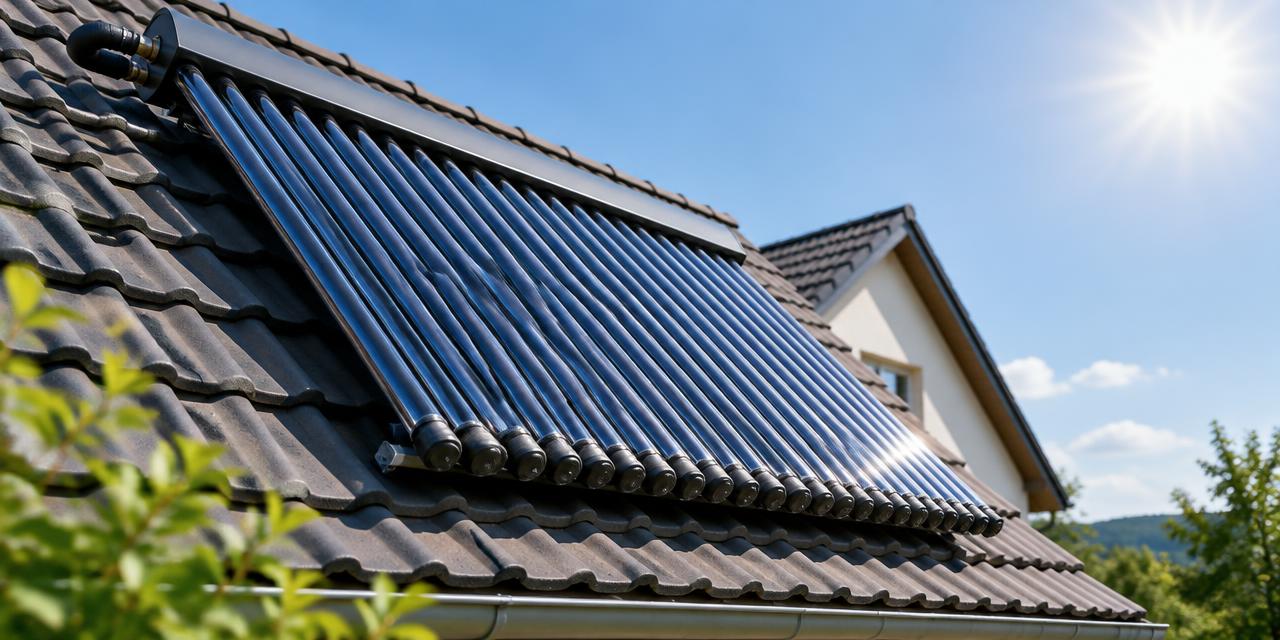
Solar thermal collectors use sunlight to heat a heat-transfer fluid circulating in a closed loop, subsequently transferring this heat to your domestic hot water. In Switzerland, solar thermal collectors usually cover much of summer hot water.
The system's efficiency depends heavily on the roof's orientation, ideally facing south, and the angle of the panels. A well-designed system can significantly reduce your annual energy bill.
It is recommended to have the actual solar exposure of your roof assessed by a local professional to ensure optimal performance throughout the seasons.
To maximize yield, it is often wise to combine collectors with other systems, such as a heat pump. However, combining collectors with a heat pump needs a sizing study.
This hybrid approach ensures your system is not oversized while maintaining constant hot water production even in winter. Careful planning helps avoid unnecessary costs during the installation of heating equipment.
Before ordering, check the available space in your technical room for the storage tank, which is a central element of your solar system to accumulate solar thermal energy effectively.
Energy renovation is encouraged by support mechanisms at various levels. Several cantons subsidise collectors per m² or per installation.
It is advisable to check the official website of the Canton of Zurich to learn about current grant programs before starting the work. These subsidies can significantly reduce the initial investment required for your solar project.
Always ensure you submit your grant application before beginning renovation work, as grants are generally not awarded retroactively. Keep a record of all detailed quotes and invoices for your administrative tasks.
A successful solar project in Stäfa requires good coordination between different trades, especially heating engineers and roofers.
The choice of materials and the quality of the installation ensure the longevity of your system, which is often designed to last more than twenty years. Do not hesitate to request several quotes to compare offers.
Use our RenoIndex estimator to get a realistic price range, which will help you negotiate better with contractors. Transparency regarding labour and material costs is crucial for a controlled budget throughout the renovation process of your thermal system.
1. Estimate
Set a budget range with the estimator.
2. Grants
Apply before work starts.
3. Quotes
Compare at least 3 quotes.
4. Permit
Check with the municipality whether a permit is needed.
5. Works
Follow the site and do a written handover.
No specific grant listed for this work. Maintenance tax deductions may still apply.
2829 Vermes · about 94 km
The website presented under the name Imeri Chauffage et Sanitaire Sàrl offers plumbing, heating and solar thermal work, while F. Imeri Sàrl’s registered purpose refers to a scrap metal business.
imeri-sarl.ch2824 Vicques · about 98.7 km
Buchwalder Sàrl in Vicques has specialized in the installation, repair, and renovation of heating and sanitary systems since 1966.
buchwalder-sarl.ch2824 Vicques · about 98.7 km
Specialist since 1968 in sanitary installations, heating (gas, oil, wood, renewable energy), and tinsmithing with 24/7 emergency repair service.
sanit.ch2824 Vicques · about 98.7 km
Gyger Haustechnik specializes in sanitary installations, heating systems, bathroom renovations, and tiling work.
gyger-co.chSuggestions from the commercial register by distance and activity. Not an endorsement or partnership.
Generally, a well-maintained solar thermal system has a lifespan of 20 to 25 years. Regular maintenance by a professional allows for checking the condition of the heat-transfer fluid and the integrity of the collectors, thus ensuring constant long-term performance for your home.
Yes, solar thermal collectors capture diffuse radiation even in cloudy weather. However, the yield will be lower than on a sunny day. That is why a backup system, such as a boiler or a heat pump, is essential to ensure your comfort in all circumstances.
Most roof-integrated solar thermal systems do not require a building permit at the cantonal level, provided certain urban planning rules are followed. However, it is recommended to contact your municipality's planning department to confirm if your project is subject to prior notification.
You can get a free and quick estimate by using the RenoIndex cost estimator. It will provide you with a price range based on your housing type, which is a reliable basis for your discussions with installers and for planning your overall renovation budget.