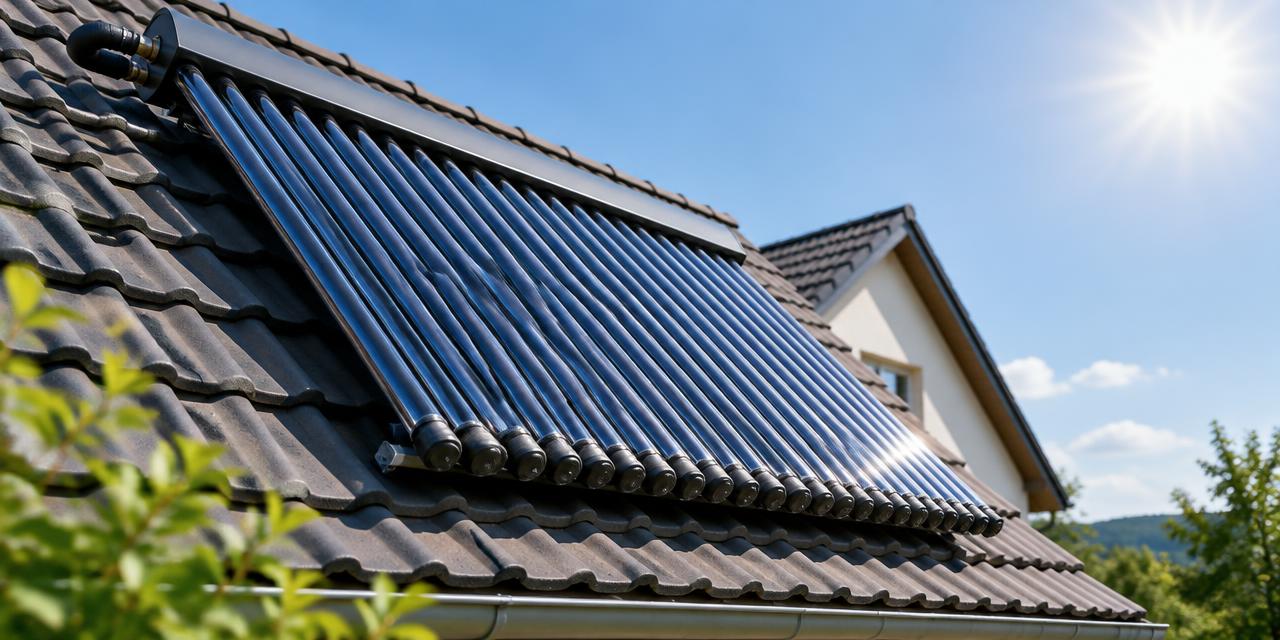
Planning to install solar water heating in Dietikon? It is an excellent decision to improve your energy efficiency. This solution allows you to produce domestic hot water sustainably while increasing your property value. In this guide, we cover technical aspects and best practices for your renovation project. To get a precise cost estimate, use the free RenoIndex estimator now and receive a price range tailored to your specific situation for a successful solar installation in your home.
At a glance
Typical budget
CHF 13'200 – CHF 30'700
Midpoint
CHF 21'300
Grants found
0
Nearby companies
4
Worked examples in Dietikon
Small project
CHF 10'300 – CHF 24'100
Typical project
CHF 13'200 – CHF 30'700
Large project
CHF 18'200 – CHF 41'800
Project
Quantity
Low
High
Per unit
Small project
3 m²
CHF 10'300
CHF 24'100
CHF 5'600
Typical project
6 m²
CHF 13'200
CHF 30'700
CHF 3'500
Large project
11 m²
CHF 18'200
CHF 41'800
CHF 2'600
Computed with our estimator for Dietikon (regional factor included), standard finish. Only the project size changes.
Cost split (typical project)
Labour :CHF 8'500(40 %)
Materials :CHF 10'600(50 %)
Other costs :CHF 2'100(10 %)
What the price covers
Included
Supply and installation
VAT
Collectors, controls, standard connection and tank according to answers
Not included
Permits and architect fees
Unexpected structural issues
Possible subsidies
Roof refurbishment and replacement of main heating
Dietikon's housing stock in figures
In Dietikon, the federal building register lists 2'426 residential buildings and 12'786 dwellings. These municipal benchmarks help put your home in context, but do not replace an individual assessment.
62 %built before 1980
59 %heated by oil or gas
20.5 %electric hot water
1.2 %with declared solar thermal
Age of residential buildings
62 % built before 1980
Before 191911 %
1919–194511 %
1946–196017 %
1961–197013 %
1971–198010 %
1981–199012 %
1991–20007 %
2001–20109 %
Since 201110 %
Construction year does not reveal past renovations: check the current insulation condition.
Main heating energy
32 % · Heating oil
Heating oil32 %
Gas27 %
Heat pump21 %
District heating15 %
Electricity2 %
Wood2 %
This distribution describes recorded buildings, not your system's consumption or efficiency.
Heating and hot water: which energies?
Energy
Heating
Hot water
Gas
27 %
24.1 %
Heating oil
32 %
27.3 %
District heating
15 %
16.3 %
Heat pump
21 %
7.3 %
Electricity
2 %
20.5 %
Wood
2 %
1.3 %
Solar thermal
0 %
1.3 %
Each line gives the share of buildings using that energy, separately for heating and for hot water. The two columns do not always reach 100%: some buildings combine two systems, or reported none.
Type of heating system
Boiler (unspecified)57.5 %
Heat pump21.5 %
Heat exchanger (district)15.1 %
Central electric heating2.1 %
Stove2 %
Condensing boiler1.4 %
A standard non-condensing boiler is usually older and less efficient.
Houses or apartment buildings?
Single-family houses43 %
Two-dwelling houses4.8 %
Apartment buildings (3+)52.2 %
Other0 %
12.1 % of buildings mix housing with shops or offices.
The typical building
storeys (median)
3
median footprint
159 m²
median dwelling area
80 m²
Renovations, heritage and volumes
For homeowners in Dietikon, leveraging register data is key to effective renovation planning. With three buildings identified as heritage protected, you must contact the municipality early to navigate specific permit requirements. Regarding scale, the median building volume is 975 cubic meters based on six structures measured via the SIA 416 standard, providing a basis for calculating insulation needs. Please note that data coverage is partial, as the vast majority of local building volumes do not follow this standardized measurement and no renovation years are recorded. Consulting municipal authorities remains a critical step for all planned structural interventions.
3
buildings flagged as protected
status known for 195 of 2'426 buildings; check with the municipality
Solar thermal collectors capture radiation to heat a transfer fluid. This process is highly efficient at covering a large part of your hot water needs during the summer months, reducing your reliance on fossil fuels.
It is essential to choose equipment tailored to your roof orientation and typical consumption.
A properly sized installation ensures consistent production and a long lifespan, thereby minimizing maintenance costs in the long run for homeowners in Dietikon looking to invest in sustainable energy.
System integration
Combining solar collectors with a heat pump is a popular strategy to maximize savings. However, this complex configuration requires a thorough sizing study conducted by professionals.
It is vital to ensure that both systems communicate perfectly to avoid regulation conflicts. Intelligent integration optimizes the overall efficiency of your energy setup.
Use RenoIndex to assess the costs of these combined systems and plan your budget carefully before starting renovation work to ensure everything functions seamlessly.
Grants and subsidies
These grants significantly reduce the initial investment required for your project. It is recommended to check eligibility criteria before ordering any equipment.
RenoIndex helps you by providing price estimates, allowing you to better visualize your out-of-pocket costs once various cantonal grants are deducted from your total invoice.
Planning and installation
Successful installation relies on careful planning. Start by assessing your roof condition and actual hot water needs. In Dietikon, local planning regulations must be followed when installing visible panels.
Hiring certified companies ensures compliance with current safety standards. Remember that regular maintenance is essential to keep your collectors performing at their peak.
Use RenoIndex to estimate labor and material costs, making it easier to select your future local installation partners and keeping your project within budget.
Your project in 5 steps
1. Estimate
Set a budget range with the estimator.
2. Grants
Apply before work starts.
3. Quotes
Compare at least 3 quotes.
4. Permit
Check with the municipality whether a permit is needed.
5. Works
Follow the site and do a written handover.
Grants and subsidies
No specific grant listed for this work. Maintenance tax deductions may still apply.
Companies in the area
F. Imeri Sàrl
2829 Vermes · about 69.4 km
The website presented under the name Imeri Chauffage et Sanitaire Sàrl offers plumbing, heating and solar thermal work, while F. Imeri Sàrl’s registered purpose refers to a scrap metal business.
Suggestions from the commercial register by distance and activity. Not an endorsement or partnership.
Frequently asked questions
Is solar thermal enough for all heating?
Generally, solar thermal is ideal for domestic hot water but rarely sufficient for winter heating alone. It acts mainly as an efficient supplementary system. Combine it with a heat pump to ensure optimal comfort throughout the entire year.
Do I need a permit in Dietikon?
Most solar installations require a prior notification. Contact your local municipal building department to learn about specific local requirements related to heritage protection or protected zones before you start any renovation work.
How to get a precise estimate?
Use the free RenoIndex estimator. By entering your building information, you will receive an indicative price range for your project in Dietikon, helping you better prepare your energy renovation budget.
What is the lifespan of collectors?
A well-maintained solar thermal installation typically lasts between 20 and 25 years. Regular inspection of fluids and components by a specialist helps ensure this longevity and guarantees maximum efficiency over the lifetime of the system.