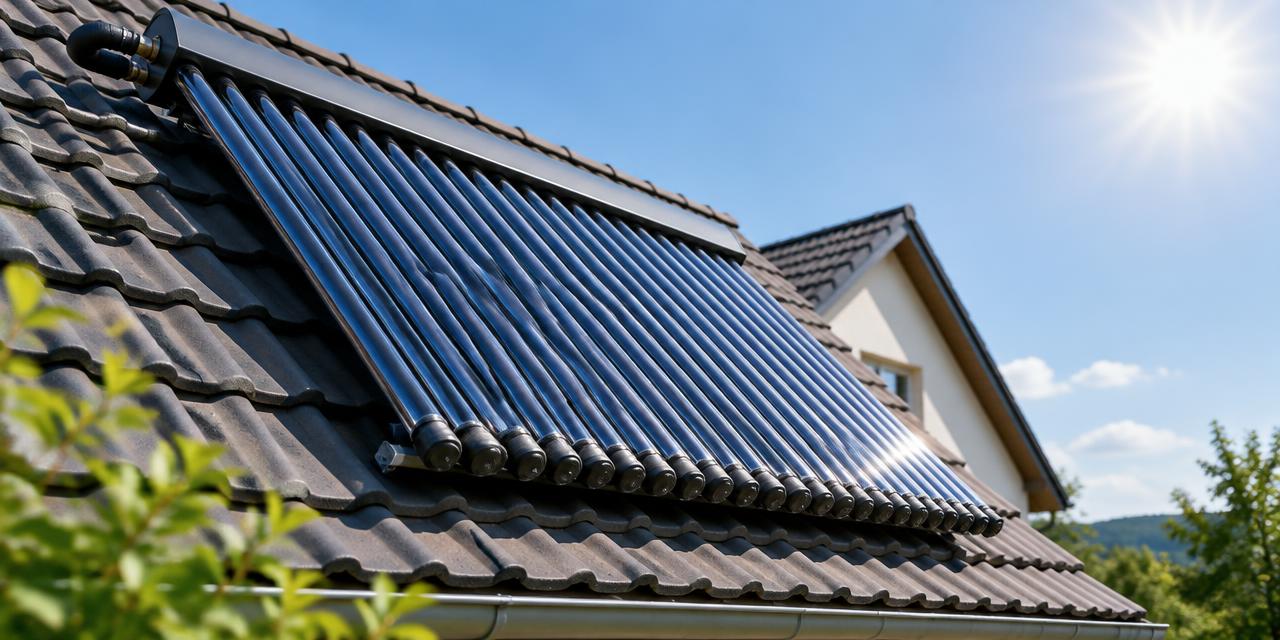
Choosing solar water heating in Wetzikon is an excellent move to lower your energy bills and reduce your carbon footprint. In the canton of Zurich, the energy transition is supported by strict sustainable building standards. Whether you are renovating an older property or optimizing a new build, solar power allows for efficient hot water management. Learn how to plan your project with confidence, and make sure to use the free RenoIndex estimator to get a reliable cost range for your installation today.
At a glance
Typical budget
CHF 13'200 – CHF 30'700
Midpoint
CHF 21'300
Grants found
0
Nearby companies
4
Worked examples in Wetzikon (ZH)
Small project
CHF 10'300 – CHF 24'100
Typical project
CHF 13'200 – CHF 30'700
Large project
CHF 18'200 – CHF 41'800
Project
Quantity
Low
High
Per unit
Small project
3 m²
CHF 10'300
CHF 24'100
CHF 5'600
Typical project
6 m²
CHF 13'200
CHF 30'700
CHF 3'500
Large project
11 m²
CHF 18'200
CHF 41'800
CHF 2'600
Computed with our estimator for Wetzikon (ZH) (regional factor included), standard finish. Only the project size changes.
Cost split (typical project)
Labour :CHF 8'500(40 %)
Materials :CHF 10'600(50 %)
Other costs :CHF 2'100(10 %)
What the price covers
Included
Supply and installation
VAT
Collectors, controls, standard connection and tank according to answers
Not included
Permits and architect fees
Unexpected structural issues
Possible subsidies
Roof refurbishment and replacement of main heating
Wetzikon (ZH)'s housing stock in figures
In Wetzikon (ZH), the federal building register lists 3'159 residential buildings and 12'630 dwellings. These municipal benchmarks help put your home in context, but do not replace an individual assessment.
56 %built before 1980
61 %heated by oil or gas
19.1 %electric hot water
1.8 %with declared solar thermal
Age of residential buildings
56 % built before 1980
Before 191920 %
1919–19455 %
1946–196013 %
1961–19708 %
1971–198010 %
1981–19908 %
1991–20008 %
2001–201018 %
Since 201111 %
Construction year does not reveal past renovations: check the current insulation condition.
Main heating energy
46 % · Gas
Gas46 %
Heat pump29 %
Heating oil15 %
Wood5 %
Electricity3 %
District heating2 %
This distribution describes recorded buildings, not your system's consumption or efficiency.
Heating and hot water: which energies?
Energy
Heating
Hot water
Gas
46 %
39.9 %
Heating oil
15 %
11.9 %
District heating
2 %
1.2 %
Heat pump
29 %
22.7 %
Electricity
3 %
19.1 %
Wood
5 %
3.1 %
Solar thermal
0 %
1.7 %
Each line gives the share of buildings using that energy, separately for heating and for hot water. The two columns do not always reach 100%: some buildings combine two systems, or reported none.
Type of heating system
Boiler (unspecified)62.7 %
Heat pump28.9 %
Stove2.7 %
Central electric heating2.2 %
Heat exchanger (district)1.7 %
Direct electric heaters0.9 %
Condensing boiler0.7 %
A standard non-condensing boiler is usually older and less efficient.
Houses or apartment buildings?
Single-family houses59.5 %
Two-dwelling houses7.8 %
Apartment buildings (3+)32.7 %
Other0 %
11 % of buildings mix housing with shops or offices.
The typical building
storeys (median)
3
median footprint
123 m²
median dwelling area
90 m²
Renovations, heritage and volumes
For renovation projects in Wetzikon, RegBL figures provide vital context. With a median house volume of 577 m3 among those measured by SIA 416, homeowners can better gauge the scale of necessary heating or insulation works. Regarding heritage protection, one building is officially listed out of 767 known cases. If your property falls under this status, contacting the municipality early is essential to navigate permit requirements. Please be aware that data coverage for these metrics is partial. Furthermore, no specific renovation year is recorded in the register, meaning this information is unavailable for your planning purposes.
1
buildings flagged as protected
status known for 767 of 3'159 buildings; check with the municipality
Solar thermal collectors capture sunlight to heat a fluid that circulates to your hot water tank. These collectors usually cover much of summer hot water needs. To maximize this performance, a properly oriented installation is essential.
In Wetzikon, south-facing roofs provide the best yields. Consider checking your roof condition before starting the installation to avoid future repair costs.
Use the free RenoIndex tool to estimate the budget needed for this sustainable energy project and ensure you have a clear view of potential costs.
Synergy with Other Systems
Integrating solar thermal into an existing heating system is very common. However, combining collectors with a heat pump needs a sizing study to ensure full compatibility and prevent the tank from overheating during summer.
In the canton of Zurich, qualified technicians can adjust these parameters to optimize your annual consumption. Thorough planning ensures the longevity of your equipment.
Make sure to consult the RenoIndex estimator to get an accurate price range, helping you budget for this essential technical study effectively.
Subsidies and Financial Aid
It is mandatory to submit your subsidy applications before starting the work to remain eligible for support. Financial incentives make the investment pay off much faster.
To visualize the impact of these grants on your total budget, use the RenoIndex estimator, which provides a realistic price range for your planning.
Maintenance and Upkeep
A solar thermal system requires little maintenance, but regular inspections are recommended to ensure long-term efficiency. A professional should periodically check the hydraulic circuit and the pressure of the heat transfer fluid.
In the canton of Zurich, local installers often offer maintenance contracts tailored to your collector model. Preventing leaks or pressure drops avoids expensive repairs later on.
RenoIndex helps you in this process by enabling you to estimate the cost of new installations, which is an essential starting point before you schedule your future maintenance.
Your project in 5 steps
1. Estimate
Set a budget range with the estimator.
2. Grants
Apply before work starts.
3. Quotes
Compare at least 3 quotes.
4. Permit
Check with the municipality whether a permit is needed.
5. Works
Follow the site and do a written handover.
Grants and subsidies
No specific grant listed for this work. Maintenance tax deductions may still apply.
Companies in the area
F. Imeri Sàrl
2829 Vermes · about 99.4 km
The website presented under the name Imeri Chauffage et Sanitaire Sàrl offers plumbing, heating and solar thermal work, while F. Imeri Sàrl’s registered purpose refers to a scrap metal business.
Suggestions from the commercial register by distance and activity. Not an endorsement or partnership.
Frequently asked questions
What is the lifespan of a solar thermal installation?
A well-maintained solar thermal installation can last between 20 and 25 years. Mechanical components, such as the pump or the tank, may need replacement after about 15 years. Regular maintenance by a professional is crucial to achieving this lifespan.
Is a building permit required in Wetzikon?
Generally, roof-integrated solar installations do not require a building permit in the canton of Zurich as long as they comply with local layout regulations. However, always check the current local regulations or specific restrictions for protected zones with your municipality.
Does solar thermal work in winter?
Yes, solar thermal works in winter, but its performance is reduced due to limited sunlight. The system then acts as pre-heating, requiring a complementary energy source, such as a boiler or a heat pump, to reach the desired temperature.
Can solar thermal be combined with solar PV?
Yes, this is perfectly possible and recommended for optimal energy management. Thermal systems produce hot water while photovoltaics generate electricity. They can be installed on the same roof if there is sufficient space available.