
Canton
Heat pump grant — Jura
Amounts per current cantonal schedule.
The canton of Jura supports replacing fossil heating with heat pumps.
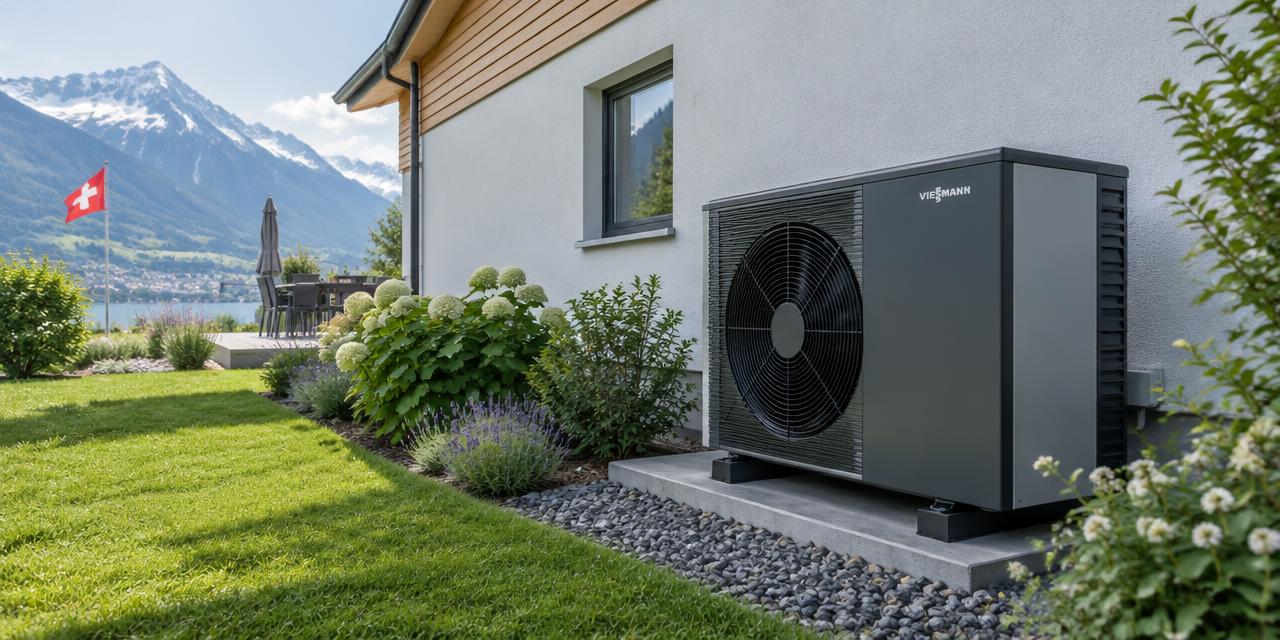
www.leprogrammebatiments.chHeat pump installation · Porrentruy
At a glance
Small project
CHF 30'000 – CHF 54'800
Typical project
CHF 37'800 – CHF 70'500
Large project
CHF 49'600 – CHF 93'900
| Project | Quantity | Low | High | Per unit |
|---|---|---|---|---|
| Small project | 80 m² | CHF 30'000 | CHF 54'800 | CHF 500 |
| Typical project | 160 m² | CHF 37'800 | CHF 70'500 | CHF 300 |
| Large project | 280 m² | CHF 49'600 | CHF 93'900 | CHF 300 |
Computed with our estimator for Porrentruy (regional factor included), standard finish. Only the project size changes.
Included
Not included
In Porrentruy, the federal building register lists 1'687 residential buildings and 4'294 dwellings. These municipal benchmarks help put your home in context, but do not replace an individual assessment.
65 % built before 1980
Construction year does not reveal past renovations: check the current insulation condition.
36 % · Heating oil
This distribution describes recorded buildings, not your system's consumption or efficiency.
| Energy | Heating | Hot water |
|---|---|---|
| Heating oil | 36 % | 29 % |
| District heating | 33 % | 31.5 % |
| Heat pump | 23 % | 19.3 % |
| Electricity | 4 % | 17.1 % |
| Wood | 2 % | 1.4 % |
| Solar thermal | 0 % | 1.4 % |
Each line gives the share of buildings using that energy, separately for heating and for hot water. The two columns do not always reach 100%: some buildings combine two systems, or reported none.
A standard non-condensing boiler is usually older and less efficient.
For renovation planning in Porrentruy, official records show that out of 1554 buildings, 71 have heritage status, with 10 specifically protected. It is essential to contact the municipality early to navigate permit requirements for such properties. Regarding scale, data for 1025 houses indicates a median volume of 600 cubic meters according to SIA 416 standards, though data coverage remains partial for this metric. These official figures provide a necessary foundation for homeowners to estimate the scope of heating or insulation works accurately, ensuring that renovation plans align with the specific building characteristics of this municipality.
Source : Registre fédéral des bâtiments et des logements (RegBL), OFS, 2026. Existing residential buildings; percentages of recorded values.
Located at an altitude of 423 meters, the municipality of Porrentruy faces demanding climatic conditions.9 °C and about 57 frost days per year, heating demand is a significant reality for the local housing stock.
The 2851 heating degree days per year confirm this necessity. Undertaking work now aligns with the municipal desire to reduce the consumption of the building stock.
The choice to replace an old fossil system with a heat pump is strategic. By taking advantage of the natural renewal of your boiler, you align your home with the 2025–2028 municipal energy planning.
Before any project, systematically check if your neighborhood can be connected to the district heating managed by Thermoréseau-Porrentruy SA, which favors wood and heat-power cogeneration.
If the network is accessible, this solution is often prioritized in the municipal planning.
9 °C in Porrentruy. This figure is crucial to ensure comfort without over-consuming. The choice of technology, whether air-to-water or geothermal heat pumps, depends on your land configuration and thermal needs.
It is imperative to properly size the equipment to avoid short cycles that are harmful to the device's longevity.
Range options also allow for the integration of features such as intelligent controls to maximize self-consumption, which is particularly relevant with an estimated photovoltaic yield potential of 1125 kWh/kWp/year.
Furthermore, for air-to-water heat pumps installed outdoors, compliance with noise limits towards neighbors is a major technical obligation.
A well-integrated installation, with adapted acoustic insulation materials if necessary, prevents neighborhood disputes and ensures peaceful integration into the area.
The building stock in Porrentruy presents varying challenges depending on the era of construction. Older houses often require a reflection on insulation before switching to a heat pump to ensure optimal efficiency.
In the event of major renovations or deep modifications to the boiler room, be vigilant regarding the potential presence of old materials, especially in buildings constructed before 1990, which may contain asbestos.
A prior inspection by a professional is recommended to secure the site.
The internal distribution network (radiators or underfloor heating) must also be compatible with the lower operating temperatures of heat pumps.
If your radiators are old, it may be necessary to increase their surface area or switch to low-temperature emitters.
As part of the energy transition, cantonal energy diagnoses can help you identify priorities, such as attic insulation or window replacement, to reduce total energy demand before sizing your future heat pump.
The municipality explicitly refers to the cantonal directive on solar panels and technical installations. Depending on the characteristics of your project, a simple notification procedure or a building permit application may be required.
Regarding energy substitution, note that from April 1, 2026, according to the energy ordinance, if you were to opt for a new gas boiler to replace an existing one, you must cover at least 20% of the needs with biomethane from the Canton of Jura.
However, priority remains with fossil-free solutions. Contact the municipal technical service to validate if your project requires a specific authorization, particularly regarding the outdoor location of the heat pump unit vis-à-vis the neighborhood.
This step is rigorous : any early start of the site may lead to the refusal of your subsidy application. Consult the official building program website to obtain the forms and detailed conditions applicable to your situation.
Tax-wise, the Canton of Jura provides advantageous measures for homeowners investing in energy efficiency. Expenses related to energy saving are deductible as effective costs from your taxable income.
In addition, a flat-rate maintenance deduction is possible, amounting to 10% of gross income, or 20% for buildings over 10 years old. These measures aim to lighten the cost of your work while promoting the durability of your home in the long term.
A heating replacement project follows a logical cycle that is best anticipated outside the heating season. The first phase consists of carrying out an audit and obtaining the necessary authorizations from the municipal authorities.
Once the subsidy file is validated and authorizations are obtained, the choice of companies can be finalized. The project generally begins with the removal of the old heating system and the preparation of the room or outdoor location.
The installation itself includes the mounting of the unit, the hydraulic and electrical connections, and the configuration of the control systems. Commissioning is accompanied by fine-tuning to ensure the heat pump's performance.
It is advisable to plan this work during the spring or summer period, which avoids compromising thermal comfort during the colder months.
This anticipation also allows installers to perform load tests and necessary adjustments in mild weather conditions, thus guaranteeing an optimal start of your new system before the arrival of the first frost days.
The success of your installation depends on careful preparation to avoid common pitfalls. Never forget to check the compatibility of your current heating circuit with the lower operating temperatures of a heat pump.
Do not neglect the acoustic study of the outdoor unit, in order to respect your neighbors. Ensure that the pump sizing is based on real thermal calculations and not on a simple empirical estimate.
Finally, do not sign any quote or start any work before having received a positive response regarding your subsidy application.
Checklist before requesting quotes : 1. Have an energy diagnosis of your building carried out. 2. Check with the local operator if your neighborhood can be connected to district heating. 3. Check the space available for the outdoor unit and noise constraints.
4. Identify compliance needs (insulation, emitters). 5. Assemble your grant application file. 6. Request several comparative quotes from specialized installers. 7. Confirm the availability of certificates of origin if you opt for a hybrid solution.
1. Estimate
Set a budget range with the estimator.
2. Grants
Apply before work starts.
3. Quotes
Compare at least 3 quotes.
4. Permit
Check with the municipality whether a permit is needed.
5. Works
Follow the site and do a written handover.
Amounts per current cantonal schedule.
The canton of Jura supports replacing fossil heating with heat pumps.
www.leprogrammebatiments.chCheck amounts and conditions with the provider before signing: apply before work starts in most cases.
2900 Porrentruy · about 0 km
Heliotherm S.A., based in Porrentruy, operates in sanitary and heating installations as well as technical and economic consulting on energy production.
heliotherm.ch2950 Courgenay · about 5.7 km
ThermoClim Sàrl specializes in the installation and maintenance of heating, air conditioning, plumbing systems, and renewable energy solutions in Courgenay.
thermoclim.ch2950 Courgenay · about 5.7 km
AC Solutions Sàrl specializes in sanitary installations, heating systems, and building renovation services.
bioalps.org2950 Courtemautruy · about 5.7 km
The Airma network provides energy consulting, building physics analysis, and HVAC engineering services.
airma.chSuggestions from the commercial register by distance and activity. Not an endorsement or partnership.
Yes, an authorization or announcement is often required, especially if the installation modifies the exterior appearance of the building. Contact the municipality to validate the specific rules.
No, the subsidy application must be submitted and validated before the start of the work. Any project started without prior agreement risks losing its right to aid.
You must respect noise limits towards neighbors during installation. A wise location and acoustic insulation measures are strongly recommended.
From April 1, 2026, this is possible under the condition of using at least 20% biomethane or renewable gas. However, fossil-free solutions are prioritized.
Yes, check with Thermoréseau-Porrentruy SA if your neighborhood can be connected. Connection is a solution favored by the municipal energy planning.
Expenses for energy saving are deductible as effective costs. In addition, you can benefit from maintenance flat rates depending on the age of the building.
Sizing is based on the local design temperature, set at -6.9 °C in Porrentruy. A good calculation avoids performance issues.
Altitude
423 m
Heating degree days
2'851 Kj/an
20/12 °C
Frost days
57 jours/an
Solar irradiation
1'278 kWh/m²/an
horizontal
Winter design temperature
-6.9 °C
1er percentile des minimales
Mean temperature
11.2 °C
Estimated solar yield
1'125 kWh/kWc/an
toit ~30° sud, PR 0.8, estimation
Source : swisstopo – service d'altitude (MNT) · Open-Meteo Historical Weather API (réanalyse ERA5, moyenne 2015-2024)
Source : Thermoréseau-Porrentruy SA
Source : Municipalité de Porrentruy
These rules apply across the whole canton, not only in this town.
Fossil heating rules
Source : edj.ch
Tax deductions
Source : S0