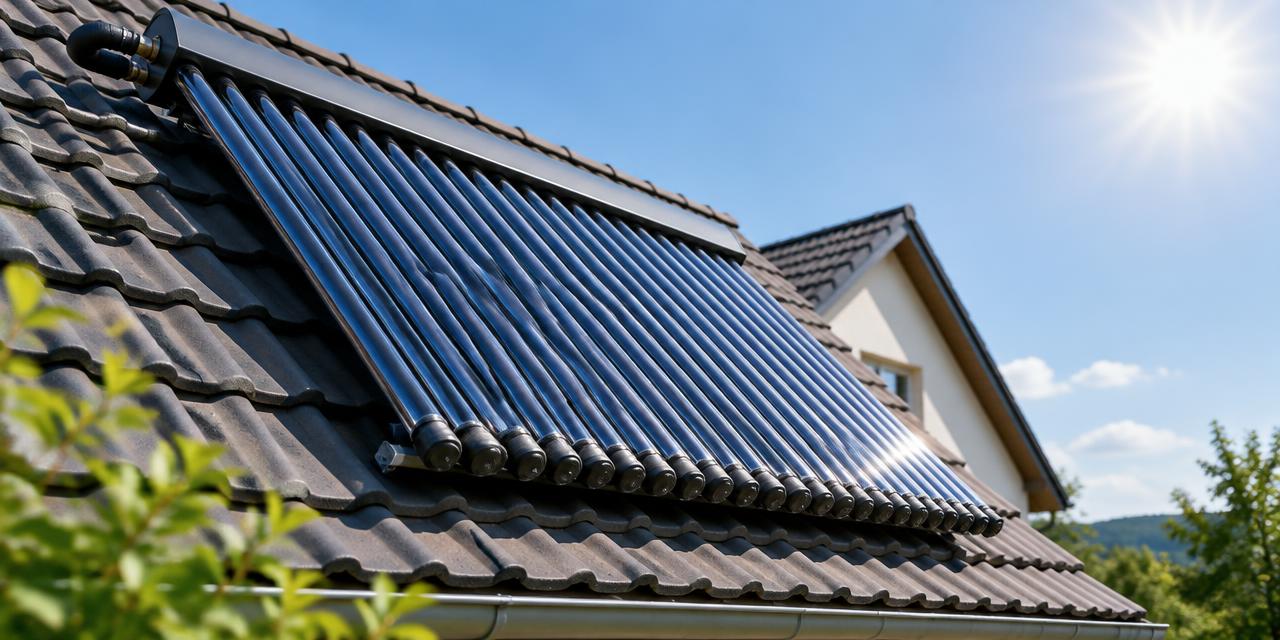
Solar water heating in Oberglatt: A complete guide
Are you planning to install solar thermal panels in Oberglatt to produce hot water? This sustainable technology significantly reduces fossil fuel consumption while increasing your property value. Before starting, it is essential to understand the technical aspects and local specifics related to your project. RenoIndex supports you in this process. Use our free online estimator to quickly obtain a precise price range tailored to your property in Switzerland.
At a glance
Typical budget
CHF 13'200 – CHF 30'700
Midpoint
CHF 21'300
Grants found
0
Nearby companies
4
Worked examples in Oberglatt
Small project
CHF 10'300 – CHF 24'100
Typical project
CHF 13'200 – CHF 30'700
Large project
CHF 18'200 – CHF 41'800
Project
Quantity
Low
High
Per unit
Small project
3 m²
CHF 10'300
CHF 24'100
CHF 5'600
Typical project
6 m²
CHF 13'200
CHF 30'700
CHF 3'500
Large project
11 m²
CHF 18'200
CHF 41'800
CHF 2'600
Computed with our estimator for Oberglatt (regional factor included), standard finish. Only the project size changes.
Cost split (typical project)
Labour :CHF 8'500(40 %)
Materials :CHF 10'600(50 %)
Other costs :CHF 2'100(10 %)
What the price covers
Included
Supply and installation
VAT
Collectors, controls, standard connection and tank according to answers
Not included
Permits and architect fees
Unexpected structural issues
Possible subsidies
Roof refurbishment and replacement of main heating
Oberglatt's housing stock in figures
In Oberglatt, the federal building register lists 970 residential buildings and 3'393 dwellings. These municipal benchmarks help put your home in context, but do not replace an individual assessment.
44 %built before 1980
51 %heated by oil or gas
32.6 %electric hot water
1.2 %with declared solar thermal
Age of residential buildings
44 % built before 1980
Before 191910 %
1919–19456 %
1946–19608 %
1961–19707 %
1971–198013 %
1981–19909 %
1991–200018 %
2001–201016 %
Since 201113 %
Construction year does not reveal past renovations: check the current insulation condition.
Main heating energy
51 % · Heating oil
Heating oil51 %
Heat pump42 %
Wood4 %
Electricity3 %
This distribution describes recorded buildings, not your system's consumption or efficiency.
Heating and hot water: which energies?
Energy
Heating
Hot water
Heating oil
51 %
52 %
Heat pump
42 %
10.7 %
Electricity
3 %
32.6 %
Wood
4 %
2.4 %
Solar thermal
0 %
1.3 %
Each line gives the share of buildings using that energy, separately for heating and for hot water. The two columns do not always reach 100%: some buildings combine two systems, or reported none.
Type of heating system
Boiler (unspecified)51 %
Heat pump42.1 %
Stove2.8 %
Central electric heating2.7 %
Condensing boiler0.6 %
A standard non-condensing boiler is usually older and less efficient.
Houses or apartment buildings?
Single-family houses60.3 %
Two-dwelling houses4.8 %
Apartment buildings (3+)34.8 %
9.4 % of buildings mix housing with shops or offices.
The typical building
storeys (median)
3
median footprint
115 m²
median dwelling area
85 m²
Renovations, heritage and volumes
For your renovation projects in Oberglatt, official RegBL figures provide essential planning guidance. The median building volume is 847 m3 based on the SIA 416 standard, although this measurement covers only 22 out of 585 houses, indicating limited data availability. Regarding heritage protection, out of 141 recorded buildings, none are currently listed as protected. Regardless, contacting the municipality early is advisable to clarify local requirements for your specific property. These technical insights assist in estimating the scale of heating or insulation works. Use this data as a foundation to plan your renovation efficiently and ensure all local regulations are met.
0
buildings flagged as protected
status known for 141 of 970 buildings; check with the municipality
Installing solar thermal collectors allows for the production of free energy through solar radiation.Solar thermal collectors usually cover much of summer hot water.
By reducing your reliance on gas or oil boilers during sunny months, you lower your operating costs and carbon footprint. It is a robust solution that ensures consistent hot water production when the weather permits.
Before choosing your model, make sure to check the RenoIndex to compare average installation costs and refine your overall budget for this energy upgrade, which is essential for any modern building.
Sizing and technology
Correctly sizing your solar installation is a crucial step to ensure efficiency. It is not just about installing panels, but about adapting the collection surface to your actual hot water needs and household size.
Combining collectors with a heat pump needs a sizing study. Poor configuration can lead to overheating in summer or lack of hot water in winter. A qualified installer will evaluate your roof to optimize tilt and orientation.
Do not hesitate to request a price estimate on RenoIndex to anticipate your expenses and better discuss options with local professionals.
Grants and financial aid
In the canton of Zurich, it is recommended to regularly check the current cantonal programs, as conditions may evolve. These grants can significantly reduce the payback period for your thermal system.
To find out about potential savings, use the RenoIndex estimator. It provides a clear overview of the price range and helps you plan your investment while incorporating potential savings from available grants.
Maintenance and durability
A well-maintained solar installation can last over twenty years. Regular maintenance is essential to ensure the proper functioning of the heat transfer circuit and the integrity of the collectors.
It is advisable to have the fluids and electronic components checked by a professional every few years. Proactive maintenance prevents costly breakdowns and maintains optimal performance throughout the year.
Use RenoIndex to get a clear idea of the costs associated with such installations in Oberglatt. Rigorous budget planning, including maintenance, will ensure long-term peace of mind while actively contributing to the Swiss energy transition.
Your project in 5 steps
1. Estimate
Set a budget range with the estimator.
2. Grants
Apply before work starts.
3. Quotes
Compare at least 3 quotes.
4. Permit
Check with the municipality whether a permit is needed.
5. Works
Follow the site and do a written handover.
Grants and subsidies
No specific grant listed for this work. Maintenance tax deductions may still apply.
Companies in the area
F. Imeri Sàrl
2829 Vermes · about 80.2 km
The website presented under the name Imeri Chauffage et Sanitaire Sàrl offers plumbing, heating and solar thermal work, while F. Imeri Sàrl’s registered purpose refers to a scrap metal business.
Suggestions from the commercial register by distance and activity. Not an endorsement or partnership.
Frequently asked questions
How many m² of collectors are needed?
The required area depends on your hot water needs and building insulation. Generally, count about 1 to 1.5 m² of collectors per person in the household. A qualified installer will perform a precise sizing to avoid unnecessary costs.
Is it profitable without grants?
Profitability depends on savings on your current energy bills. While grants speed up payback, annual savings on oil or gas make the installation advantageous in the long term, especially given rising energy prices.
Does solar work in winter?
Yes, but with reduced efficiency. In winter, solar radiation is weaker and days are shorter. Solar thermal collectors then serve as preheating support, but your main heating system will take over to reach the desired temperature.
Is a permit required in Oberglatt?
Generally, roof-mounted solar installations are subject to a notification procedure at the cantonal level. It is advisable to check with local authorities if your building is protected or in a specific zone before starting works.