
E. Vauclair SA
2504 Biel/Bienne · about 18.8 km
Operating in Biel/Bienne since 1948, E. Vauclair SA provides plumbing, heating and solar installations, architectural sheet metalwork, roofing and flat roof renovation.
vauclair.chSolar water heating · Münchenbuchsee
At a glance
Small project
CHF 9'400 – CHF 21'900
Typical project
CHF 12'100 – CHF 28'000
Large project
CHF 16'500 – CHF 38'000
| Project | Quantity | Low | High | Per unit |
|---|---|---|---|---|
| Small project | 3 m² | CHF 9'400 | CHF 21'900 | CHF 5'100 |
| Typical project | 6 m² | CHF 12'100 | CHF 28'000 | CHF 3'200 |
| Large project | 11 m² | CHF 16'500 | CHF 38'000 | CHF 2'400 |
Computed with our estimator for Münchenbuchsee (regional factor included), standard finish. Only the project size changes.
Included
Not included
In Münchenbuchsee, the federal building register lists 1'638 residential buildings and 5'115 dwellings. These municipal benchmarks help put your home in context, but do not replace an individual assessment.
57 % built before 1980
Construction year does not reveal past renovations: check the current insulation condition.
48 % · Heating oil
This distribution describes recorded buildings, not your system's consumption or efficiency.
| Energy | Heating | Hot water |
|---|---|---|
| Gas | 1 % | 1.4 % |
| Heating oil | 48 % | 40.5 % |
| District heating | 16 % | 9.7 % |
| Heat pump | 28 % | 11.7 % |
| Electricity | 1 % | 32.5 % |
| Wood | 6 % | 3.1 % |
| Solar thermal | 0 % | 1 % |
Each line gives the share of buildings using that energy, separately for heating and for hot water. The two columns do not always reach 100%: some buildings combine two systems, or reported none.
A standard non-condensing boiler is usually older and less efficient.
7.8 % of buildings mix housing with shops or offices.
For your renovation projects in Münchenbuchsee, federal building registry data offers essential insights. The median building volume is 790 cubic meters for properties measured under the SIA 416 standard, helping you gauge the scale of heating and insulation works. Heritage protection applies to two buildings out of 1638. If your property is protected, contacting the municipality early is vital to secure necessary permits. Please be aware that data coverage is partial regarding building volume, with only four units measured according to the standard. Use these figures as a starting point to assess the scope and regulatory requirements for your home renovations.
Source : OFS — RegBL (export communal complet). Existing residential buildings; percentages of recorded values.
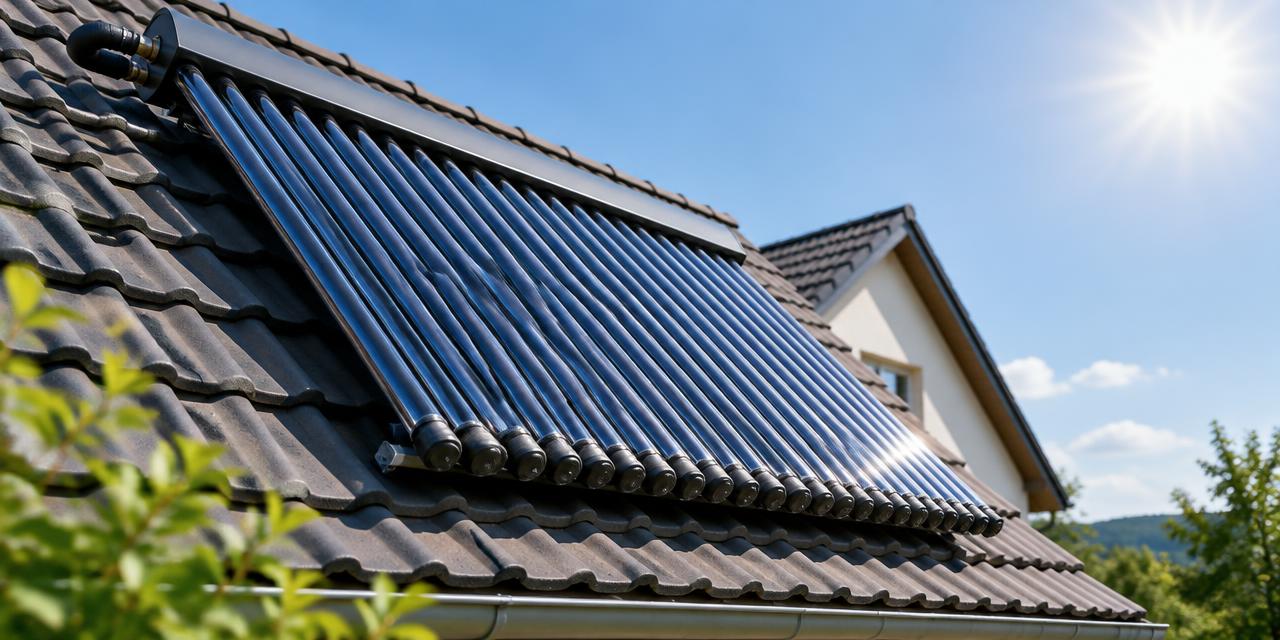
Solar thermal collectors usually cover much of summer hot water, offering an ideal solution for household needs. By capturing free energy from the sun, you reduce the use of your main boiler during sunny months.
This setup works in conjunction with a well-insulated storage tank. Performance depends mainly on your roof's tilt and its orientation towards the south.
It is advisable to conduct an energy assessment beforehand to confirm that your house is ready to receive this type of high-performance equipment that can provide benefits throughout the year.
Combining collectors with a heat pump needs a sizing study to be effective. This hybrid approach guarantees optimal synergy, avoiding overheating in summer and ensuring maximum coverage in winter.
Sizing must consider your household size and consumption habits. A qualified professional in the canton of Bern will know how to calculate the number of panels required to optimize your return on investment.
Do not neglect pipe insulation, as poor thermal management drastically reduces the efficiency of your entire solar system. Proper planning ensures long-term performance and reliability for your home heating.
Before signing with an installer, verify current eligibility conditions with the relevant authorities. Grants are often subject to strict technical standards regarding the efficiency of the chosen equipment.
Ensure that your project meets these criteria to fully benefit from available financial support and reduce your overall net investment for your future renovation works.
Planning is the crucial step for successfully transitioning to solar thermal energy. It is recommended to compare several quotes and choose local companies familiar with the specific regulations in the canton of Bern.
Always check the guaranteed lifespan of the panels and the maintenance requirements to ensure maximum longevity. Use the RenoIndex estimator to get a reliable cost estimate before contacting professionals.
By being well-informed, you secure your budget and guarantee the quality of your solar installation for many years to come.
1. Estimate
Set a budget range with the estimator.
2. Grants
Apply before work starts.
3. Quotes
Compare at least 3 quotes.
4. Permit
Check with the municipality whether a permit is needed.
5. Works
Follow the site and do a written handover.
No specific grant listed for this work. Maintenance tax deductions may still apply.
2504 Biel/Bienne · about 18.8 km
Operating in Biel/Bienne since 1948, E. Vauclair SA provides plumbing, heating and solar installations, architectural sheet metalwork, roofing and flat roof renovation.
vauclair.ch2740 Moutier · about 28.3 km
Company in Moutier specializing in plumbing, heating (oil, wood, heat pumps), and solar thermal and photovoltaic solutions.
bmonnerat.ch2732 Reconvilier · about 28.9 km
Anotta SA in Reconvilier installs and renovates plumbing and heating systems, including heat pumps and solar thermal systems, with a seven-day-a-week breakdown service for its customers.
anotta.ch2606 Corgémont · about 29.2 km
Renfer Sàrl is a company active in the fields of plumbing, heating, tinsmithing, and kitchen and bathroom renovations in the Jura region.
renfersa.chSuggestions from the commercial register by distance and activity. Not an endorsement or partnership.
A well-maintained solar thermal installation can operate efficiently for 20 to 25 years. Regular maintenance, about every five years, allows you to check the condition of the heat transfer fluid and the tightness of the circuit to maintain optimal performance throughout the system's life.
Urban planning rules can vary. Although federal law facilitates the installation of solar collectors, it is imperative to check with the municipality of Münchenbuchsee regarding local regulations or potential protected zones before starting any work.
Yes, solar thermal collectors use diffuse radiation, not just direct sunlight. While production decreases on cloudy days, the system remains functional. Your boiler will then take over to supplement the water temperature if necessary.
To get a realistic price range for your renovation project, you can use the free RenoIndex estimator. It provides data based on Swiss standards to help you better prepare for your discussions with local craftsmen.