
Eco6therm Sàrl
2832 Rebeuvelier · about 75.3 km
Eco6therm specializes in the installation of heating systems, particularly heat pumps, and solar photovoltaic energy solutions.
eco6therm.chHome solar battery · Horw
At a glance
Small project
CHF 3'800 – CHF 8'800
Typical project
CHF 7'000 – CHF 14'900
Large project
CHF 12'000 – CHF 24'700
| Project | Quantity | Low | High | Per unit |
|---|---|---|---|---|
| Small project | 5 kWh | CHF 3'800 | CHF 8'800 | CHF 1'200 |
| Typical project | 10 kWh | CHF 7'000 | CHF 14'900 | CHF 1'000 |
| Large project | 18 kWh | CHF 12'000 | CHF 24'700 | CHF 1'000 |
Computed with our estimator for Horw (regional factor included), standard finish. Only the project size changes.
Included
Not included
In Horw, the federal building register lists 2'080 residential buildings and 7'940 dwellings. These municipal benchmarks help put your home in context, but do not replace an individual assessment.
55 % built before 1980
Construction year does not reveal past renovations: check the current insulation condition.
42 % · Heat pump
This distribution describes recorded buildings, not your system's consumption or efficiency.
| Energy | Heating | Hot water |
|---|---|---|
| Gas | 9 % | 8.2 % |
| Heating oil | 34 % | 26.3 % |
| District heating | 2 % | 2 % |
| Heat pump | 42 % | 26 % |
| Electricity | 3 % | 28 % |
| Wood | 9 % | 6.6 % |
| Solar thermal | 0 % | 2.5 % |
Each line gives the share of buildings using that energy, separately for heating and for hot water. The two columns do not always reach 100%: some buildings combine two systems, or reported none.
A standard non-condensing boiler is usually older and less efficient.
7.8 % of buildings mix housing with shops or offices.
For your renovation plans in Horw, official building registry data provides essential context. Regarding heritage protection, 503 out of 523 identified buildings are classified as protected, making it critical to contact the municipality early for permit requirements. The median building volume is 1003.5 m3 based on the SIA 416 standard, which dictates the scale of your insulation and heating projects. Please be aware that data coverage is partial for volume, as only 288 out of 1067 houses are measured using this standard. Information regarding the renovation year is currently unavailable for these properties.
Source : OFS — RegBL (export communal complet). Existing residential buildings; percentages of recorded values.
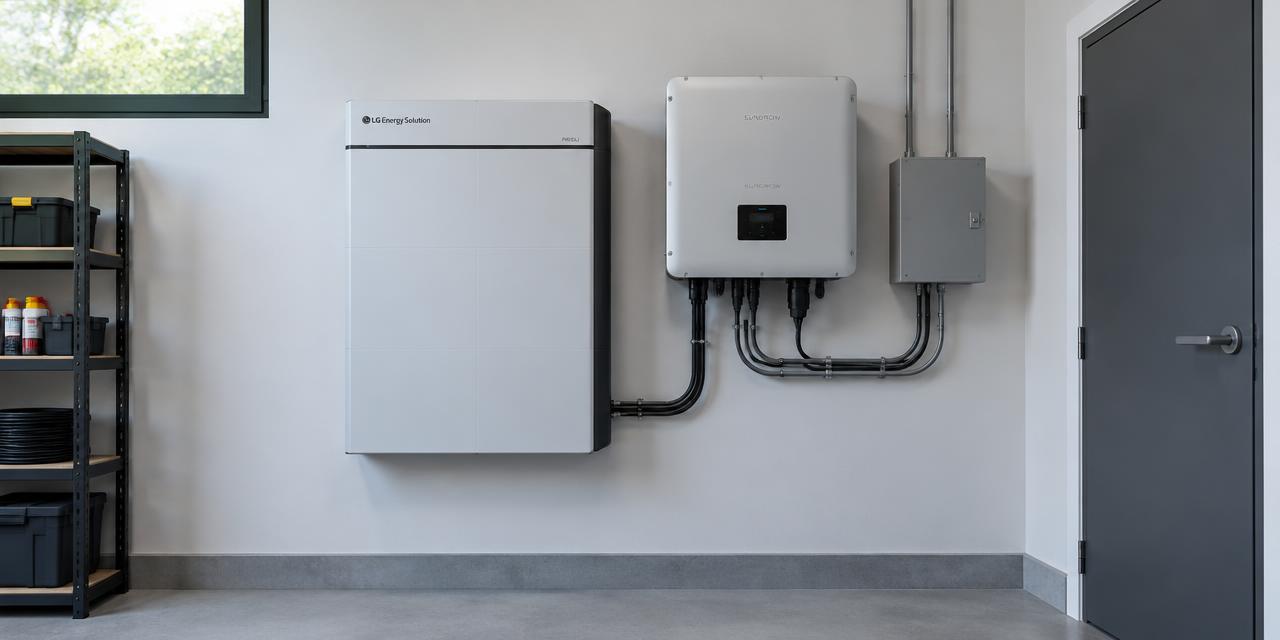
Installing a solar battery is a relevant strategy when your solar production significantly exceeds your daytime consumption. By storing the surplus generated during sunny hours, you can use this clean energy in the evening or early morning.
This improves your self-consumption rate, making your installation more profitable in the long term. In the canton of Lucerne, as everywhere in Switzerland, stabilizing your domestic supply helps manage rising electricity costs.
It is essential to evaluate your lifestyle habits to determine if this device is suited to your specific energy profile.
To properly size your battery, focus on your evening consumption rather than the raw power of your solar panels. A common mistake is to over-dimension the storage, which unnecessarily increases the initial investment without real operational benefit.
Analyze your annual electricity bills and identify peak nighttime usage. A well-adjusted capacity ensures the battery is cycled regularly, extending its lifespan while optimizing return on investment.
Do not forget to check RenoIndex to get an indicative price range for your specific project before contacting local companies.
Compatibility between the battery and your existing inverter is a critical point often overlooked. Before any purchase, carefully check if the storage system is compatible with the technical specifications of your current inverter.
Some installations require a hybrid inverter, capable of managing both solar panel input and battery charging/discharging. If your current inverter is not compatible, you might need to plan for a replacement, which will impact your total budget.
RenoIndex allows you to estimate these costs transparently, taking into account the different technical configurations for your home in Horw.
Financial planning is a key step for any solar installation in the canton of Lucerne. In addition to equipment costs, consider the expenses for installation, wiring, and commissioning by certified professionals.
It is advisable to compare several quotes and verify the warranties offered by manufacturers. The durability and quality of the chosen technology directly influence long-term profitability.
To facilitate your process, use the RenoIndex calculator, which provides a realistic CHF price range for your work in Horw, helping you avoid budget surprises when launching your project.
1. Estimate
Set a budget range with the estimator.
2. Grants
Apply before work starts.
3. Quotes
Compare at least 3 quotes.
4. Permit
Check with the municipality whether a permit is needed.
5. Works
Follow the site and do a written handover.
No specific grant listed for this work. Maintenance tax deductions may still apply.
2832 Rebeuvelier · about 75.3 km
Eco6therm specializes in the installation of heating systems, particularly heat pumps, and solar photovoltaic energy solutions.
eco6therm.ch2735 Malleray · about 81.4 km
Company specialized in electrical installations and telecommunications systems, including network infrastructure and related trade.
telecrengglisa.ch3213 Liebistorf · about 84.8 km
Enosis develops biomethanation technologies to convert CO2 and surplus electricity into storable and sustainable green gas.
enosis-energies.com3942 Raron · about 85.1 km
TZ Stromag is a full-service provider of electrical engineering for buildings, covering installations, automation, security, and in-house switchgear construction.
stromag.chSuggestions from the commercial register by distance and activity. Not an endorsement or partnership.
Profitability depends on your self-consumption rate. A battery is particularly relevant if your solar production significantly exceeds your daytime needs. If your consumption is mainly at night, storage becomes an advantageous investment to avoid purchasing grid electricity. Use RenoIndex to estimate costs and evaluate your return on investment.
Do not base your choice on panel power, but on your electricity consumption at night. Analyze your bills to estimate the kilowatt-hours needed to cover your evening and morning needs. Correct sizing avoids unnecessary costs and maximizes the actual use of stored energy.
It is possible if your current inverter is not hybrid or compatible with the chosen battery model. It is essential to check technical compatibility before any purchase. If a replacement is necessary, it must be integrated into your overall budget planning for your home in Horw.
The RenoIndex portal offers a free tool to obtain a personalized price range for your energy renovation work in Horw. This allows you to anticipate the necessary budget and better prepare your discussions with professional local installers in the canton of Lucerne.