
Eco6therm Sàrl
2832 Rebeuvelier · about 72.5 km
Eco6therm specializes in the installation of heating systems, particularly heat pumps, and solar photovoltaic energy solutions.
eco6therm.chHome solar battery · Kriens
At a glance
Small project
CHF 3'800 – CHF 8'800
Typical project
CHF 7'000 – CHF 14'900
Large project
CHF 12'000 – CHF 24'700
| Project | Quantity | Low | High | Per unit |
|---|---|---|---|---|
| Small project | 5 kWh | CHF 3'800 | CHF 8'800 | CHF 1'200 |
| Typical project | 10 kWh | CHF 7'000 | CHF 14'900 | CHF 1'000 |
| Large project | 18 kWh | CHF 12'000 | CHF 24'700 | CHF 1'000 |
Computed with our estimator for Kriens (regional factor included), standard finish. Only the project size changes.
Included
Not included
In Kriens, the federal building register lists 3'250 residential buildings and 15'719 dwellings. These municipal benchmarks help put your home in context, but do not replace an individual assessment.
55 % built before 1980
Construction year does not reveal past renovations: check the current insulation condition.
31 % · Gas
This distribution describes recorded buildings, not your system's consumption or efficiency.
| Energy | Heating | Hot water |
|---|---|---|
| Gas | 31 % | 23.9 % |
| Heating oil | 29 % | 23 % |
| District heating | 4 % | 2.3 % |
| Heat pump | 26 % | 16.6 % |
| Electricity | 3 % | 28.5 % |
| Wood | 6 % | 3.9 % |
| Solar thermal | 0 % | 1 % |
Each line gives the share of buildings using that energy, separately for heating and for hot water. The two columns do not always reach 100%: some buildings combine two systems, or reported none.
A standard non-condensing boiler is usually older and less efficient.
7.4 % of buildings mix housing with shops or offices.
For renovation projects in Kriens, official building register data provides essential insights for homeowners. With 785 out of 817 identified buildings listed under heritage protection, it is crucial to contact the municipality early to clarify permit requirements before starting work. Regarding building volume, the median is 1116 cubic meters; however, this figure is based on only 10 measured buildings, indicating partial data coverage. This information helps gauge the scale of your renovation, particularly for heating and insulation upgrades, allowing for more accurate cost planning despite the limited scope of the current statistical volume data.
Source : OFS — RegBL (export communal complet). Existing residential buildings; percentages of recorded values.
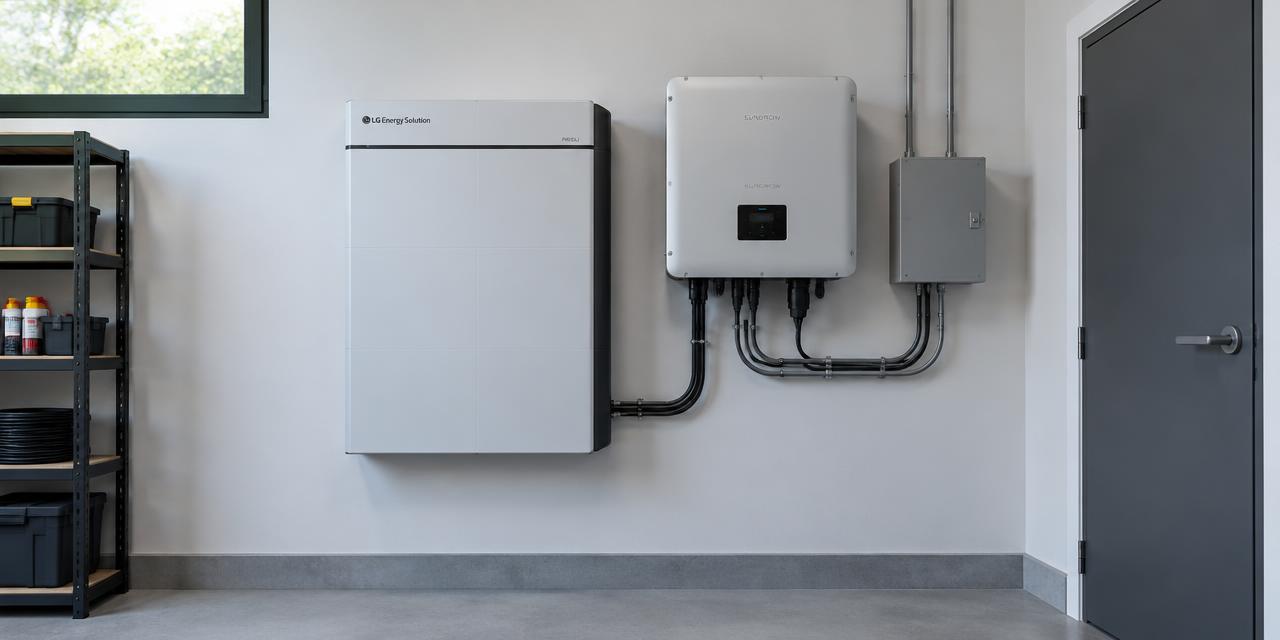
A battery is worthwhile when solar output clearly exceeds your daytime use. In Kriens, solar radiation varies throughout the seasons, making storage crucial for households wanting to use their own energy after sunset.
By avoiding the injection of all your surplus into the grid, you get better value from your initial investment.
It is essential to analyze your actual consumption habits to determine if a storage unit will pay for itself through savings on your annual electricity bill. Proper planning helps you optimize the system for your specific needs.
Sizing is a critical step for any storage project. Contrary to common belief, battery capacity should be chosen based on your evening consumption, not the total power of your solar panels.
An oversized system increases costs unnecessarily, while an undersized system will not cover your needs. Accurately assess your typical nightly consumption to select a suitable model.
Use the RenoIndex estimator to compare different cost scenarios based on the storage capacity required for your home in Kriens.
Before buying storage equipment, it is mandatory to check compatibility with your existing inverter. Storage systems are either DC-coupled or AC-coupled. This technical distinction greatly influences the installation and ancillary costs.
Also ensure that your electrical infrastructure can safely accommodate the storage unit. Working with local professionals in Kriens ensures your installation meets current safety standards.
Consult RenoIndex to get a cost estimate including installation and technical integration.
Investing in a solar battery represents a significant initial cost that should be carefully budgeted. In addition to the equipment price, do not forget to include labor costs and any necessary upgrades to your electrical panel.
While no specific municipal grants are mentioned for Kriens, it is recommended to regularly check for canton-level or national incentive programs that may change.
For a clear view of your investment, use our free RenoIndex tool to get a current price range for installing a battery in your canton.
1. Estimate
Set a budget range with the estimator.
2. Grants
Apply before work starts.
3. Quotes
Compare at least 3 quotes.
4. Permit
Check with the municipality whether a permit is needed.
5. Works
Follow the site and do a written handover.
No specific grant listed for this work. Maintenance tax deductions may still apply.
2832 Rebeuvelier · about 72.5 km
Eco6therm specializes in the installation of heating systems, particularly heat pumps, and solar photovoltaic energy solutions.
eco6therm.ch2735 Malleray · about 78.4 km
Company specialized in electrical installations and telecommunications systems, including network infrastructure and related trade.
telecrengglisa.ch3213 Liebistorf · about 81.7 km
Enosis develops biomethanation technologies to convert CO2 and surplus electricity into storable and sustainable green gas.
enosis-energies.com3942 Raron · about 83.7 km
TZ Stromag is a full-service provider of electrical engineering for buildings, covering installations, automation, security, and in-house switchgear construction.
stromag.chSuggestions from the commercial register by distance and activity. Not an endorsement or partnership.
Most modern solar batteries are designed to be virtually maintenance-free. However, it is recommended to have the system checked periodically by a professional to ensure optimal efficiency and verify electrical connections. Remote software monitoring usually allows for the detection of any performance anomalies without physical intervention.
The lifespan of a domestic solar battery is typically between 10 and 20 years, depending on the technology used, such as lithium-ion. This longevity strongly depends on the number of charge cycles and storage temperature conditions. Using the battery according to the manufacturer's recommendations helps maximize this duration.
Installing a battery requires electrical skills and strict adherence to safety standards. It is strongly advised to hire a certified electrician. Professional installation is often required to validate the manufacturer's warranty and ensure your electrical setup complies with cantonal requirements.
This depends on your system configuration. Some models offer an integrated backup function to power essential circuits during an outage, while others shut down for safety to avoid feeding power into the grid. Check this specific option when selecting your equipment.